
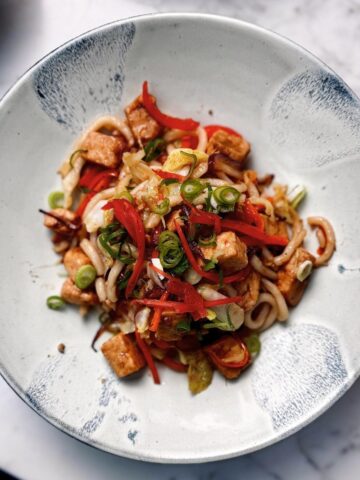
This spicy yaki udon is a quick, yum-packed vegan dinner on the table in 20 minutes. Chewy udon, crisp tofu, and plenty of veg tossed in a savoury-sweet sauce with a proper chilli kick. Top with homemade rayu and pink pickled ginger, or try my vegan yaki udon or kitsune udon for something milder.

Spicy Yaki Udon – At a Glance
Ask AI about this recipe
Summaries, substitutions, scaling, allergen checks — or save this site to your AI for future recipe ideas.
AI answers can be wrong. Treat them as suggestions, not as a substitute for the recipe above.
Why you'll love this spicy yaki udon
- On the table in 20 minutes
- Chewy noodles, savoury sauce, proper chilli kick
- Swap the veg, dial the spice up or down, or add a spoonful of vegan mayo for creaminess
- Works with tofu, Quorn, veggie mince, or vegan bacon
- Izakaya vibes at home
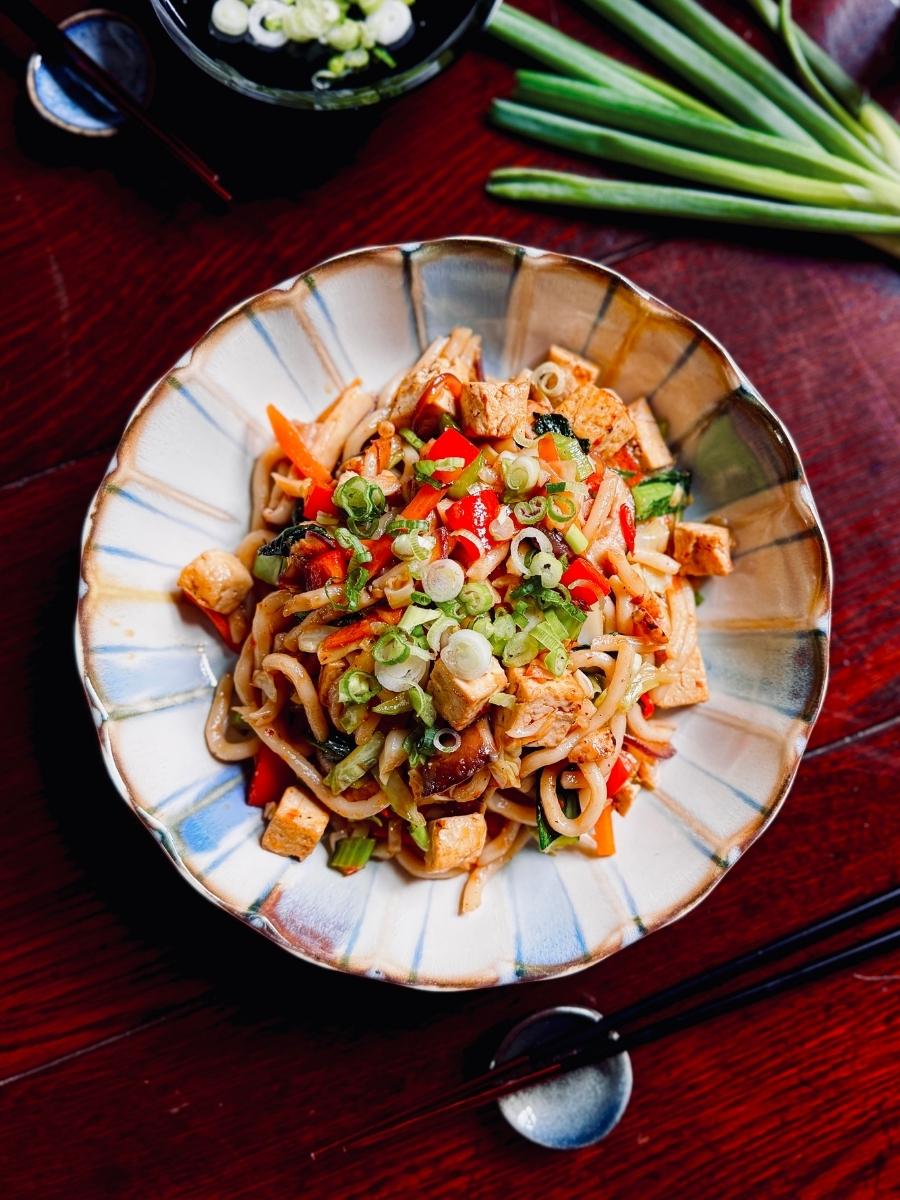
What to serve with spicy yaki udon
- Yasai gyoza - pan-fried veggie dumplings make a brilliant side
- Vegan miso soup - a light broth that balances the heat
- Edamame - steamed with sea salt for a quick protein boost
- Pink pickled ginger - adds crunch and cleanses the palate
- Japanese beer or sake - Asahi, Sapporo, or a crisp chilled sake. See our guide to some of the best Japanese beers.
Jump to:
Ingredients
For quantitites take a look at the recipe card. For an overview see below:
- Udon noodles (Forzen or fresh preferable)
- Doubanjiang (fermented chilli bean paste, spicy-savoury)
- Kombu dashi powder
- Soy sauce (Kikkoman or similar)
- Cooking sake
- Mirin
- Neutral cooking oil
- Tofu - Extra firm (preferably a variety that you don't need to press)
- Salt & pepper
- Pointed cabbage
- Spring onion
- Onion
- Carrot
- Red pepper
- Birdseye chilli
- Garlic
- Pak choi or choi sum
- Layu & Shichimi togarashi
How to Make Spicy Yaki Udon
Here's the plan for the best spicy stir-fried udon you'll ever make:
- Boil water for the noodles (but cook them just before the final fry).
- Chop a colourful spread of veg and cube your tofu.
- Stir-fry tofu and veg until golden and glossy.
- Drop in the noodles and sauce - let everything sizzle together.
- Finish with spring onion, chilli oil, and shichimi togarashi.
Dinner, sorted in under half an hour. Follow on below for details on how to make this step by step. You'll be an expert yaki udonner in no time!
Step 1. Get the water boiling

Fill a large saucepan with about 2L of water and bring it to a rolling boil. Leave it bubbling on the side while you get everything else ready - you'll cook the noodles just before the stir-fry.
Step 2. Prep the veg and tofu


i) Peel your garlic and slice it into lovely paper-thin discs. Trim and peel the onion, cut it in half, then slice into thin even strips. Keeping the slices uniform means they'll cook evenly and gently flavour the oil with that gorgeous garlic and onion aroma.


ii) Slice the carrot lengthways into thin sheets, then cut those into fine batons (little matchsticks). The smaller you go, the quicker they'll soften while still keeping a nice bit of crunch.

iii) Cabbage - Staring with a cabbage quarter, go ahead and cut out the tough core, then shred the leaves into ribbons. Don't go too chunky - ½ inch strips wilt down beautifully and soak up that spicy sauce.

iv) For the red pepper, deseed and dice it into small chunks, about 1 cm. That way, it cooks fast, adds bursts of colour, and gives you those little sweet pops against the spice.


v) With your choi sum or pak choi - Separate the stalks from the leaves. Chop the stalks into small pieces so they can get a head start in the pan, then leave the leafy tops nice and chunky - they'll wilt down in seconds and give you that lovely fresh green lift.


vi) Now for the chilli: take a bird's eye, slice it finely, and leave the seeds in if you want that extra fiery kick. Then for the garnish, trim your sping onion taking off any dull parts of the stalk and slice into thin discs.


vi) Pat your tofu dry and then cube into ½ inch pieces. First slice into slabs, then into strips, and finally into cubes. More edges means more surface area to crisp up and soak in all that flavour once it hits the pan.
Tip: Extra-firm tofu like Tofoo needs no pressing, it's ready to crisp straight up. Softer blocks, give it a press and pat dry first. Golden edges make all the difference.
Step 3. Fry the tofu

Heat oil in a wok or large frying pan over medium-high. Add tofu and fry until crisp on the edges (2-3 minutes). Season with salt and pepper.
Step 4. Add the veg


Start with garlic, onion then 2 minutes later add the cabbage, and carrot. After a couple of minutes, add red pepper and pak choi stalks. Stir-fry until glossy and tender-crisp. Toss in the pak choi leaves at the end for just 30 seconds or so. Season with a good couple of pinches of salt a freshly ground pepper. Reduce heat to low while you par-cook your noodles.
Step 5. Cook the noodles


Drop your udon into the (now) boiling water. For dry noodles, undercook by 2 minutes. For vacuum-packed, cook just until the strands separate (encourage them to separate by tickling them using chopticks). Drain in a colander and shake off excess water.
Step 6. Sauce it up


Turn up the heat on your pan. Add the drained noodles along with doubanjiang, soy sauce, mirin, sake, and kombu dashi. Stir vigorously until everything is sizzling, glossy, and coated in deep, savoury flavour. This is where it transforms into true spicy yaki udon.
Step 7. Plate and finish

Divide between bowls. Top with sliced spring onion, a drizzle of Rayu (La-yu), and a dusting of shichimi togarashi. Eat straight away - these noodles are at their best piping hot.
Love this recipe?
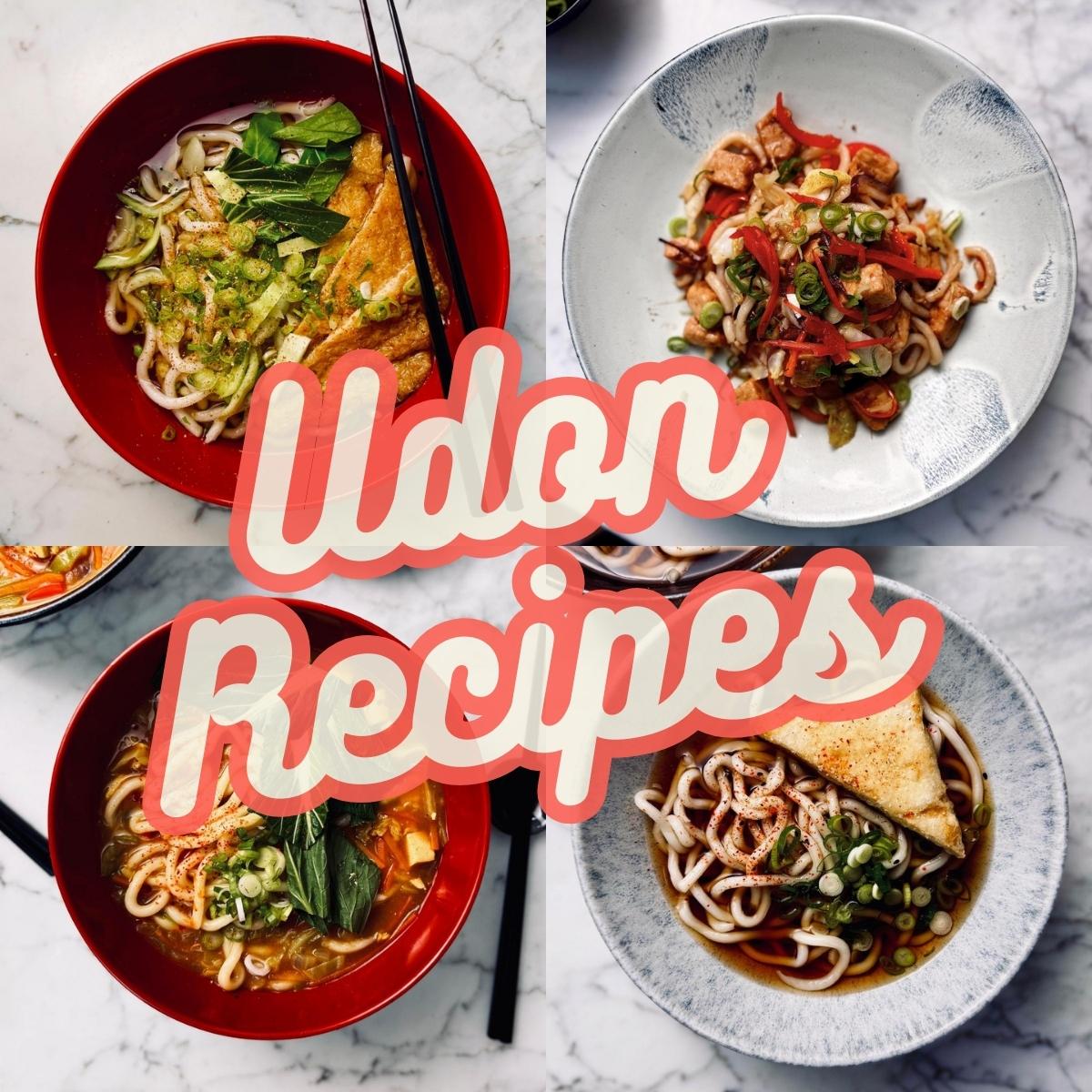
Check out my other vegan udon noodle recipes for more ideas.
Substitutions
| Ingredient | Substitute | Notes |
|---|---|---|
| Udon noodles | Soba, ramen, spaghetti | Spaghetti works surprisingly well in a pinch |
| Tofu | Tempeh, seitan, soy chicken strips | Some plant based 'meats' contain flavorings so adjust seasonings to taste |
| Doubanjiang | Gochujang, miso + chilli flakes | Miso + chilli gives a similar depth |
| Mirin | Pinch of sugar | Preferably with a touch of sake |
| Veg | Broccolini, bean sprouts, peas, young spinach | Most crunchy, crisp greens work well |
Variations
- Spicier: add finely sliced bird's eye chilli or extra chilli powder for a properly fiery bowl.
- Creamy: stir a spoonful of vegan kewpie mayo through at the end for a rich, silky wafu-style sauce.
- Sesame: swap the chilli oil for toasted sesame oil and a scattering of sesame seeds for a nuttier, more fragrant finish.

Equipment
- Wooden spoon or spatula
- Large wok or frying pan
- Saucepan for boiling noodles
- Colander for draining udon
- Chopping board + sharp knife
Storage
Best enjoyed fresh, but leftovers keep in the fridge for up to 2 days. Reheat in a hot pan with a splash of soy sauce or water. Not freezer-friendly (udon gets mushy).
3 Tips for Success
- Get your pan properly hot - stir-frying should sizzle, not steam. You want that loud, exciting fry going on. Just remember, every time you add cold veggies the heat will dip, so don't be shy about cranking the temperature up a touch to keep the action going. If things start charring too fast, ease it back down. It's all about finding that sweet spot where everything cooks quickly, stays vibrant, and picks up just the right bit of colour.
- Undercook your noodles - they'll finish off in the pan. This keeps your spicy udon noodles bouncy rather than soggy. What you're after is that lovely bit of bite, noodles that hold together and soak up the sauce instead of breaking apart and turning to mush.
- Stage your veg - firmer veg first, leafy greens last and keep things moving in the pan so everything get a nice even cook. If you prefer to have some charred flavors allow things to sit for 30 secs to get a crisper coating on things
Spicy Yaki Udon FAQs
It means vegetable yaki udon - a stir-fried noodle dish with loads of veg. This spicy yaki udon is similar but with a chilli kick.
Absolutely - try Quorn, soya mince or tempeh in your spicy udon noodles.
Cut down the doubanjiang and skip the birdseye chilli. You'll still get loads of umami from the soy, mirin, and dashi.
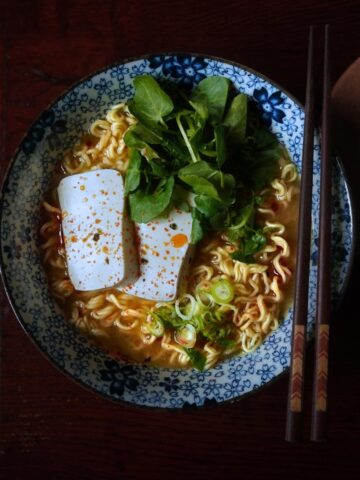
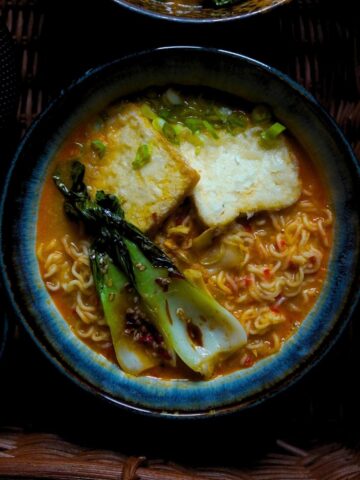
Popular Vegan Japanese Recipes
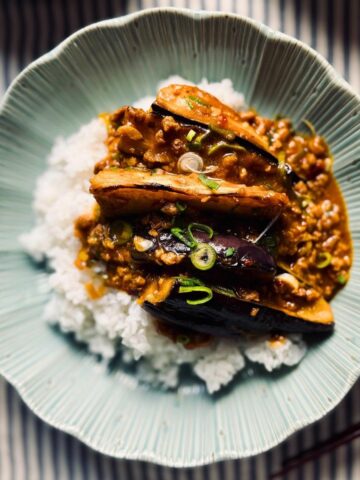
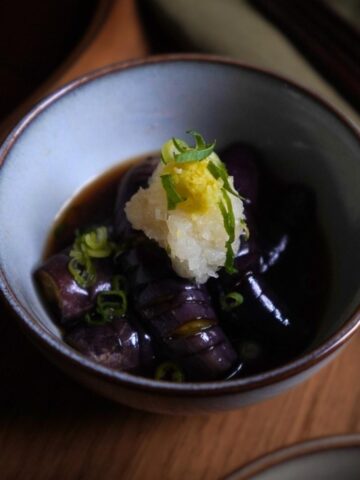
Vegan Japanese Side Dishes
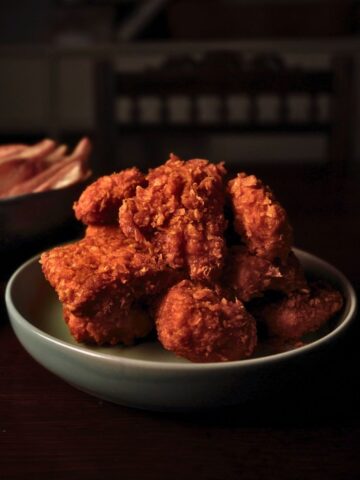
📖 Recipe

Spicy Yaki Udon - Easy 20-Minute Vegan Japanese Stir-Fried Noodles
Equipment
- Large wok or frying pan
- saucepan for boiling noodles
- colander for draining noodles
- Chopping board
- Sharp knife
- Wooden spoon or spatula
Ingredients
- 400 g fresh udon or dry udon - just use half the amount and cook according to packet instructions
- 1 teaspoon doubanjiang heaped tsp
- 1 teaspoon kombu dashi powder
- 2 tablespoons soy sauce Kikkoman or similar
- 1 tablespoon cooking sake
- 1 tablespoon mirin Japanese sweet rice wine
- 2 tablespoons neutral cooking oil
- 200 g tofu cubed
- Salt and black pepper to season
- ¼ head pointed cabbage shredded
- 1 spring onion thinly sliced (for garnish)
- ½ medium onion sliced
- 1 medium carrot cut into thin batons
- ¼ red pepper diced
- 2 cloves garlic thinly sliced
- 1 bird's eye chilli finely sliced (leave seeds in for extra kick)
- 3 leaves pak choi or choi sum stalks and greens separated
- Layu Japanese chilli oil, to finish (optional)
- Shichimi togarashi Japanese 7-spice, to finish (optional)
Instructions cook mode
Step 1. Boil the water
- Bring about 2 litres of water to a rolling boil in a large saucepan. Keep it bubbling on the side - you'll cook the noodles just before the final stir-fry.
Step 2. Prep the vegetables
- Peel and slice the garlic into thin discs.
- Trim, peel, and halve the onion, then cut into thin strips.
- Slice the carrot lengthways into thin sheets, then cut into fine batons.
- Core the cabbage and shred it into ribbons.
- Dice the red pepper into small chunks (about 1 cm).
- Slice the bird's eye chilli finely (leave seeds in for extra heat).
- Separate the pak choi stalks from the leaves, chopping the stalks small and leaving the leaves chunky.
- Slice the tofu into slabs, then strips, then cubes (about 1 inch). Pat dry if needed. More edges mean more crisp and flavour absorption.
- Trim and chop the spring onion into thin discs for garnish.
Step 4. Fry the tofu
- Heat the oil in a wok or large frying pan over medium-high. Add the tofu and fry for 2-3 minutes until the edges are golden. Season with salt and pepper.
- Step 5. Stir-fry the veg
- Add the garlic, onion, cabbage, and carrot to the wok. Stir-fry for 2 minutes, then add the red pepper, chilli, and pak choi stalks. Cook until glossy and tender-crisp. Toss in the pak choi leaves for the final minute.
Step 6. Cook the noodles
- Add the udon noodles to the boiling water. Cook according to the type:
- Dry noodles → cook 2 minutes less than the packet instructions.
- Vacuum-packed noodles → cook just until they separate.
- Drain well in a colander, shaking off excess water.
Step 7. Combine with sauce
- Turn the wok heat up to medium-high. Add the drained noodles along with the doubanjiang, soy sauce, sake, mirin, and kombu dashi powder. Stir vigorously until everything is evenly coated, sizzling, and glossy.
Step 8. Finish and serve
- Divide the noodles between bowls. Garnish with sliced spring onion, a drizzle of layu chilli oil, and a dusting of shichimi togarashi. Serve immediately while piping hot.

Leave a Reply