Vegan Japanese

  • Start Here
  • Recipes
  • About
  • Contact
menu icon
go to homepage
  • Start Here
  • Recipes
  • About
  • Contact
  • Socials

    • Instagram
    • Pinterest
    • YouTube
  • search icon
    Homepage link
    • Start Here
    • Recipes
    • About
    • Contact
  • Socials

    • Instagram
    • Pinterest
    • YouTube
  • ×
    Home » Recipes » Condiments

    Homemade Rayu (Japanese Ramen Chili Oil) Recipe

    Last updated: Jun 3, 2026 by Aaron Fukuyama

    If you've ever eaten ramen at a Japanese restaurant and noticed a fragrant red oil floating on the broth, that's ra-yu. This aromatic chili oil is a staple condiment in ramen shops across Japan - a small spoonful adds warmth, depth, and a gentle heat that transforms a bowl of noodles. Try it drizzled over vegan miso ramen, yuzu ramen, or vegan shio ramen.
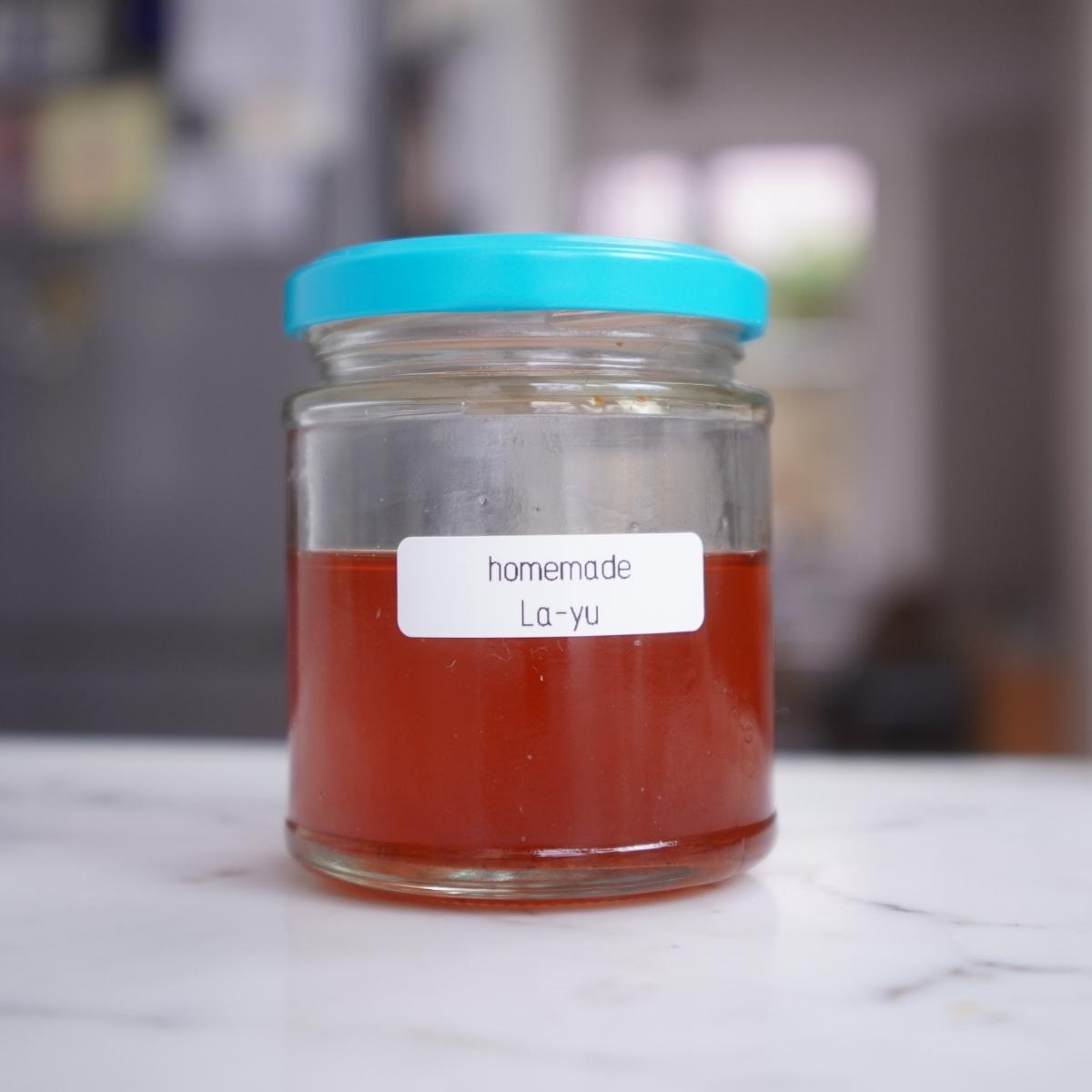
    homemade rayu Japanese chili oil in jar
    Jump to Recipe Jump to Video

    Homemade Rayu – At a Glance

    Recipe Homemade Rayu (Japanese Ramen Chili Oil) Recipe
    Ready in 30 min
    Serves 60 5ml drizzles
    Calories ~41 per serving (est.)
    Key ingredients neutral oil, toasted sesame oil, large garlic clove, slices fresh ginger, Green tops green onions
    Course Condiments

    Ask AI about this recipe

    Summaries, substitutions, scaling, allergen checks — or save this site to your AI for future recipe ideas.

    ChatGPT Grok Perplexity Claude Google AI

    AI answers can be wrong. Treat them as suggestions, not as a substitute for the recipe above.

    Add us as a trusted Google source

    Ways to Use Rayu

    Most commonly used as a finishing oil for ramen, but this fragrant chili oil works across a lot of dishes. Try it with:

    • Ramen - drizzle over vegan miso ramen, yuzu ramen, tantanmen, or shio ramen for that classic finish.
    • Gyoza - mix with soy sauce and rice vinegar for a classic dipping sauce. Works perfectly with these yasai gyoza wrapped in homemade gyoza skins.
    • Noodle bowls - a splash over tofu noodles or yaki udon adds a rich sesame heat.
    • Rice bowls - a spoonful lifts a shiitake and tofu donburi or vegan beef donburi with fragrant chili warmth.

    Making rayu at home is simple and once you have a jar in the kitchen, you'll reach for it constantly.
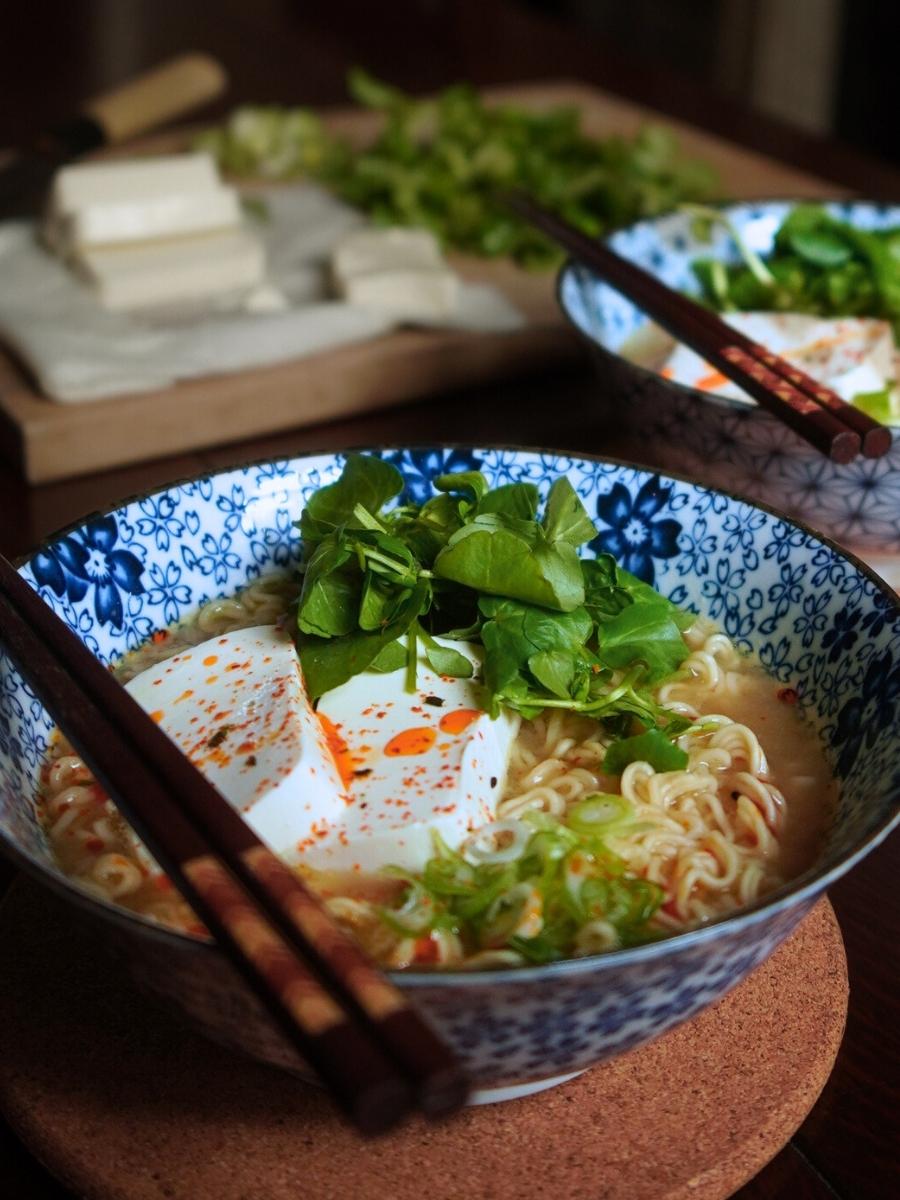
    ramen topped with homemade rayu chili oil
    Jump to:
    • Homemade Rayu – At a Glance
    • Ways to Use Rayu
    • Ingredients
    • How to Make Homemade Rayu
    • Tips for the Best Rayu
    • Homemade Rayu Oil FAQs
    • More Vegan Japanese Side Dishes
    • 📖 Recipe

    Ingredients

    • Neutral oil (such as sunflower, canola, or vegetable oil)
    • Toasted sesame oil
    • Garlic
    • Fresh ginger
    • Green onions (scallions/spring onions)
    • Japanese ground red chili pepper (ichimi togarashi)
    • Red chili flakes

    How to Make Homemade Rayu

    1. Prepare the aromatics:
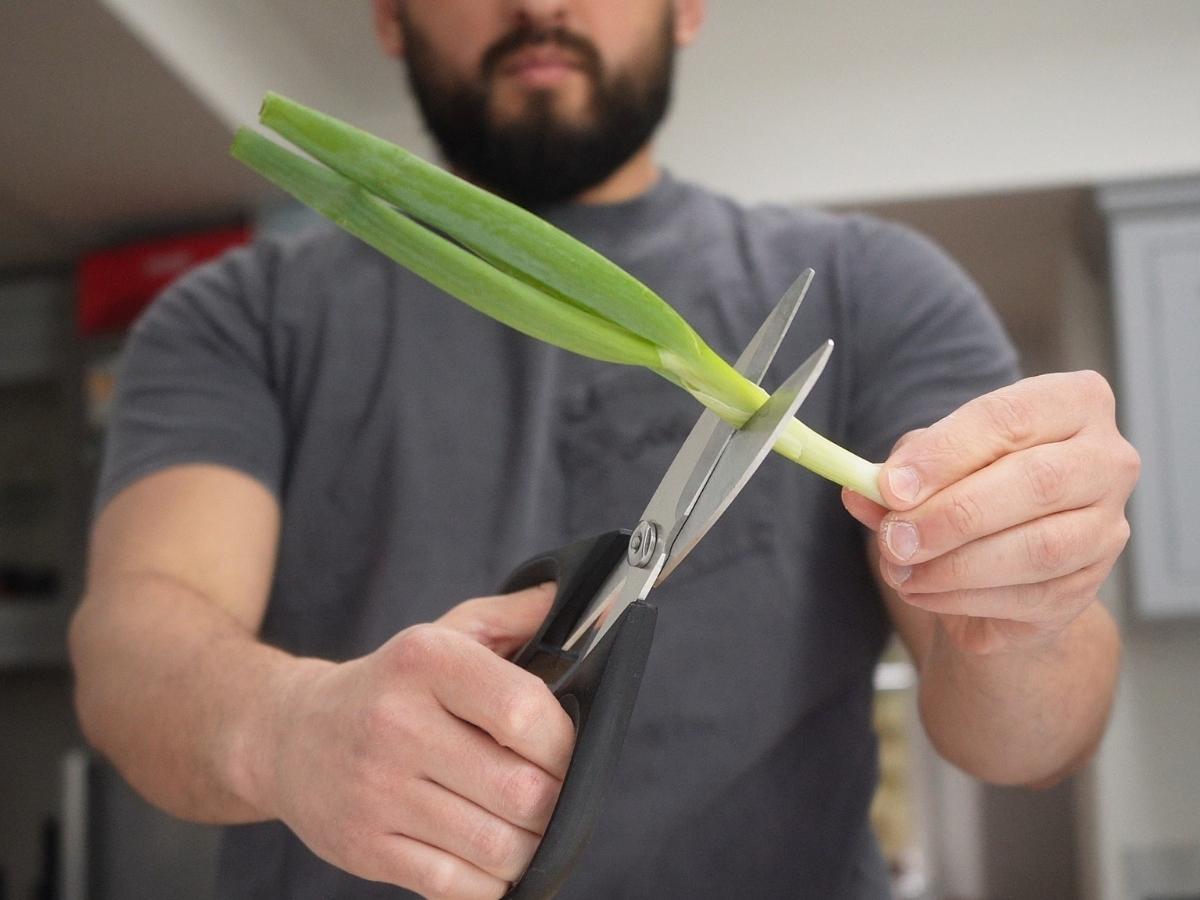
    trimming green onions for homemade rayu chili oil

    i) Trim off the white root ends of the green onions using scissors or a knife.
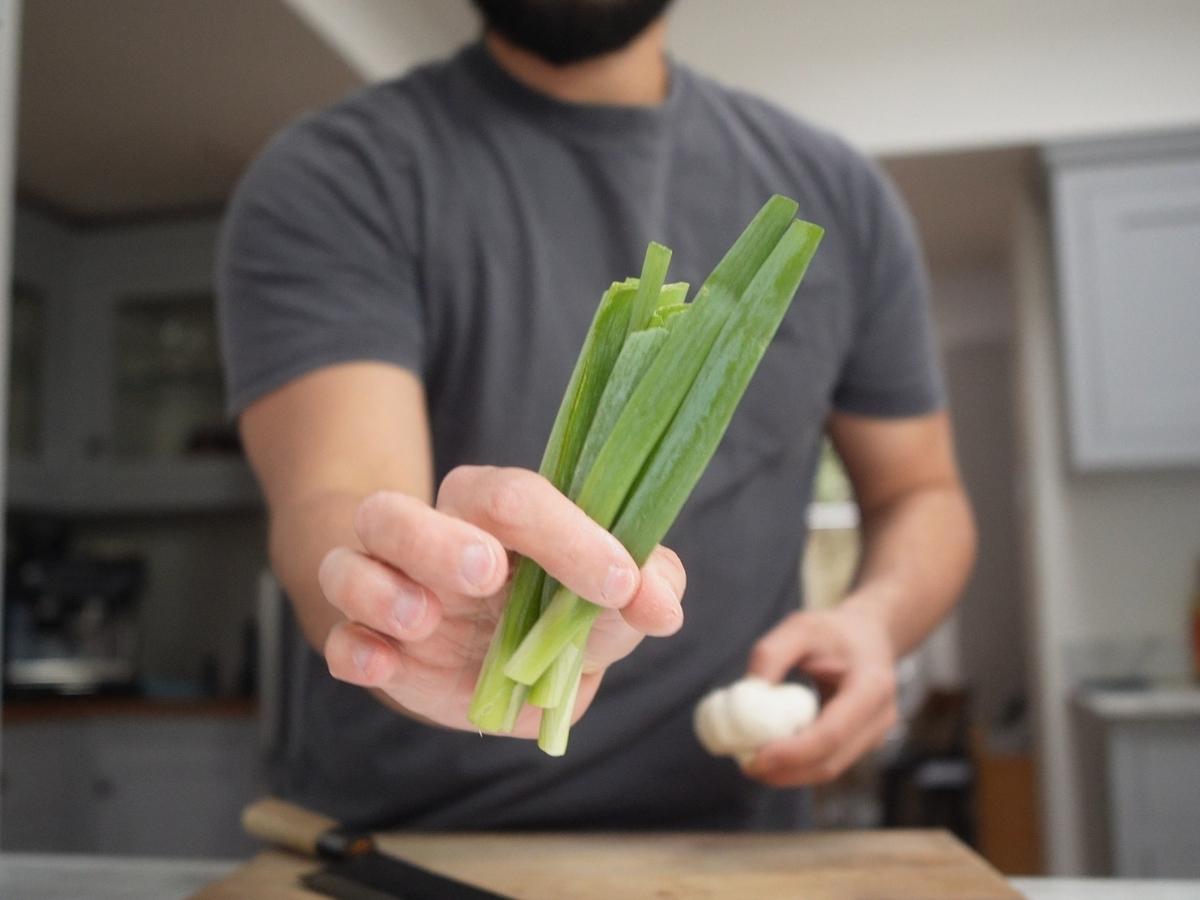
    trimmed green onion tops used to make rayu

    ii) The green tips give the oil a mild aroma without the sharper flavor and excess moisture found in the white parts.
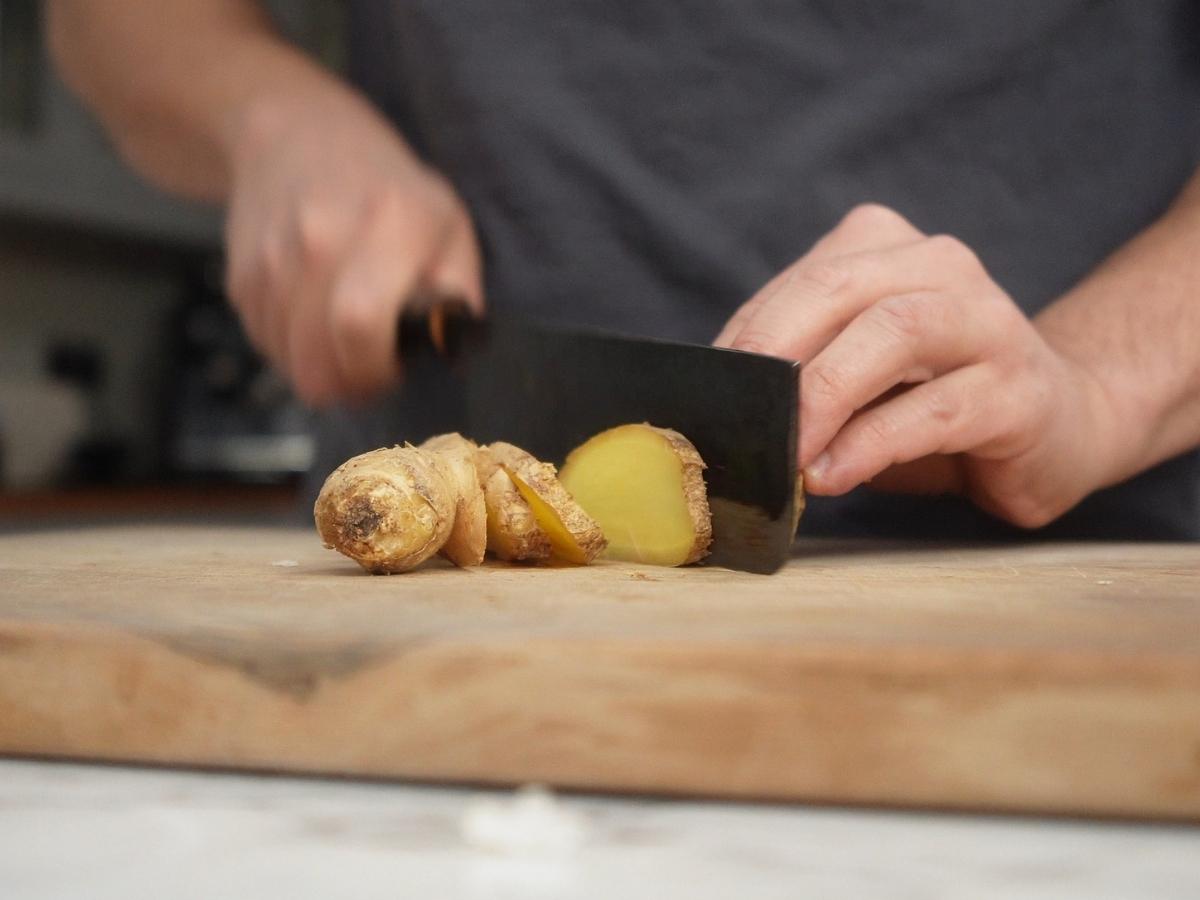
    slicing fresh ginger for rayu chili oil

    iii) Slice the ginger into roughly ½ cm slices.
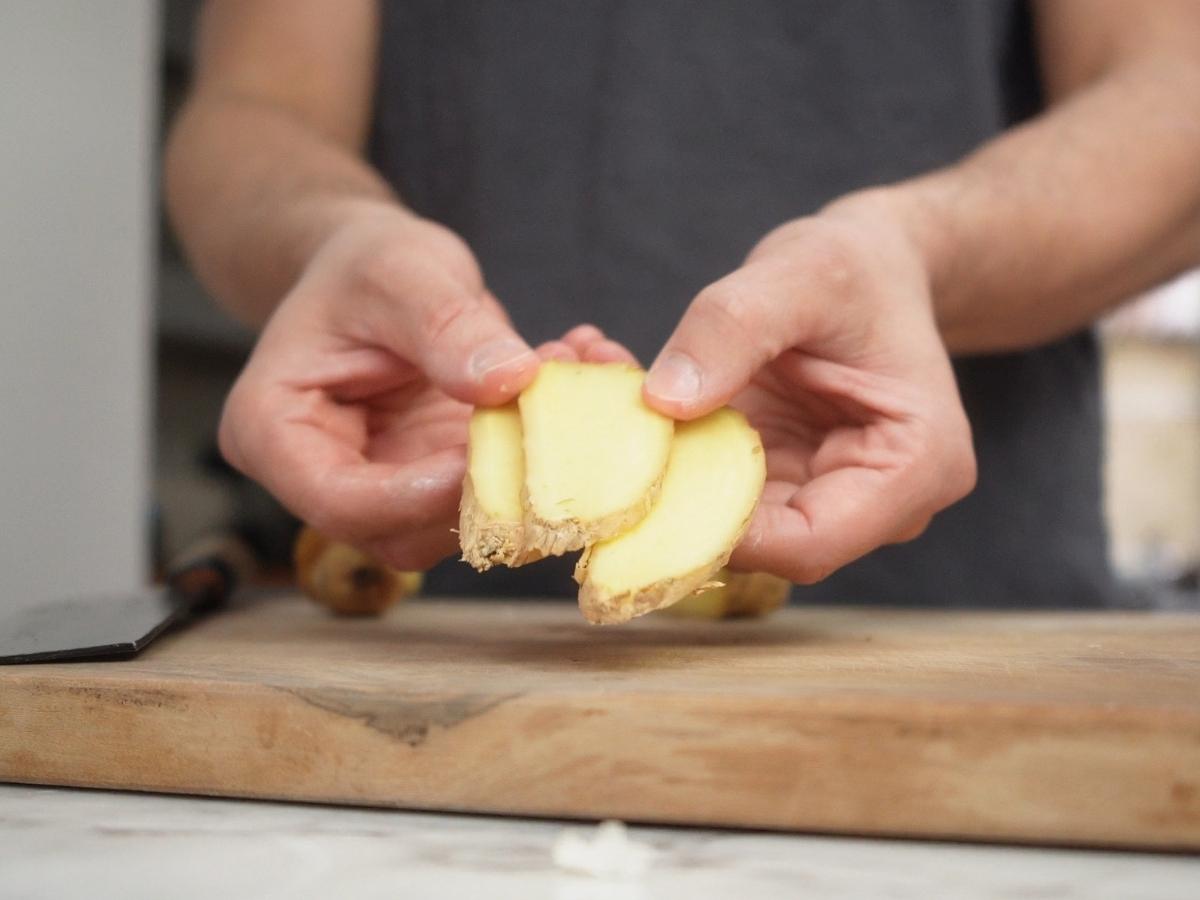
    slices of ginger

    iv) There is no need to peel it since the ginger is only used to infuse the oil with flavor and will be strained out later.
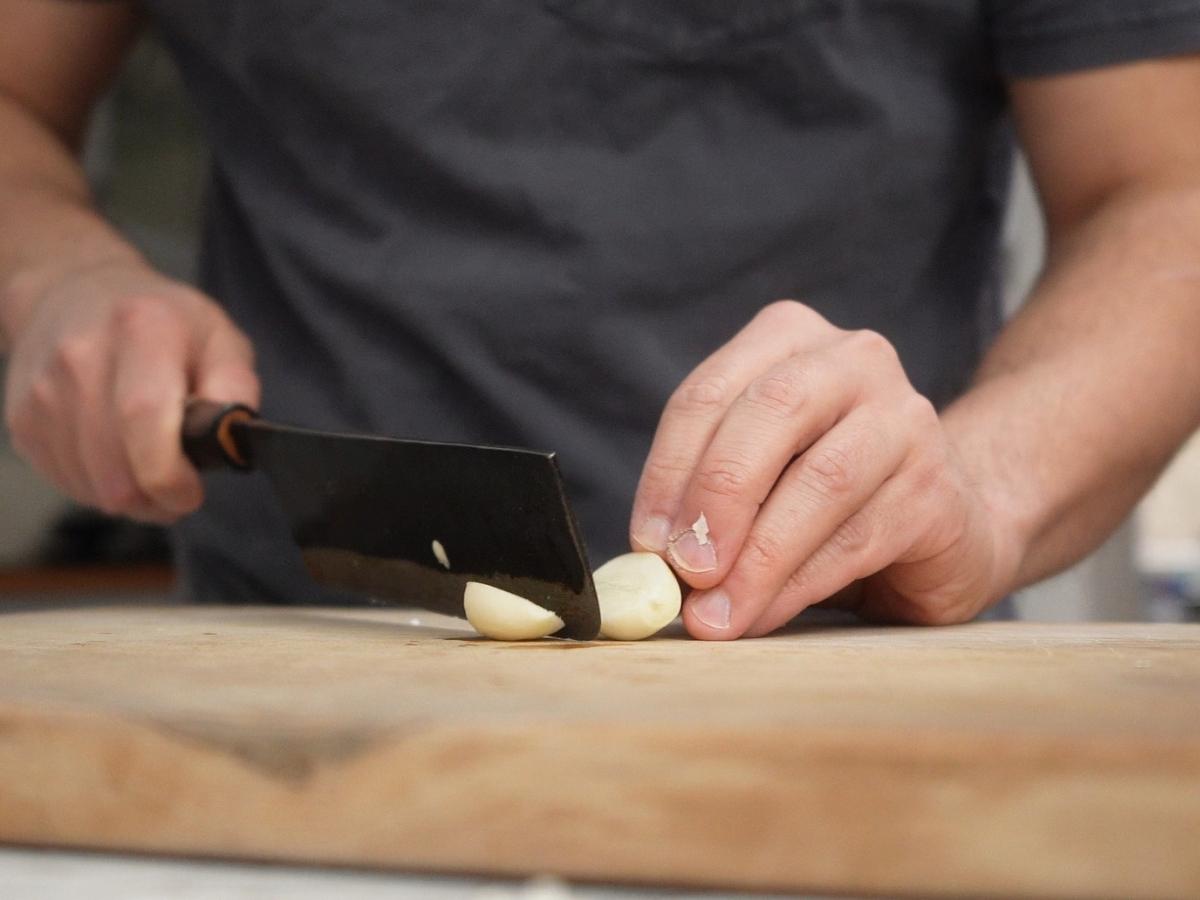
    halving a garlic clove for homemade rayu

    v) Peel the garlic clove and slice it in half. Larger pieces release their flavor more gradually into the oil and are less likely to burn. If your cloves are small, you can simply leave them whole.

    2. Heat & Infuse the Oil

    heating oil to 160C for homemade rayu chili oil

    i) Pour the neutral oil and toasted sesame oil into a pan. A skillet works well, but a wok or heavy-bottomed saucepan will also work. Heat the oil to 160°C (320°F). The goal is to gently sizzle the aromatics rather than deep fry them.
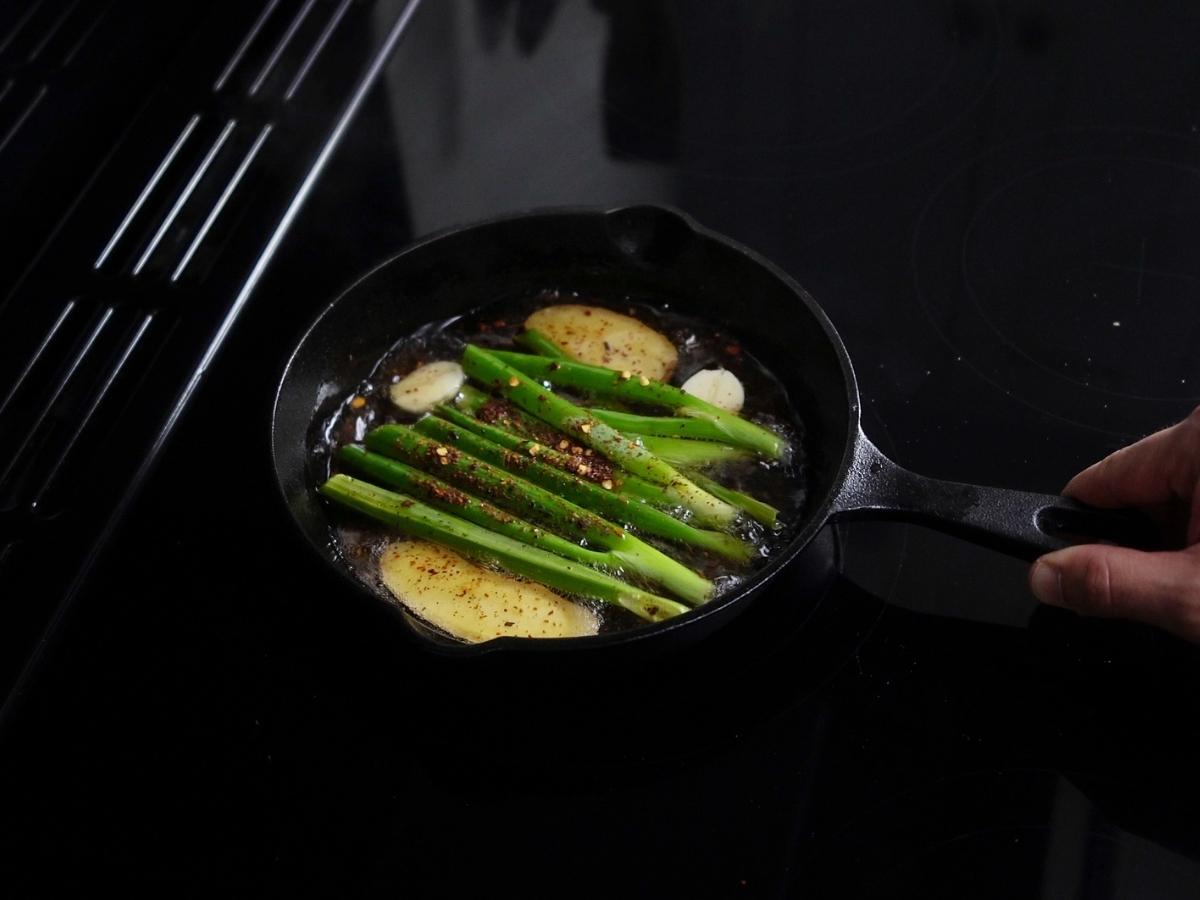
    garlic ginger and green onions frying in oil for rayu

    ii) Add the garlic, ginger, green onion tops, and crushed chili flakes. Allow them to gently sizzle for about 20 minutes, slowly infusing the oil with flavor.
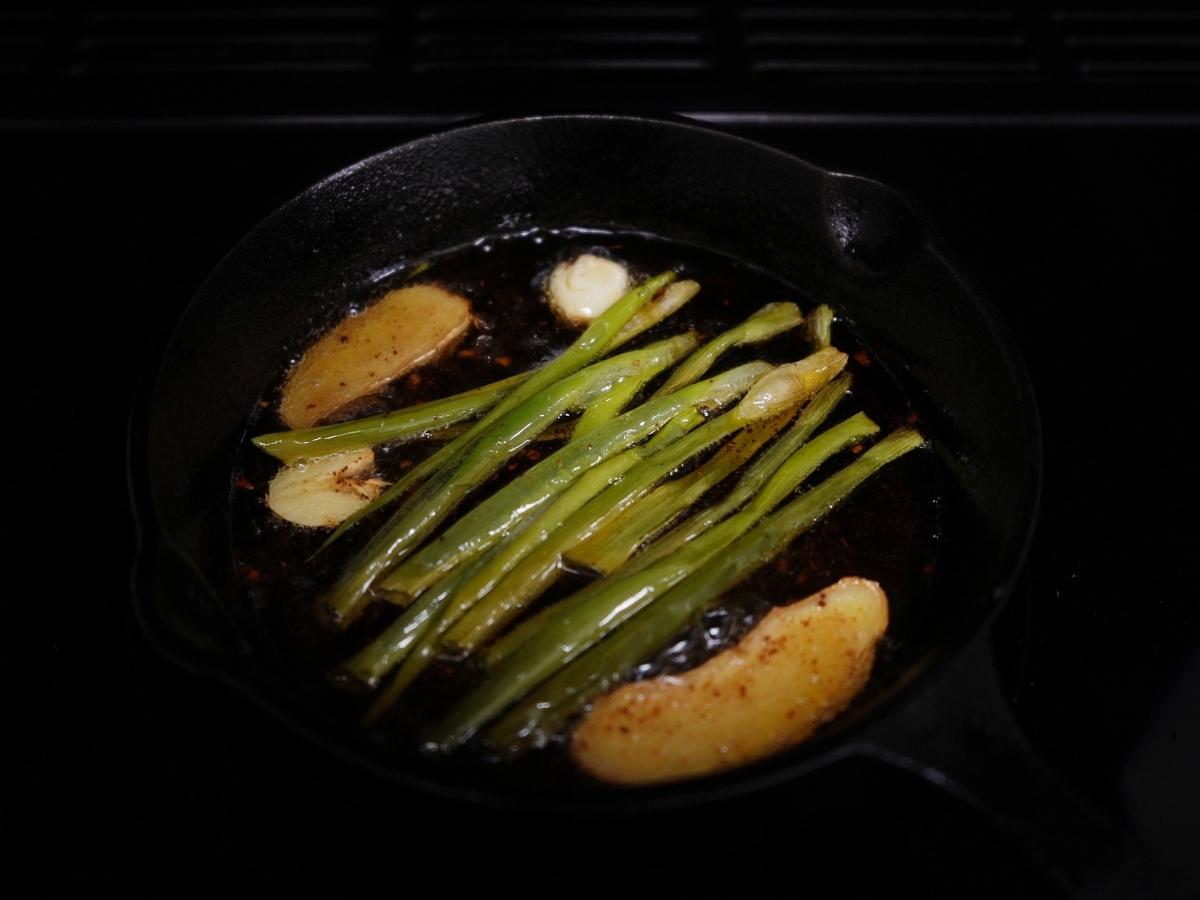
    aromatics infusing oil while making rayu chili oil

    iii) The aromatics should bubble gently rather than fry aggressively. This step builds the fragrant base that gives rayu its signature ramen chili oil aroma.

    4. Prepare the chili mixture
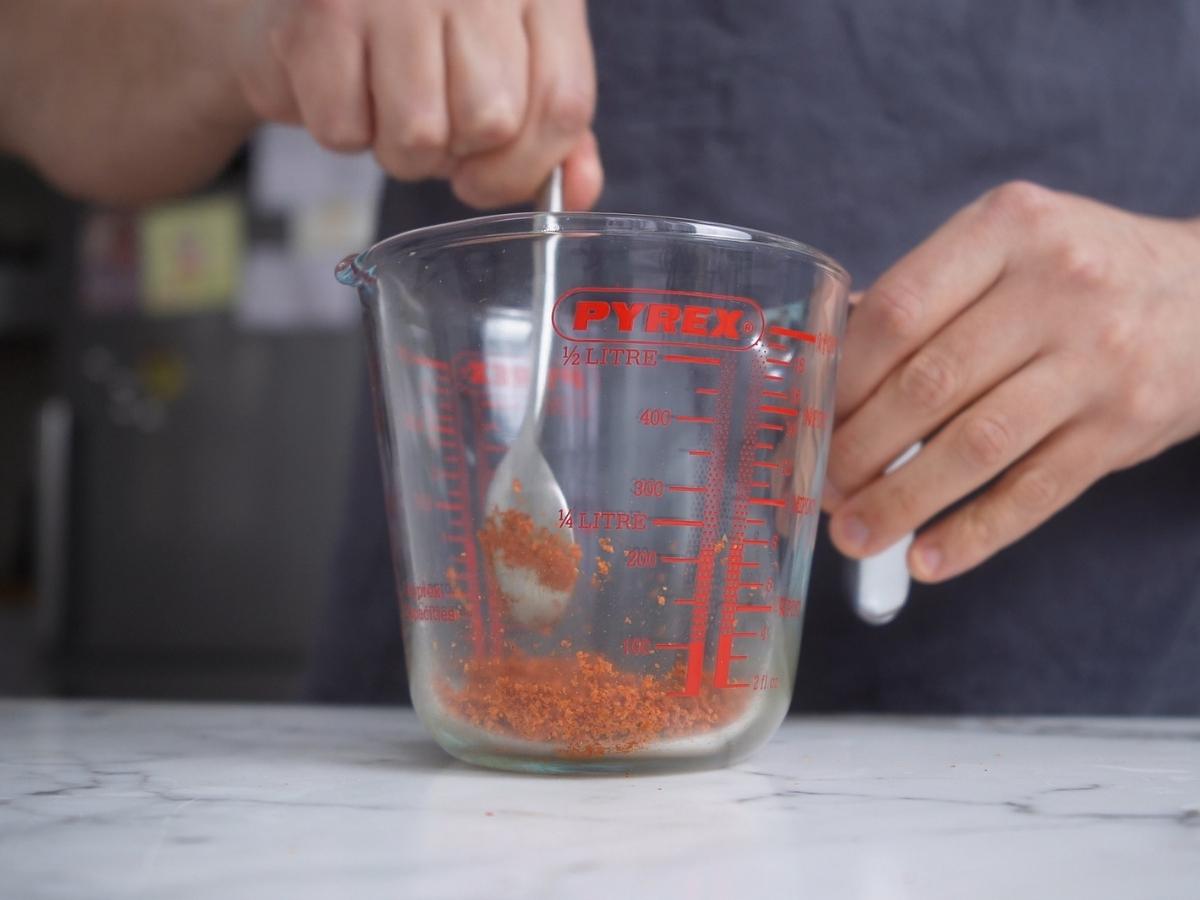
    ichimi togarashi chili powder mixed with water for rayu

    i) Meanwhile, add the ichimi togarashi to a heatproof jug. Stir in about 2 teaspoons of water until evenly dispersed. The mixture should resemble wet sand.

    5. Bloom the chili oil
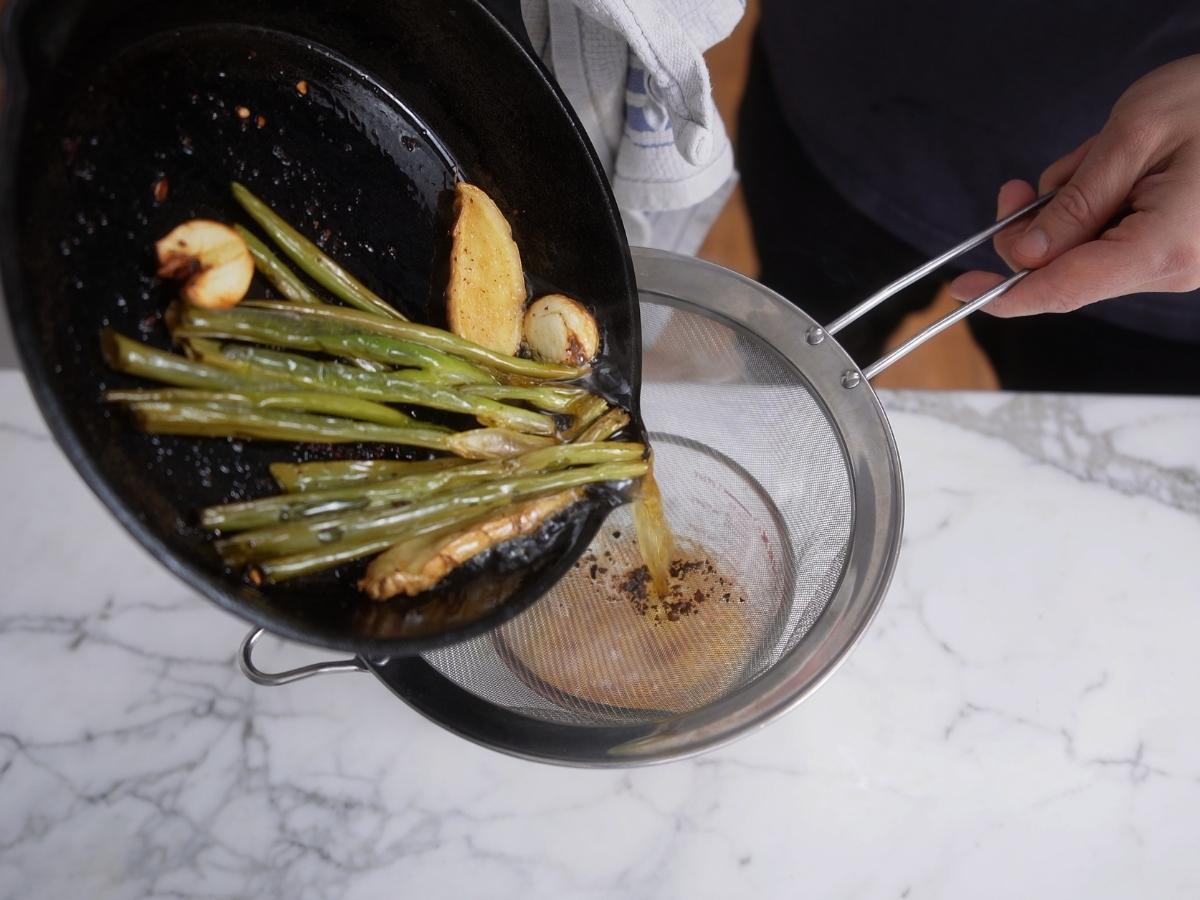
    straining hot oil into ichimi chili mixture for rayu

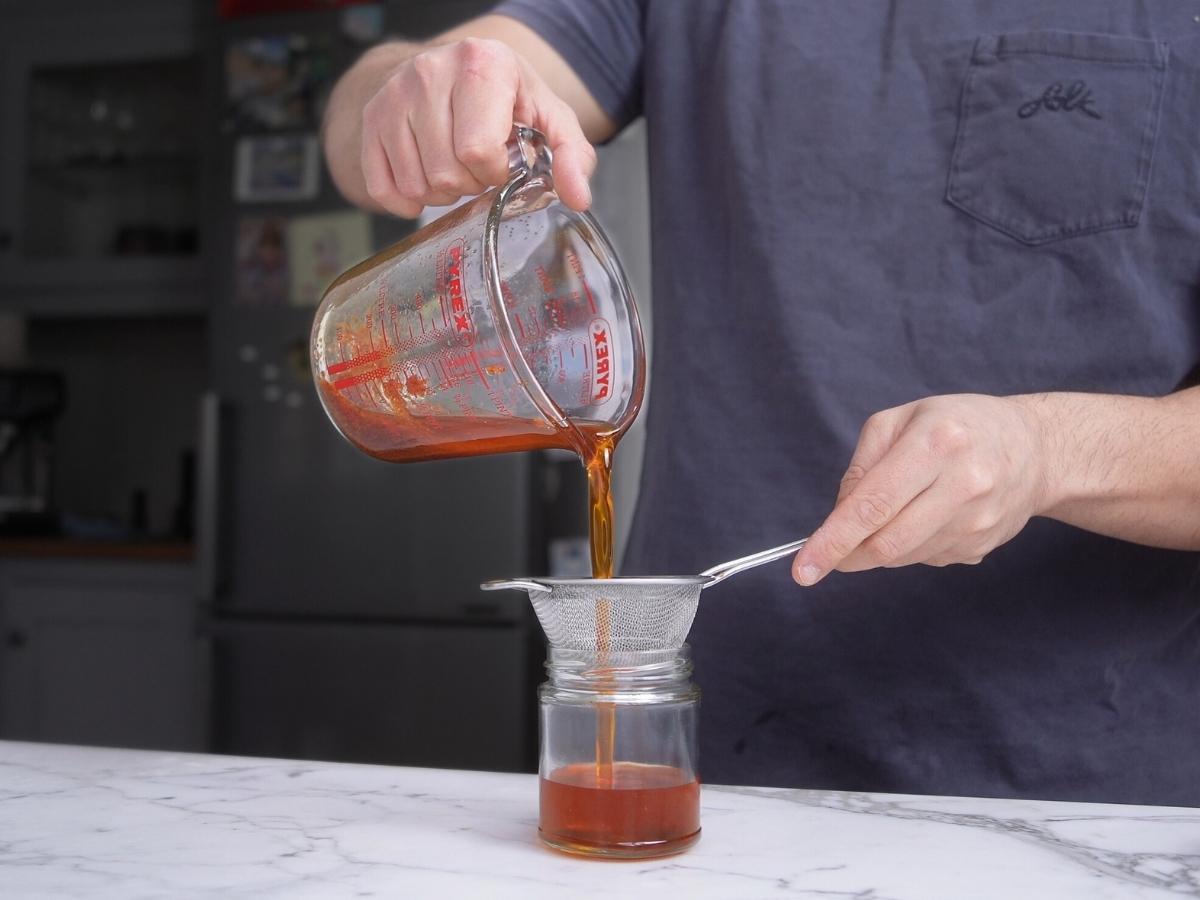
    i) Once the oil is ready, carefully strain it through a sieve into the jug over the chili mixture.
    pouring homemade rayu chili oil into glass jar

    ii) Pour the oil while still hot so the chili powder blooms and releases its aroma.This creates the rich red color and deep flavor of Japanese chili oil.

    6. Cool and store
    sealing jar of homemade rayu chili oil

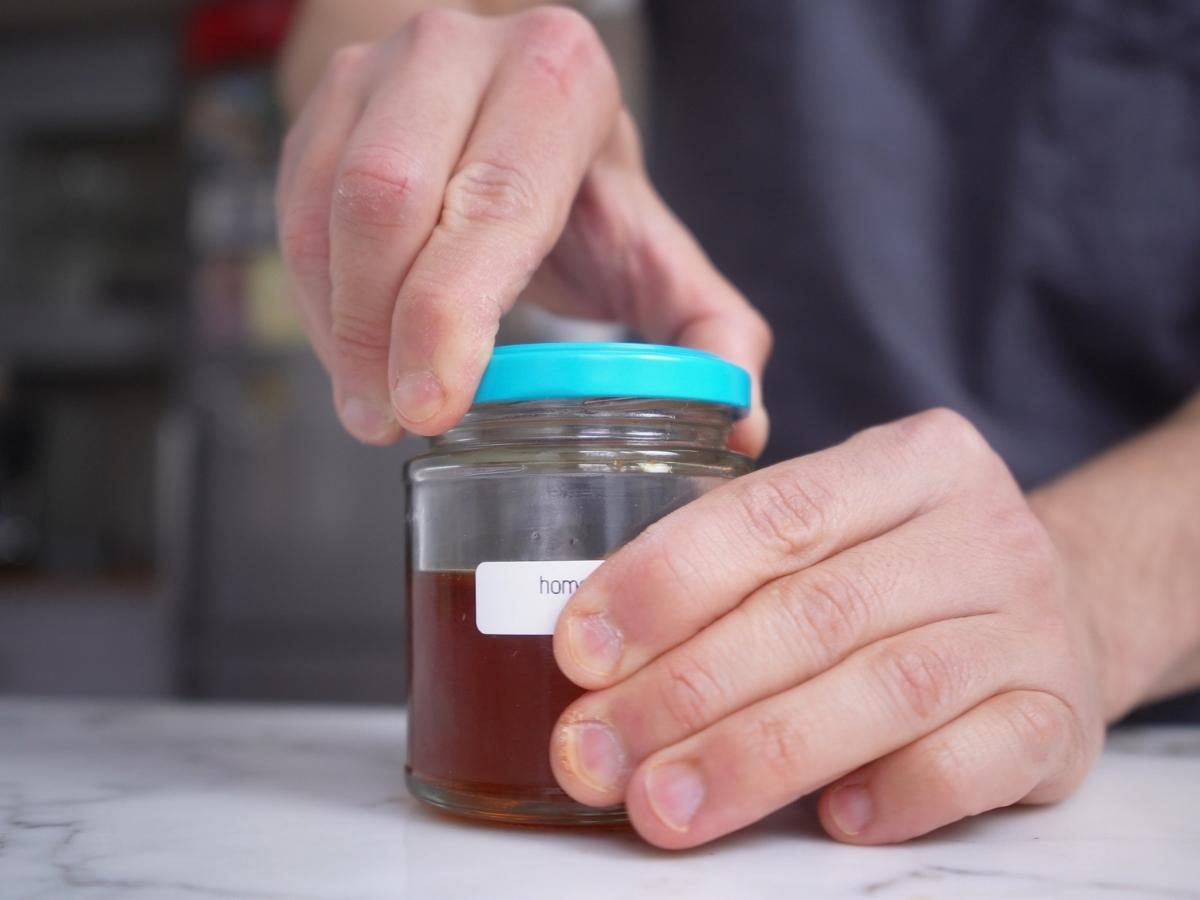
    i) Allow the homemade rayu to cool completely, then transfer it to a clean jar and seal with a lid. Congratulations, your rayu is ready to use. Because the aromatics have been strained out, it will keep well for up to 3 months in a cool, dry place.


    Tips for the Best Rayu

    • Keep the oil temperature gentle: The aromatics should slowly bubble rather than fry aggressively. This keeps the oil fragrant and prevents bitterness.
    • Use good sesame oil: Toasted sesame oil gives rayu its distinctive nutty aroma.
    • Strain the aromatics: Removing the garlic, ginger, and green onions helps extend the shelf life.

    Homemade Rayu Oil FAQs

    Is rayu the same as chili oil?

    Rayu is a type of chili oil made with sesame oil and Japanese aromatics. It tends to be lighter and more fragrant than many other chili oils.

    Is rayu very spicy?

    Rayu usually has a moderate level of heat. The spice level depends on the amount of chili used.

    What chili oil is used in ramen?

    Most ramen shops use rayu, a fragrant Japanese chili oil that adds heat and aroma to ramen broth.


    More Vegan Japanese Side Dishes
    • Eggplant agebitashi on a wooden tray garnished with grated daikon, spring onions and ginger
      Eggplant Agebitashi (Nasu Agebitashi)
    • Vegan fried chicken tofu piled on a small plate
      Vegan Fried Chicken
    • Beer and eggplant stir-fry in a shallow bowl garnished with spring onions
      Beer and Eggplant Stir-Fry (10 Minute Recipe)
    • Sticky tofu on a plate garnished with spring onions and pickled ginger
      Sticky Tofu: 10-Minute Recipe

    If you tried this Homemade Rayu Recipe or any other recipe on my blog, please leave a 🌟 star rating and let me know it went in the comments. I love hearing from you!

    📖 Recipe
    Homemade rayu Japanese chili oil in a jar

    Homemade Rayu (Japanese Ramen Chili Oil) Recipe

    Aaron Fukuyama
    This homemade rayu (Japanese ramen chili oil) is a fragrant, spicy condiment made by slowly infusing oil with garlic, ginger, and green onions, then pouring it over Japanese chili powder. It adds warmth, aroma, and gentle heat to ramen, dumplings, noodles, and rice bowls. Easy to make in under 30 minutes and keeps for months, this simple Japanese chili oil is a delicious way to elevate everyday meals.
    No ratings yet
    Print Recipe Pin Recipe
    Prep Time 10 minutes mins
    Cook Time 20 minutes mins
    Total Time 30 minutes mins
    Course Condiments
    Cuisine Japanese, vegan Japanese, vegetarian Japanese
    Servings 60 5ml drizzles
    Calories 41 kcal

    Equipment

    • Heavy-bottomed saucepan skillet, or wok are great options
    • Heatproof jug or bowl
    • Fine mesh sieve or strainer
    • Kitchen thermometer (optional but recommended)
    • Glass jar or bottle for storage

    Ingredients


    • 250 ml neutral oil such as sunflower, canola, or vegetable oil
    • 60 ml toasted sesame oil
    • 1 large garlic clove halved
    • 3 slices fresh ginger about ½ cm thick
    • 4 Green tops green onions scallions
    • 15 g Japanese ground red chili pepper ichimi togarashi
    • 1 teaspoon crushed red chili flakes

    Instructions
      cook mode 

    • Trim off the white root ends of the green onions so you are left with just the green tops. Peel the garlic and slice it in half lengthwise. Slice the ginger into roughly ½ cm slices.
    • Pour the neutral oil and toasted sesame oil into a saucepan, skillet, or wok. Heat the oil to 160°C (320°F).
    • Add the garlic, ginger, green onion tops, and crushed red chili flakes. Allow them to gently sizzle for about 20 minutes, infusing the oil with flavor. The aromatics should bubble gently rather than fry aggressively.
    • Meanwhile, add the ichimi togarashi to a heatproof jug or bowl. Stir in about 1 teaspoon of water until evenly dispersed. The mixture should resemble wet sand.
    • Carefully strain the hot oil through a fine sieve into the jug over the chili mixture. Pour while still hot so the chili powder blooms and releases its aroma.
    • Allow the rayu to cool completely, then transfer it to a clean jar and seal with a lid. Store in a cool, dry place for up to 3 months.

    Video

    https://youtu.be/DhZDzNAb-mQ

    Notes

    • Ichimi togarashi substitute: If you cannot find ichimi togarashi, crushed red pepper flakes make the best substitute. For a smoother chili oil, lightly grind them before using.
    • Keep the oil gentle: The aromatics should slowly bubble rather than fry aggressively. This prevents the garlic from burning and keeps the oil fragrant rather than bitter.
    • Strain the aromatics: Removing the garlic, ginger, and green onions helps keep the oil clear and extends the shelf life.
    • Storage: Because the aromatics are strained out, the rayu will keep for up to 3 months in a cool, dry place. Always use a clean spoon when serving.
    • Adjust the heat: Add a little more crushed chili flakes if you prefer a spicier chili oil.
    Nutrition

    Serving: 5gCalories: 41kcalCarbohydrates: 0.2gProtein: 0.1gFat: 5gSaturated Fat: 0.5gPolyunsaturated Fat: 1gMonounsaturated Fat: 3gSodium: 5mgPotassium: 8mgFiber: 0.1gSugar: 0.04gVitamin A: 92IUVitamin C: 0.2mgCalcium: 2mgIron: 0.1mg
    Tried this recipe?Let us know how it was!

    More Condiments

    • Miso walnut pesto spaghetti on a plate garnished with thyme
      Miso Pesto Pasta
    • Japanese sesame dressing in a bowl being stirred with a teaspoon
      Japanese Sesame Dressing
    • Teaspoon of vegan wasabi mayo over a small bowl
      Easy Wasabi Mayo recipe
    • Small bowl of creamy mayo being stirred with ground sesame seeds and tonkatsu sauce
      Tonkatsu Mayo

    Leave a Reply Cancel reply

    Your email address will not be published. Required fields are marked *

    Recipe Rating


    profile photo of Aaron (founder/recipe creator)

    Hi, I'm Aaron!

    Half Japanese and passionate about plant-based cooking. I'm Aaron Fukuyama - here to help you bring simple, delicious Japanese flavours into your own kitchen.

    More about me →

    Popular Recipes

    • Serving of tofu noodles in a patterned bowl
      Tofu Noodles: Quick 20 Minute Stir-fry
    • Yuzu cocktails collage poster
      Top 5 Yuzu Cocktails
    • Yuzu gin fizz served in an old-fashioned glass over ice with a fresh herb garnish
      Yuzu Gin Fizz | Vegan Japanese Pink Gin Fizz Cocktail
    • Yuzu ramen in a bowl
      Yuzu Ramen (Japanese Citrus Noodle Soup Recipe)
    • Yuzu gin sour in an old fashioned glass on a garden table
      Yuzu Gin Sour (Easy Japanese Gin Cocktail Recipe)
    • White dish with thinly sliced Japanese-style pink radish pickles in pickling liquid
      Pink Radish Pickles

    Trending Recipes

    • Homemade rayu Japanese chili oil in a jar
      Homemade Rayu (Japanese Ramen Chili Oil) Recipe
    • Vegan miso ramen in a bowl with toppings and chopsticks resting on the rim
      Vegan Miso Ramen - Quick 10 Minute Recipe
    • Vegan tofu recipes collage featuring agedashi tofu, sticky tofu, kake udon and tofu noodles
      Top 10 Vegan Tofu Recipes
    • Four Japanese eggplant recipes collage
      Top 6 Japanese Eggplant Recipes
    • Mabo nasu mapo eggplant served on a bed of white rice
      Mabo Nasu (Mapo Eggplant 麻婆茄子)
    • Vegan Japanese udon noodle recipes collage poster
      Our Favourite Vegan Udon Noodle Recipes

    Footer

    ↑ back to top

    About

    • Privacy Policy
    • Terms & Conditions
    • Accessibility Policy

    Newsletter

    • Sign up

    Contact

    • Contact
    • Services

    Copyright © 2026 Vegan Japanese. All rights reserved.

    Vegan Japanese
    Manage Consent
    To provide the best experiences, we use technologies like cookies to store and/or access device information. Consenting to these technologies will allow us to process data such as browsing behavior or unique IDs on this site. Not consenting or withdrawing consent, may adversely affect certain features and functions.
    Functional Always active
    The technical storage or access is strictly necessary for the legitimate purpose of enabling the use of a specific service explicitly requested by the subscriber or user, or for the sole purpose of carrying out the transmission of a communication over an electronic communications network.
    Preferences
    The technical storage or access is necessary for the legitimate purpose of storing preferences that are not requested by the subscriber or user.
    Statistics
    The technical storage or access that is used exclusively for statistical purposes. The technical storage or access that is used exclusively for anonymous statistical purposes. Without a subpoena, voluntary compliance on the part of your Internet Service Provider, or additional records from a third party, information stored or retrieved for this purpose alone cannot usually be used to identify you.
    Marketing
    The technical storage or access is required to create user profiles to send advertising, or to track the user on a website or across several websites for similar marketing purposes.
    • Manage options
    • Manage services
    • Manage {vendor_count} vendors
    • Read more about these purposes
    View preferences
    • {title}
    • {title}
    • {title}

    Rate This Recipe

    Your vote:


    A rating is required
    A name is required
    An email is required

    Homemade Rayu (Japanese Ramen Chili Oil) Recipe

    Homemade Rayu (Japanese Ramen Chili Oil) Recipe

    Ingredients

    • 250 ml neutral oil (such as sunflower, canola, or vegetable oil)
    • 60 ml toasted sesame oil
    • 1 large garlic clove (halved)
    • 3 slices fresh ginger (about ½ cm thick)
    • 4 Green tops green onions (scallions)
    • 15 g Japanese ground red chili pepper (ichimi togarashi)
    • 1 tsp crushed red chili flakes

    Equipment

    • Heavy-bottomed saucepan skillet, or wok are great options
    • Heatproof jug or bowl
    • Fine mesh sieve or strainer
    • Kitchen thermometer (optional but recommended)
    • Glass jar or bottle for storage
    1
    Trim off the white root ends of the green onions so you are left with just the green tops. Peel the garlic and slice it in half lengthwise. Slice the ginger into roughly ½ cm slices.
    2
    Pour the neutral oil and toasted sesame oil into a saucepan, skillet, or wok. Heat the oil to 160°C (320°F).
    3
    Add the garlic, ginger, green onion tops, and crushed red chili flakes. Allow them to gently sizzle for about 20 minutes, infusing the oil with flavor. The aromatics should bubble gently rather than fry aggressively.
    4
    Meanwhile, add the ichimi togarashi to a heatproof jug or bowl. Stir in about 1 teaspoon of water until evenly dispersed. The mixture should resemble wet sand.
    5
    Carefully strain the hot oil through a fine sieve into the jug over the chili mixture. Pour while still hot so the chili powder blooms and releases its aroma.
    6
    Allow the rayu to cool completely, then transfer it to a clean jar and seal with a lid. Store in a cool, dry place for up to 3 months.

    Hope you enjoyed cooking this recipe!

    Please rate this recipe to help others find it.

    step 1 of 6