
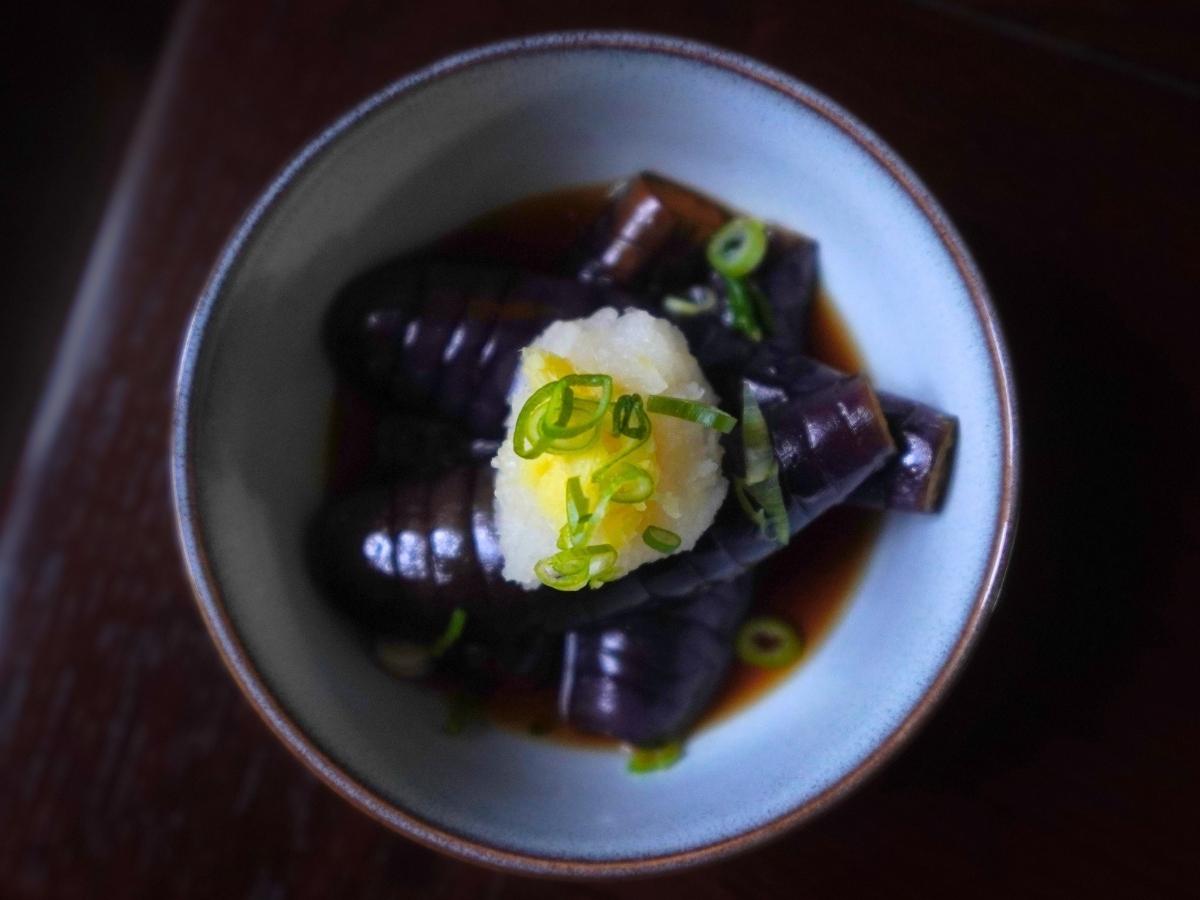
Eggplant Agebitashi, also known as Nasu Agebitashi (茄子の揚げ浸し), is a classic Japanese dish where fried eggplant is soaked in a savoury dashi marinade until it becomes silky, juicy, and packed with umami.
I'll often serve this dish alongside some steamed Japanese rice or sansai gohan (山菜ご飯), a nice bowl of vegan miso soup and a yuzu gin fizz.

Eggplant Agebitashi – At a Glance
Ask AI about this recipe
Summaries, substitutions, scaling, allergen checks — or save this site to your AI for future recipe ideas.
AI answers can be wrong. Treat them as suggestions, not as a substitute for the recipe above.
This simple Japanese eggplant recipe is often served in izakaya restaurants as a small appetizer or side dish. The eggplant is lightly fried, then immersed in a soy, mirin, and dashi broth that slowly infuses every bite with flavour.
The result is soft, delicate eggplant with a refreshing topping of grated daikon radish, ginger, and sliced green onions. It is usually served chilled or at room temperature, which makes it a perfect make-ahead dish for warm weather meals or Japanese-style spreads.
Jump to:
What Is Eggplant Agebitashi?
Eggplant Agebitashi is a traditional Japanese preparation where vegetables are fried and then soaked in a seasoned broth.
The name comes from two Japanese cooking terms.
Age means fried.
Bitashi means soaked or immersed.
Together they describe the technique of frying ingredients and allowing them to absorb a savoury marinade.
Why You'll Love This Recipe
- Simple Japanese eggplant recipe with deep umami flavour
- Perfect make-ahead appetizer or side dish
- Traditionally served chilled or at room temperature
- A great introduction to classic Japanese vegetable dishes
- Naturally vegan and plant-based
Ingredients for Eggplant Agebitashi
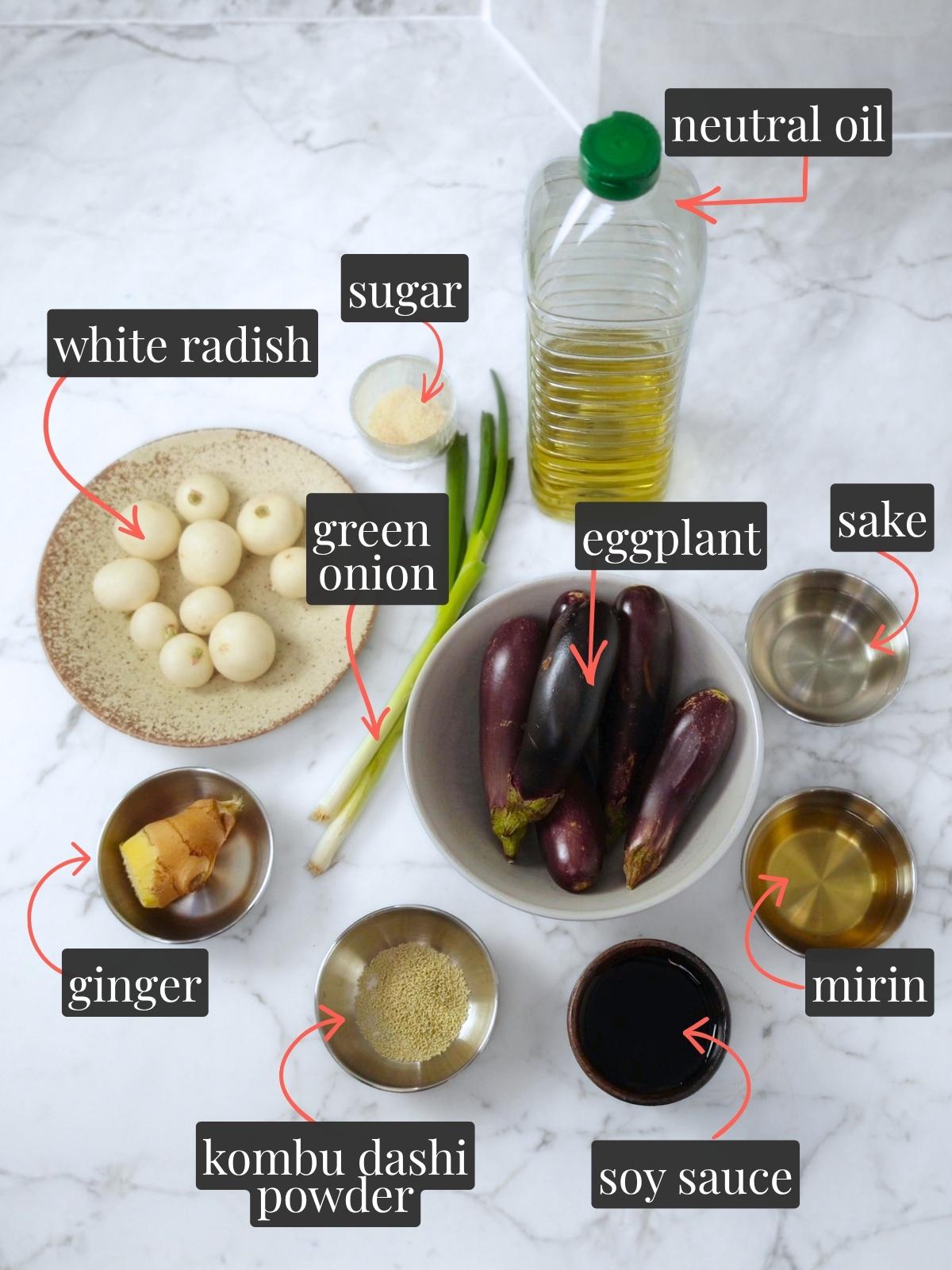
This dish uses a few classic Japanese pantry ingredients that create its signature umami flavour. If you are new to Japanese cooking, you can learn more about these staples in my guide to Japanese essential ingredients.
Vegan Dashi
Dashi is the savoury broth that forms the base of the marinade. You can use a simple vegan dashi made with kombu and shiitake mushrooms, prepared ahead of time. If you are short on time, you can also make a quick dashi using water and kombu dashi powder.
Mirin
Mirin is a lightly sweet Japanese cooking wine that balances the salty soy sauce and adds depth to the marinade.
Sake
Sake adds subtle aroma and rounds out the flavour of the broth.
Soy Sauce
Japanese soy sauce provides saltiness and deep umami to the marinade. Here I've used classic Kikkoman, which is widely available.
How to Make Eggplant Agebitashi:
1. Make the Marinade


i) Place the vegan dashi in a small saucepan over medium to high heat. If using instant powder, heat the water first and then add the kombu dashi powder. If you are using premade vegan dashi, simply warm it gently.
ii) Add the mirin, sake, soy sauce, and sugar. Bring the mixture to a gentle simmer and stir until the sugar dissolves. Let it simmer for a few minutes to allow the flavours to combine. Remove from the heat and set aside.
This savoury broth will become the marinade that soaks into the fried eggplant.
2. Prepare the Eggplant


i) Trim the tops and bottoms of the eggplant and slice each one in half lengthwise. If using larger eggplants, cut them so the pieces are roughly 10 cm long and about 4 cm thick.
ii) Lightly score the skin side of each piece using shallow cuts spaced about 2 to 3 mm apart.

Tip: You can score straight lines or create a crisscross pattern. Just avoid cutting all the way through. Scoring helps the eggplant absorb the marinade.
3. Deep Fry the Eggplant


i) Heat the oil until it reaches about 320°F (160°C). Gently lower the eggplant pieces into the oil and fry until they become tender and lightly golden.
Tip: Avoid overcrowding the pan. Frying in batches keeps the oil temperature stable.


ii) Remove the eggplant and drain on a wire rack or paper towel. Repeat until all pieces are cooked.
4. Marinate the Eggplant

i) Place the fried eggplant in a medium glass container or tupperware. Pour the warm marinade over the eggplant so that most pieces are submerged. Let the eggplant soak for at least one hour, or overnight in the refrigerator for deeper flavour.
Tip: Eggplant agebitashi can be served cold or at room temperature.
5. Prepare toppings


i) Grate the radish using a ceramic grater or the fine side of a box grater. If using regular white radish, trim the ends first. If pink radishes are your only option, peeling them helps mimic the look of daikon even though the flavour is slightly more peppery.


ii) Peel and grate the ginger same as the radish. Then trim any wilted outer leaves from the green onions and slice them into thin discs.
6. Assemble the Dish


i) Place three to four eggplant pieces into a small bowl. Spoon over some marinade so the eggplant sits in a shallow pool of broth without being completely submerged.
ii) Top with a small mound of grated radish, a pinch of grated ginger, and a sprinkle of sliced green onions. Serve as part of a larger Japanese-style meal.

Hint: Any left over marinade can be used for marinating tofu or in ramen soups as a starter broth. Do not waster this precious umami delight!

Love this recipe?
Check out my other Japanese eggplant recipes for more ideas.
Expert Tips for Eggplant
Score the eggplant skin
This helps the marinade penetrate and improves texture.
Fry at moderate heat
Around 320°F (160°C) allows the eggplant to soften without burning.
Marinate while warm
Warm eggplant absorbs the broth much more effectively.
Use Japanese eggplant if possible
Japanese varieties are more tender and absorb the marinade better.
How to Serve
Eggplant agebitashi is usually served as a small Japanese appetizer or side dish.
It pairs beautifully with a combination of:
Because it is served chilled or at room temperature, it also works well as a summer appetizer.
Storage
Store eggplant agebitashi in an airtight container in the refrigerator. It keeps well for up to three days. The flavour actually improves after a day as the eggplant continues to absorb the marinade.
Eggplant Agebitashi FAQs
Nasu Agebitashi is the Japanese name for eggplant agebitashi.
"Nasu" means eggplant, while "agebitashi" refers to the cooking technique of frying and soaking ingredients in a seasoned broth.
Yes. In fact this dish often tastes better after resting in the marinade for several hours or overnight.
Yes. It is traditionally served chilled or at room temperature rather than hot.
Yes. Italian eggplant works well if cut into smaller pieces.
Japanese eggplant tends to have a softer texture and slightly sweeter flavour, which makes it ideal for this dish.
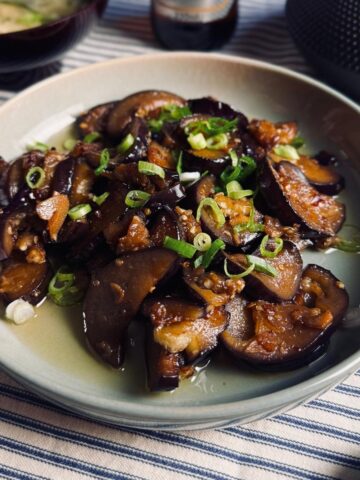
More Vegan Japanese Side Dishes



If you tried this Eggplant Agebitashi recipe or any other recipe on my blog, please leave a 🌟 star rating and let me know it went in the comments. I love hearing from you!
📖 Recipe
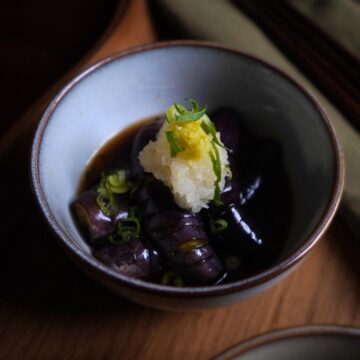
Eggplant Agebitashi (Nasu Agebitashi)
Ingredients
Fried Eggplant
- 250 g Japanese or baby eggplants
- 250 ml neutral oil for deep frying
Toppings
- 100 g daikon radish or white or pink radish
- 2 green onions scallions
- 3 cm fresh ginger
Broth / Marinade
- 250 ml vegan dashi
- 3 tablespoon mirin
- 3 tablespoon sake
- 3 tablespoon soy sauce
- 15 g sugar
Instructions cook mode
- Make the marinade: Place the vegan dashi in a small saucepan over medium heat. Add the mirin, sake, soy sauce, and sugar. Bring to a gentle simmer and stir until the sugar has dissolved. Simmer for a few minutes, then remove from the heat and set aside.
- Prepare the eggplant: Trim the tops and bottoms of the eggplants and slice them in half lengthwise. If using larger eggplants, cut them into pieces about 4 inches long and 1½ inches thick.
- Score the eggplant: Lightly score the skin side of each piece with shallow cuts about ⅛ inch (2-3 mm) apart. This helps the eggplant absorb the marinade.
- Heat the oil: Pour the neutral oil into a deep pan and heat to 160°C (320°F).
- Fry the eggplant: Carefully add the eggplant pieces to the oil and fry until tender and lightly golden. Do not overcrowd the pan. Fry in batches if needed.
- Drain the eggplant: Remove the fried eggplant and drain on a wire rack or paper towel.
- Marinate the eggplant: Transfer the eggplant to a medium glass container and pour the marinade over the top. Make sure most pieces are immersed in the broth.
- Let it soak: Allow the eggplant to marinate for at least 1 hour, or refrigerate overnight for deeper flavour.
- Prepare the toppings: Grate the daikon radish and ginger. Thinly slice the green onions into fine discs.
- Assemble the dish: Place 3-4 pieces of eggplant into a small bowl. Spoon over some marinade so the eggplant sits in a shallow pool of broth.
- Add the toppings: Top with a small mound of grated radish, a pinch of grated ginger, and a sprinkle of sliced green onions.
- Serve: Serve eggplant agebitashi chilled or at room temperature as a Japanese appetizer or side dish.
Notes
Lightly scoring the skin helps the eggplant cook evenly and allows the marinade to soak in more effectively. Do not overcrowd the pan
Fry the eggplant in batches if necessary. Overcrowding lowers the oil temperature and can make the eggplant greasy instead of tender. Marinate while the eggplant is warm
Adding the marinade while the eggplant is still warm helps it absorb more flavour. This dish is traditionally served chilled
Eggplant agebitashi is often served cold or at room temperature rather than hot. It is a refreshing Japanese appetizer that works well as part of a larger meal. Leftover marinade is liquid gold
Do not discard it. It can be used to marinate tofu, season noodle bowls, or as a base for ramen broth. Make it ahead of time
This dish actually tastes better after resting for a few hours. The eggplant continues absorbing the marinade as it sits.




Ellie Rose says
Lovely & very tasty recipe. I tried this with Italian eggplant and it worked out great!
Aaron Fukuyama says
thanks Ellie! Glad it worked out for you. Much appreciated!