
Rich, savory, and deeply comforting, this vegan miso ramen is my most-made lunch, and for good reason. Ten minutes and you've got a proper bowl. All the umami depth of the classic, none of the pork or the hour-long simmer. A drizzle of homemade rayu takes it to another level entirely. When I want something proper satisfying but don't have time to think about it, this is the one.
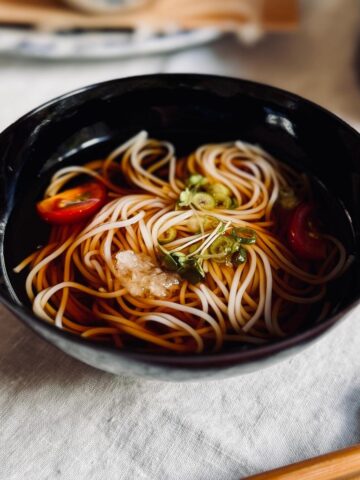
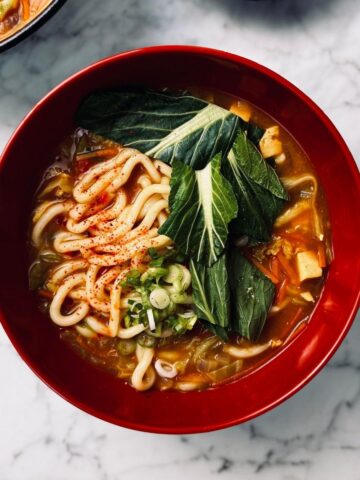
If you're on a ramen kick, yuzu ramen, shio ramen, and tantanmen are all worth exploring. Fancy something lighter? Vegan somen and kake udon are two of my other go-tos.

Vegan Miso Ramen – At a Glance
Ask AI about this recipe
Summaries, substitutions, scaling, allergen checks — or save this site to your AI for future recipe ideas.
AI answers can be wrong. Treat them as suggestions, not as a substitute for the recipe above.
This bowl absolutely sings with a nice cold can of Japanese beer, something crisp and clean to cut through that rich, savory miso broth. If beer is not your thing, a little sake fizz on the side feels wonderfully grown up and brings out all that deep, toasty umami.
Jump to:
What Is Miso Ramen?
Ramen is a Japanese noodle soup made with wheat noodles served in a deeply flavored broth.
Miso ramen is a regional style that became famous in Sapporo. The broth is enriched with Miso, which gives it body, saltiness, and a slightly sweet depth.
Traditional versions often include pork-based stock. This recipe keeps all the comfort but uses vegan dashi and plant-based ingredients.

Why This Vegan Miso Ramen Works
Most ramen recipes require long-simmered broths. This one relies on:
- Vegan dashi for instant umami
- Miso paste for richness
- Soy sauce for salt balance
- Toasted sesame oil for aroma
- A touch of sugar to round everything out
The result tastes layered and deeply comforting, never rushed. And the best part? I am going to show you just how quick and easy it is to create a delicious, almost-instant bowl of vegan miso ramen in just 10 minutes. Scroll down for step-by-step instructions, plus a few tips and tricks to make it absolutely spot on every time.
Ingredients
Noodles
- Ramen noodles, dry or fresh
Soup Stock
- Vegan dashi or water with kombu dashi powder
- Celery salt
- Ground ginger powder
- Vegetable stock powder
- Miso paste
- Sugar
- Soy sauce
- Toasted sesame oil
Toppings
- Silken tofu
- Spring onions
- Watercress
- La-yu chili oil
For quantities please see the recipe card.
Substitutions
| Item | Swap out |
|---|---|
| Kombu dashi powder | Steep a piece of dried kombu in hot water for 10 minutes for a quick homemade dashi. Vegetable stock works in a pinch, though the flavor will be slightly less traditional |
| White miso paste | Red miso for a deeper, saltier broth (white gives a lighter, slightly sweeter one) |
| Silken tofu | Firm tofu, plain or pan-fried first for extra texture |
| Soy sauce | Tamari, plus gluten free ramen noodles, for a gluten free version |
How to Make Vegan Miso Ramen
1. Boil the Noodle Water:

Start by bringing a large pot with around 2 liters of water to a rolling boil. Getting this on first means your noodles will be ready to cook exactly when you need them, keeping everything moving quickly.
2. Prepare the Toppings

i) While the water heats, prepare your toppings. Trim away any tired outer layers from the spring onions, give them a rinse, and slice them into thin, delicate discs.

ii) Wash and Roughly chop the watercress so it's ready to scatter over the finished bowl.

i) Carefully remove the silken tofu from its packaging, pat it dry with paper towel

ii) Slice into pieces about 1 to 1.5 cm thick. Set everything aside so assembly is effortless later on.
3. Build your broth:

i) Pour 1 liter of water into a saucepan and place it over high heat. As it comes up to a gentle simmer, add the kombu dashi powder if using, celery salt, ground ginger, vegetable stock powder, miso paste, sugar, soy sauce, and toasted sesame oil.

ii) Whisk thoroughly until everything is fully dissolved and the broth looks smooth and glossy. Once it begins to simmer, lower the heat to keep it warm, but do not let it boil, as boiling can dull the flavor of the miso.
3. Drain noodles:

i) By now your noodle water should be boiling. Add the ramen noodles and cook according to the package instructions.

ii) As soon as they are done, drain them and quickly divide between two bowls.
Top Tip: Undercook your noodles so that they have plenty of bite left in them - they will continue to cook in the broth.
4. Plate up:

i) Give the broth one final stir, then ladle it generously over the noodles. Arrange the slices of silken tofu on top, scatter over the spring onions and watercress.

ii) Finish with a drizzle of la-yu chili oil. Take a brief moment to appreciate the aroma rising from the bowl before diving in for that first satisfying slurp.
Bonus fact: In Japan, slurping your noodles is practically encouraged. It shows you are enjoying every last mouthful and is all part of proper noodle etiquette. So go on, lean over your bowl and give it a proper slurp, it is half the fun.
Pro Tips for the Best Vegan Miso Ramen
- Do not boil the miso. Once the broth reaches a simmer, lower the heat. Boiling can flatten the delicate, fermented flavor of the miso.
- Dissolve the miso properly. Whisk thoroughly so there are no clumps. A smooth broth feels more luxurious and balanced.
- Season at the end. Different miso pastes vary in saltiness. Taste the broth before serving and adjust with a splash of soy sauce if needed.
- Undercook the noodles until al dente. Overcooked ramen turns soft quickly once submerged in broth. Drain immediately and serve straight away.
- Warm your bowls. If you have time, pour a little hot water into your bowls while the noodles cook, then discard before assembling. It keeps the ramen hotter for longer.
- Add chili oil last. Drizzle la-yu right at the end so you keep that fragrant chili aroma on top.
Variations
Not quite as speedy, but absolutely worth it if you can spare a few more saucy minutes in the kitchen:
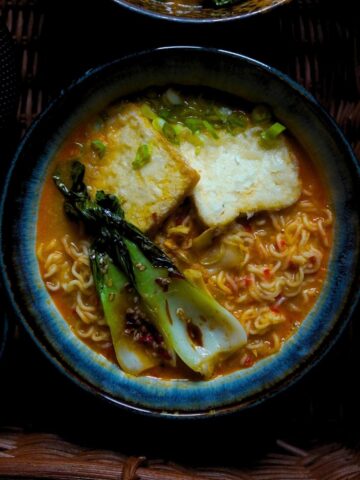
- Vegan Spicy Ramen - If you like things with a proper kick, this one brings the heat. A deeper, richer broth with layers of spice that build beautifully with every slurp.
- Shio Ramen - Clean, delicate, and beautifully balanced. This salt-based ramen is lighter in style but still packed with umami and comfort.
- Yuzu Ramen - Bright, citrusy, and refreshing. The yuzu lifts the broth with a fragrant zing that makes the whole bowl feel vibrant and a little bit special.
Each one takes a little more time than this quick 10 minute version, but they are perfect when you want to slow down and really lean into the ritual of ramen.
Topping Notes
Watercress is not traditional in miso ramen, but it works beautifully here. Its peppery freshness cuts through the richness of the broth.
If you prefer a more classic direction, you could swap for:
- Corn
- Bean sprouts
- Bamboo shoots
- Sautéed mushrooms
Vegan Miso Ramen FAQs
Traditional miso ramen often contains pork-based broth. This version is fully vegan, using plant-based dashi and no animal products.
Yes. You can simmer a piece of kombu in hot water for 10 minutes to create a simple dashi base.
White miso creates a lighter, slightly sweeter broth. Red miso gives deeper, saltier intensity. Both work here.
Use gluten free ramen noodles and tamari instead of soy sauce.
More Vegan Japanese Noodle Dishes


If you tried this 10 minute Miso Ramen Recipe or any other recipe on my blog, please leave a 🌟 star rating and let me know it went in the comments. I love hearing from you!
Related
Looking for other recipes like this? Try these:

📖 Recipe

Vegan Miso Ramen, Quick 10 Minute Recipe
Equipment
- Large pot for boiling the noodles
- Medium saucepan for the broth for the broth
- Whisk to fully dissolve the miso and seasonings
- Sharp knife and chopping board for preparing toppings
- ladle for serving the broth
- 2 Deep ramen bowls
Ingredients
Noodles
- 200 g dry ramen noodles or vacuum packed/frozen ramen noodles (you'll need double your dry quantity)
Soup
- 1 L vegan dashi homemade or 500ml water + 1 teaspoon kombu dashi powder per person
- ½ teaspoon celery salt
- ½ teaspoon ground ginger
- 1 teaspoon vegetable stock powder
- 1 tablespoon miso paste
- 1½ teaspoons sugar
- 1 tablespoon soy sauce
- 1 tablespoon toasted sesame oil
Toppings
- 200 g 200 g silken tofu
- 2 spring onions
- 2 handfulls watercress
- 2 teaspoon La-yu chili oil or to taste
Instructions cook mode
- Bring a large pot with about 2 liters (8 cups) of water to a rolling boil for the noodles.
- While the water heats, prepare the toppings. Slice the spring onions into thin rounds. Roughly chop the watercress. Carefully remove the silken tofu from its packaging, pat dry, and slice into ½-inch (1-1.5 cm) thick pieces.
- In a medium saucepan, add 4 cups (1 liter) of water over high heat. Add the kombu dashi powder if using, celery salt, ground ginger, vegetable stock powder, miso paste, sugar, soy sauce, and toasted sesame oil. Whisk until fully dissolved. Bring to a gentle simmer, then reduce heat and keep warm. Do not boil.
- Cook the ramen noodles according to package instructions until just al dente. Drain immediately and divide between two bowls.
- Stir the broth, then ladle evenly over the noodles. Top with sliced tofu, spring onions, watercress, and a drizzle of la-yu chili oil. Serve immediately.
Notes
Use traditional wheat ramen noodles if possible, either fresh or dried. Fresh noodles give the best texture, but good-quality dried ramen works perfectly for this quick version. Avoid instant ramen packets with seasoning sachets. Miso choice:
White miso creates a lighter, slightly sweeter broth. Red miso gives a deeper, saltier flavor. Taste and adjust soy sauce as needed. Do not boil the broth:
Once the miso is added, keep the broth at a gentle simmer. Boiling can dull the flavor. Salt adjustment:
Miso and soy sauce vary in saltiness. Always taste the broth before serving and adjust if needed. Serve immediately:
Ramen noodles continue to soften in hot broth. Assemble and serve straight away for the best texture.


Georgie says
Took me a bit longer than 10 minutes but now that I know what I'm doing I think next time it'll be closer to the time. Tasted great, any other toppings you think work the best?