
"I want curry but I'm in the mood for noods…" Look no further. Curry udon brings the best of both together: thick, chewy noodles in a rich, glossy Japanese curry broth with tofu and fresh veg. Milder than Indian or Thai, made with Japanese curry roux dissolved into a silky, slurpable soup. Serve with pink pickled ginger.
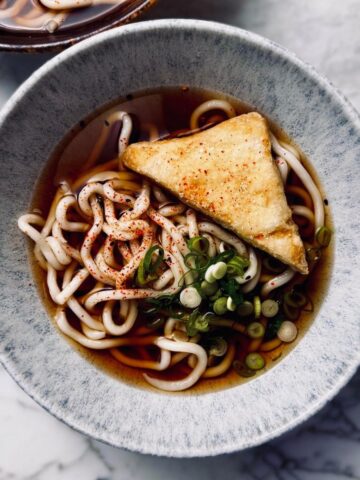
For something lighter, try my kake udon or kitsune udon.
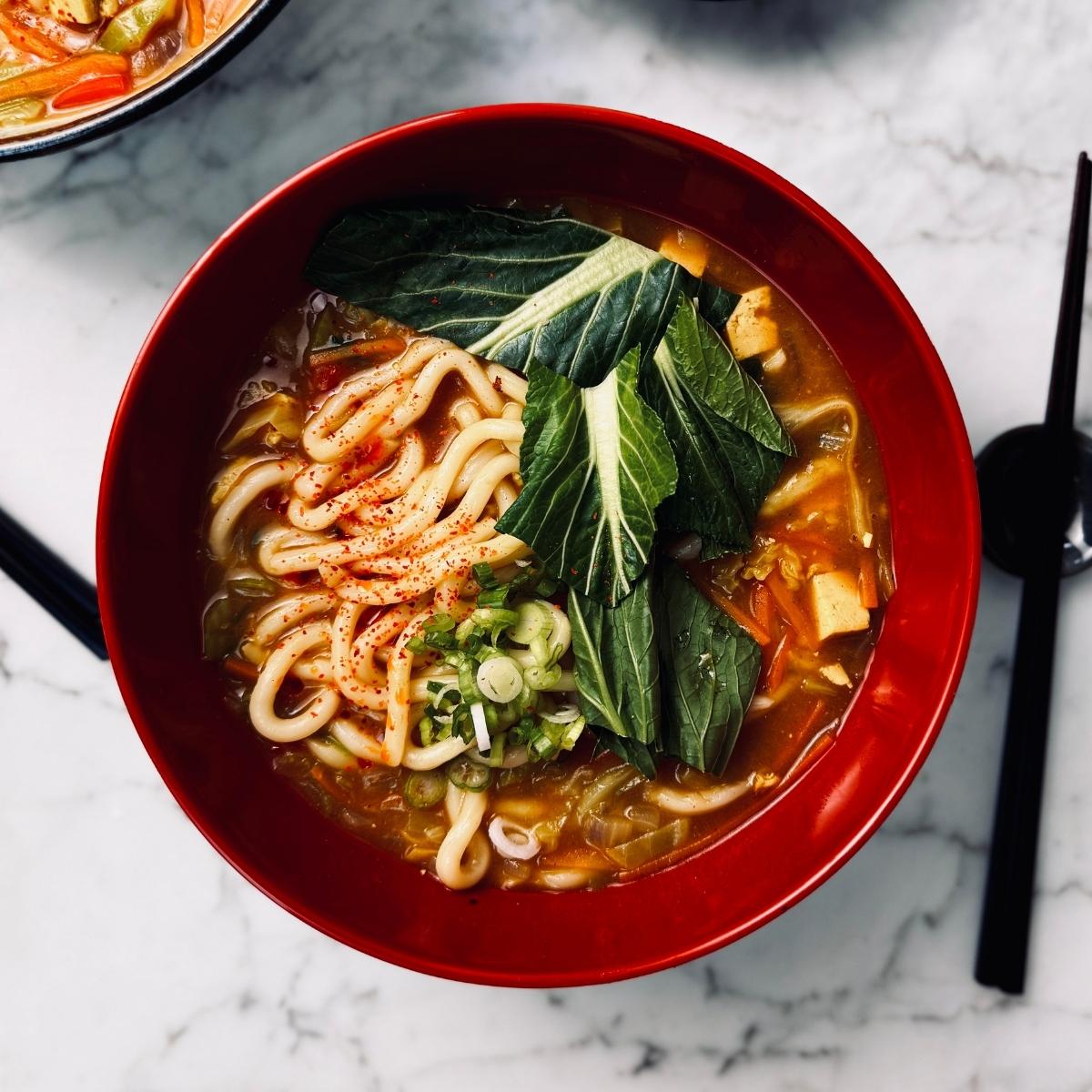
Curry Udon – At a Glance
Ask AI about this recipe
Summaries, substitutions, scaling, allergen checks — or save this site to your AI for future recipe ideas.
AI answers can be wrong. Treat them as suggestions, not as a substitute for the recipe above.
Why You'll Love Curry Udon
- They're versatile: go ahead and add your favourite veg or protein to make it your own.
- Quick and hearty: ready in under 30 minutes. Perfect for busy weeknights when you want something fast but still full of flavour.
- Family-friendly: Japanese curry is milder and slightly sweeter than Indian or Thai curries, making it perfect for kids and spice-shy eaters.
- Vegan-friendly: With kombu-based dashi and a plant-based curry roux, this dish is easily adapted for a fully vegan version.
- Comforting: Thick udon noodles soak up the silky curry broth, making every bite hearty, warming, and soothing.

What to Serve with Curry Udon
This dish is hearty enough to enjoy on its own, but if you want to make it feel like a proper Japanese-style spread, here are a few simple sides and sips that pair beautifully with curry udon:
- yasai gyoza: Pan-fried vegetable gyoza add a crispy, savoury bite alongside your bowl.
- A simple green salad dressed in Japanese sesame seed dressing balances the richness of the curry broth.
- Edamame beans: Steamed and sprinkled with sea salt, these little pods are the perfect protein-packed nibble.
- Pink sushi ginger - Sharp, crunchy pickles cut through the curry and refresh your palate between slurps.
- Japanese beer or sake - A cold Asahi or Sapporo, or a crisp chilled sake, makes the perfect match (you can also check out our full guide on our favorite japanese beers if you'd like to explore more).
Jump to:
- Curry Udon – At a Glance
- Why You'll Love Curry Udon
- What to Serve with Curry Udon
- Ingredients
- How to Make Curry Udon
- Substitutions & Swaps
- Make It Your Own
- Equipment You'll Need
- Storage & Leftovers
- Top Tips for Perfect Curry Udon
- Curry Udon FAQs
- Other Popular Vegan Japanese Mains
- Vegan Japanese Side Dishes
- 📖 Recipe
Ingredients

For quantitites take a look at the recipe card. For an overview see below:
- Udon noodles (fresh or dried)
- Oil
- Dashi stock (homemade vegan dashi
or instant) - Japanese curry roux (such as S&B Golden Curry)
- Tofu
- Carrot
- Onion
- Garlic
- Pointed cabbage
- Red pepper
- Leafy greens (such as choi sum)
- Salt
- Black pepper
- Spring onions
- Shichimi togarashi (japanese seven spice - optional)
How to Make Curry Udon
Here's the game plan for our curry udon:
- Chop and prep all your veg and tofu.
- Fry off onions, tofu, and veggies until golden.
- Add dashi and curry roux to make that glossy curry broth.
- Cook the noodles - either straight in the broth (fresh) or parboil first (dried).
- Serve it up hot with a sprinkle of spring onions.
Dinner, done in under 30 minutes. Scroll down for the step-by-step and you'll be whipping up a steaming bowl of curry udon before you know it.
1. Prep the veggies


i) Trim, peel, and dice the onion. Remove the root and outer skin, slice in half, then dice into small, even pieces so it cooks down evenly. Slice the garlic into thin discs. Peel, trim the root, and cut into fine rounds that will soften in the oil and give a gentle, sweet flavour to the broth.


ii) Peel, top, and tail the carrot. Remove the outer skin with a peeler, trim off both ends, and lay the carrot flat on the board. Slice it lengthways into thin, flat strips, then stack a few together and cut them into slim batons.


iii) Grab your cabbage quarter and cut out the tough central core, then lay the leaves flat and slice across into even strips. Thin, uniform slices cook quickly and soak up the curry broth while still keeping a little crunch. Then trim the spring onion, discarding any dull stalks, and slice into thin discs.


iv) Roughly chop the choi sum leaves into 2-inch pieces. Cutting them larger keeps some texture and ensures the greens wilt gently in the hot broth. Now, dice the red pepper into 1cm cubes. Remove the core and seeds first, then cut into even pieces so they cook quickly and add bright sweetness and colour to the curry.


v) Cube the tofu into 1-inch pieces. Slice the block into thick slabs, stack them neatly, then cut lengthways and crossways to form even cubes. Keeping the pieces uniform helps them cook evenly and crisp up on all sides when fried, while still holding their shape in the curry broth.
2. Start frying


i) Add oil to a medium saucepan and place over medium heat. Once the oil moves easily around the pan, add the onion and garlic and fry until golden (2-3 minutes). Then tip in the tofu cubes and let them sizzle, crisping the edges evenly for another 2-3 minutes. Season with a generous pinch of salt and pepper.

ii) Add the carrot, cabbage, and red pepper. Cook until they take on some colour and become glossy, seasoning again with salt and pepper. Keep things moving in the pan and sizzle for 2-3 minutes.
3. Build the curry broth


i) Pour in the dashi and add the curry blocks. Bring the pan to a gentle simmer and stir steadily as the blocks dissolve. They'll melt into the stock, thickening it into a smooth, glossy broth with a rich curry aroma.

ii) You're aiming for a sauce like a thin gravy or thickened soup. Taste and adjust the seasoning as needed. Lower the heat and stir often to stop it catching on the bottom of the pan and burning.
4. Cook the noodles


i) For fresh udon (vacuum-packed or frozen): Add straight into the broth and stir gently until the noodles loosen and separate.
Tip: If using dried udon: Boil 2 minutes less than the packet instructions. Rinse thoroughly under cold water to remove starch, shake off excess water, then add to the broth to reheat for a couple of minutes before serving.
5. Plate up

Divide the noodles and curry broth evenly between serving bowls. Finish with a garnish of sliced spring onion and shichimi togarashi. Voila! A steaming bowl of curry udon, the don of all udons!

Love this recipe?
Check out my other vegan udon noodle recipes for more ideas.
Substitutions & Swaps
Can't find everything on the list? No worries. Here are some easy alternatives for making curry udon with what you've got.
- Dashi stock
Use a good vegetable stock if dashi isn't handy. For a more authentic vegan option, make kombu and shiitake dashi at home.
- Japanese curry roux blocks
Try a mix of mild curry powder, flour, soy sauce, and a pinch of sugar as a DIY version. Alternatively, use a mild curry paste thinned with stock.
- Tofu
Replace with seitan or quorn for a meatier bite. Sautéed mushrooms also add great depth and texture.
- Vegetables
Switch choi sum for pak choi, spinach, or kale. Courgette, aubergine, or broccoli can stand in for red pepper or cabbage.
- Garnish
If you don't have spring onions, chives or finely sliced leeks will bring a similar freshness.

Make It Your Own
Once you've nailed the basics, try playing around with these simple twists to make your bowl of curry udon suit your taste.
- Turn up the heat
Add chilli oil, fresh red chilli, or a sprinkle of shichimi togarashi for a spicier broth.
- Add a crunch
Top with crispy tempura vegetables or fried crispy shallots for texture.
- Mix up the protein
Swap tofu for pan-fried seitan strips, marinated quorn, or soya mince.
- Make it a feast
Serve with sides like gyoza, edamame beans, or a cold Japanese beer for the full izakaya experience.
Equipment You'll Need
- Chopsticks or noodle tongs: Helpful for stirring and separating the noodles in the broth.
- Medium saucepan: For frying the vegetables, simmering the broth, and cooking the noodles together.
- Sharp knife: To prep the vegetables and tofu cleanly and evenly.
- Cutting board: A sturdy surface for chopping onion, cabbage, and tofu.
- Wooden spoon or silicone spatula: For stirring the broth and preventing the curry from sticking.
- Measuring cups and spoons: To portion stock, oil, and seasoning accurately.
- Strainer or colander: Useful if you are cooking dried udon, for draining and rinsing the noodles.
- Serving bowls: Wide and deep enough to hold broth, noodles, and garnishes.

Storage & Leftovers
- Fridge: Store any leftover curry udon in an airtight container for up to 2 days. Keep the noodles and broth separate if you can, as the noodles will continue to soak up liquid and may become too soft.
- Freezer: The curry broth freezes well for up to 1 month. Defrost overnight in the fridge and reheat gently on the hob. Udon noodles are best cooked fresh, so freeze the broth only and add fresh noodles when reheating.
- Reheating: Warm the broth in a saucepan over medium heat until piping hot. If the sauce has thickened, loosen it with a splash of water or stock. Add the noodles and heat through just before serving.
Top Tips for Perfect Curry Udon
1. Keep stirring the curry blocks. They can sink and catch at the bottom, so stir gently until they're fully dissolved and the broth is smooth.
2. Undercook dried udon slightly. Shaving a couple of minutes off the cooking time stops them going mushy when they're reheated in the curry broth.
3. Don't overcrowd the pan. Give your tofu and veg space to colour properly. This adds flavour and prevents steaming.
4. Taste as you go. Japanese curry roux blocks vary in saltiness and spice, so adjust the broth to your liking before serving.
5. Garnish last minute. Fresh spring onion and leafy greens should be added at the very end so they stay bright and crisp.
Curry Udon FAQs
Curry udon noodles are a Japanese dish made with thick, chewy udon served in a curry-flavoured broth. The curry is made using Japanese curry roux, which gives it a mild, slightly sweet flavour and a glossy, gravy-like texture.
They can be. Use kombu and shiitake dashi instead of fish-based stock, and choose a vegan curry roux (many Japanese brands contain milk or meat extracts). Swap in tofu, seitan, or vegetables as the main protein for a plant-based version.
Curry rice uses the same curry roux, but the sauce is thicker and spooned over rice. Curry udon broth is lighter and soupier, designed to coat the noodles.
Japanese curry is typically mild compared to Indian or Thai curries. You can add heat with chilli oil, shichimi togarashi, or fresh chilli if you prefer it spicier.
Yes, but store the broth and noodles separately if possible. The broth will keep in the fridge for 2 days or in the freezer for up to a month. Cook fresh noodles when reheating for the best texture.
Spring onion, leafy greens like choi sum, tempura vegetables, pickled ginger, or even a sprinkle of sesame seeds. They add freshness, crunch, and colour to balance the rich broth.
Other Popular Vegan Japanese Mains



Vegan Japanese Side Dishes



📖 Recipe

Curry Udon - A Japanese Comfort in under 30 Minutes
Equipment
- Medium saucepan For frying vegetables, simmering the broth, and cooking the noodles together.
- Sharp knife To chop vegetables and cube tofu evenly.
- Cutting board A sturdy base for prepping all your ingredients.
- Wooden spoon or silicone spatula For stirring the curry blocks into the broth without scratching the pan.
- Measuring cups and spoons To portion stock, oil, and seasonings accurately.
- Strainer or colander For draining and rinsing dried udon noodles.
- Serving bowls Wide and deep enough to hold broth, noodles, and toppings.
- Chopsticks or noodle tongs To separate noodles while cooking and for serving.
Ingredients
- 400 g fresh udon noodles vacuum packed or frozen
For the broth
- 1 tablespoon neutral oil such as vegetable or canola
- 625 ml vegan dashi homemade or from instant kombu dashi powder (ratio 1tsp/2cups water)
- 55 g Japanese curry roux S&B Golden Curry
- 140 g firm tofu cubed
- 1 medium carrot
- 1 onion
- 1 clove garlic
- ¼ pointed cabbage
- ¼ red pepper
- Salt to taste
- Black pepper to taste
For garnish:
- A handful of leafy greens such as choi sum
- 2 spring onions thinly sliced (for garnish)
Instructions cook mode
- Prep vegetables and tofu: Dice onion, slice garlic, julienne carrot, shred cabbage, dice red pepper, chop choi sum, slice spring onions, and cube tofu.
- Fry base: Heat oil in a saucepan. Fry onion until golden, add tofu and crisp on all sides. Season. Add carrot, cabbage, and red pepper, then cook until softened.
- Make broth: Pour in dashi, add curry roux blocks, and stir until dissolved and thickened into a smooth broth. Season to taste.
- Cook noodles: Add fresh udon straight to the broth and stir until separated. For dried udon, boil 2 minutes less than packet instructions, rinse, then add to broth to finish cooking.
- Serve: Divide noodles and broth into bowls. Top with choi sum and sliced spring onions. Serve hot.

Ben Bowers says
Love this recipe! Keep up the good work!
Aaron Fukuyama says
thanks Ben,
Glad you enjoyed the recipe!