
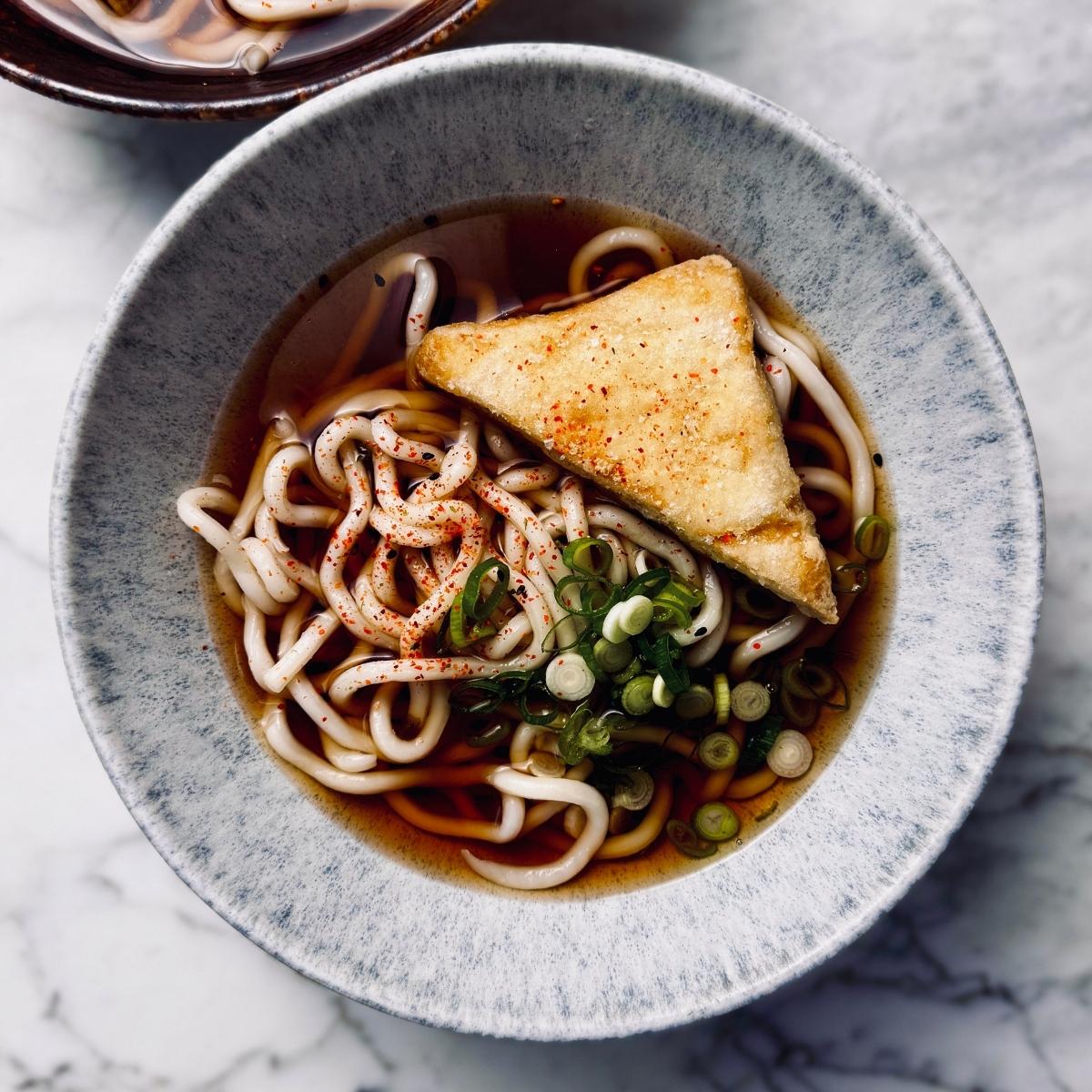
Silky noodles, light savoury broth, golden crispy tofu that crackles when you bite in, vegan kake udon is Japanese A-tier comfort food. Simple, savory, and slurpalicious. It sits at the delicate end of the Japanese noodle spectrum, so if you prefer something richer and bolder, curry udon, tantanmen, or vegan miso ramen are worth a try, or go lighter still with a cold bowl of vegan somen in summer.
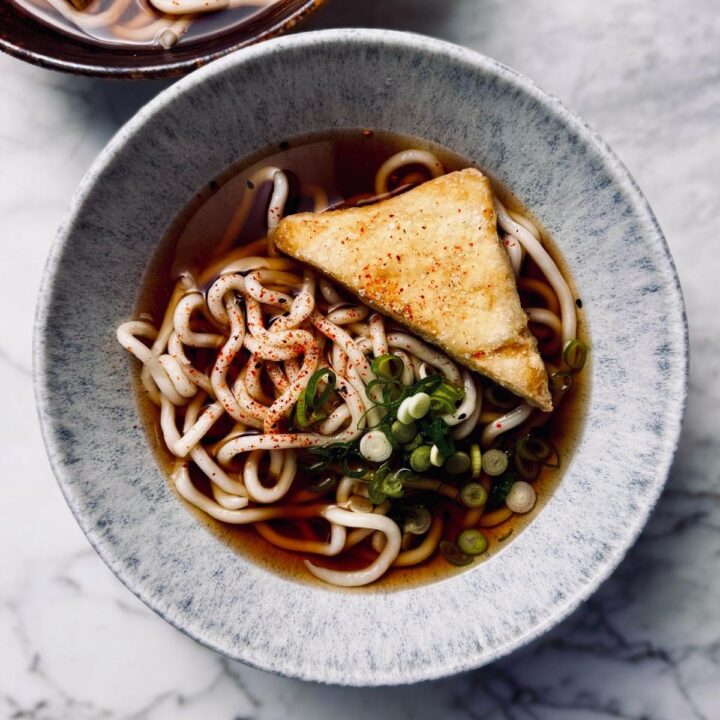
Vegan Kake Udon – At a Glance
Ask AI about this recipe
Summaries, substitutions, scaling, allergen checks — or save this site to your AI for future recipe ideas.
AI answers can be wrong. Treat them as suggestions, not as a substitute for the recipe above.
Why You'll Love Kake Udon
- Comforting broth: A light, umami-rich base that warms you through without feeling heavy.
- Simple ingredients, big flavour: Just everyday pantry staples like soy sauce, mirin, and a bit of sugar.
- Crispy tofu: Golden on the outside, soft in the middle, the tofu adds real bite and makes this bowl extra satisfying.
- Quick and adaptable: On the table in under 30 minutes, with loads of room to add your favorite veg or toppings.
Jump to:
What to Serve with Kake Udon
It's filling enough on its own, but add a couple of sides and you've got yourself a proper Japanese-style spread. Try it with:
- yasai gyoza Pan-fried veggie gyoza are always a crowd-pleaser.
- Yasai Tempura Light, crunchy, and the perfect contrast to soft noodles.
- Edamame: Just steam and sprinkle with sea salt for a quick protein boost.
- Japanese beer or sake: Asahi, Sapporo, or a chilled sake all work well. Check out our guide to Japanese beers if you want more ideas.
Ingredients
For quantities see the recipe card.
- Fresh udon noodles (vacuum packed or frozen)
- Vegan dashi (either using kombu dashi powder + water or vegan dashi )
- Soy sauce
- Mirin
- Salt
- Sugar
- Extra or super firm tofu
- Cornflour
- Salt
- Neutral cooking oil
- Spring onions
- Shichimi togarashi (optional)
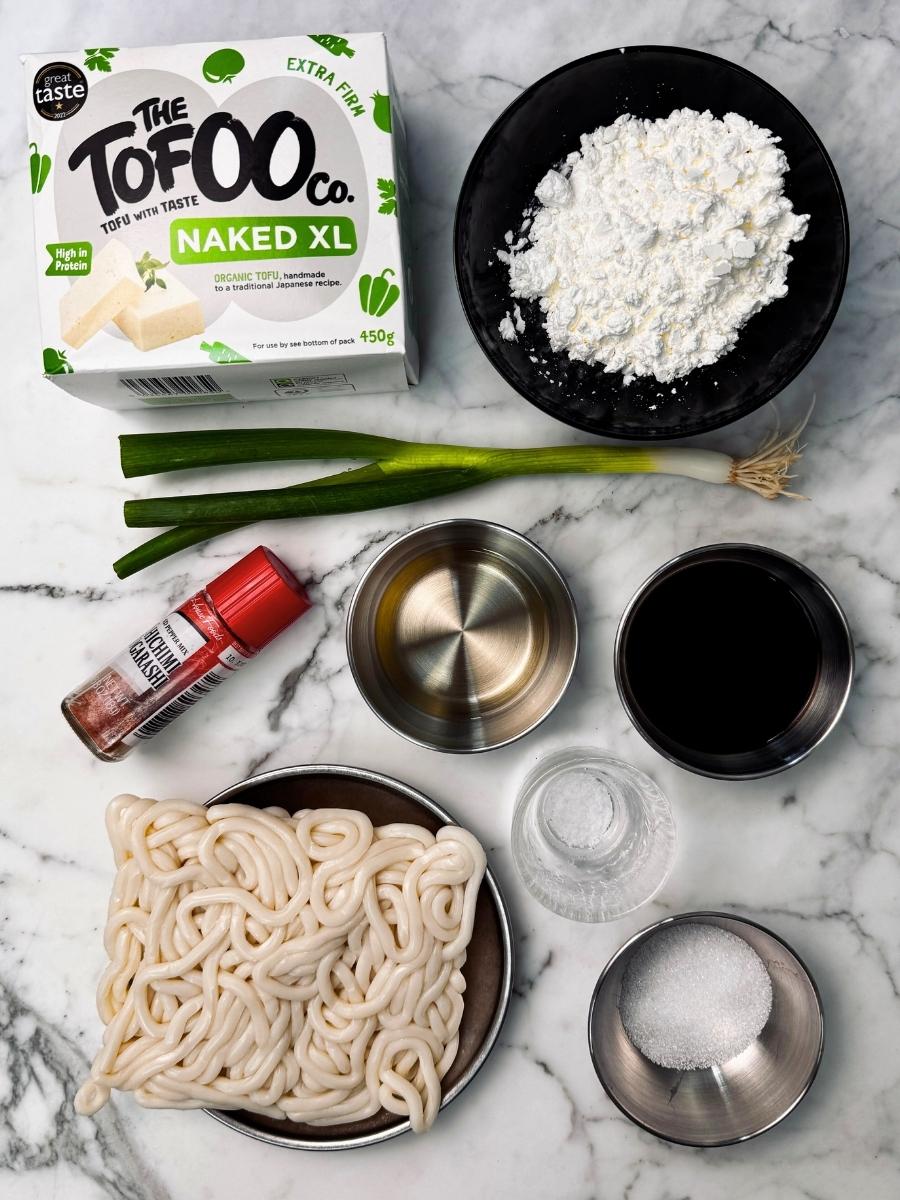
For more info on Japanese ingredients please see our guide to Japanese pantry staples.
How to Make Vegan Kake Udon
These four simple steps are your path to udon utopia:
- Simmer the broth
- Prepare the tofu
- Cook the udon noodles
- Build the bowls and serve
Follow along and you'll see how it all comes together. The steps don't always happen in strict order. While the water comes to a boil, start the broth and let it simmer in the background while you prepare the tofu and the rest.. It's less a checklist and more a gentle flow in the kitchen, with everything coming together in the bowl at the end.
1. Before you start
Get a big pot of water boiling so it's ready when you need to cook your noodles.

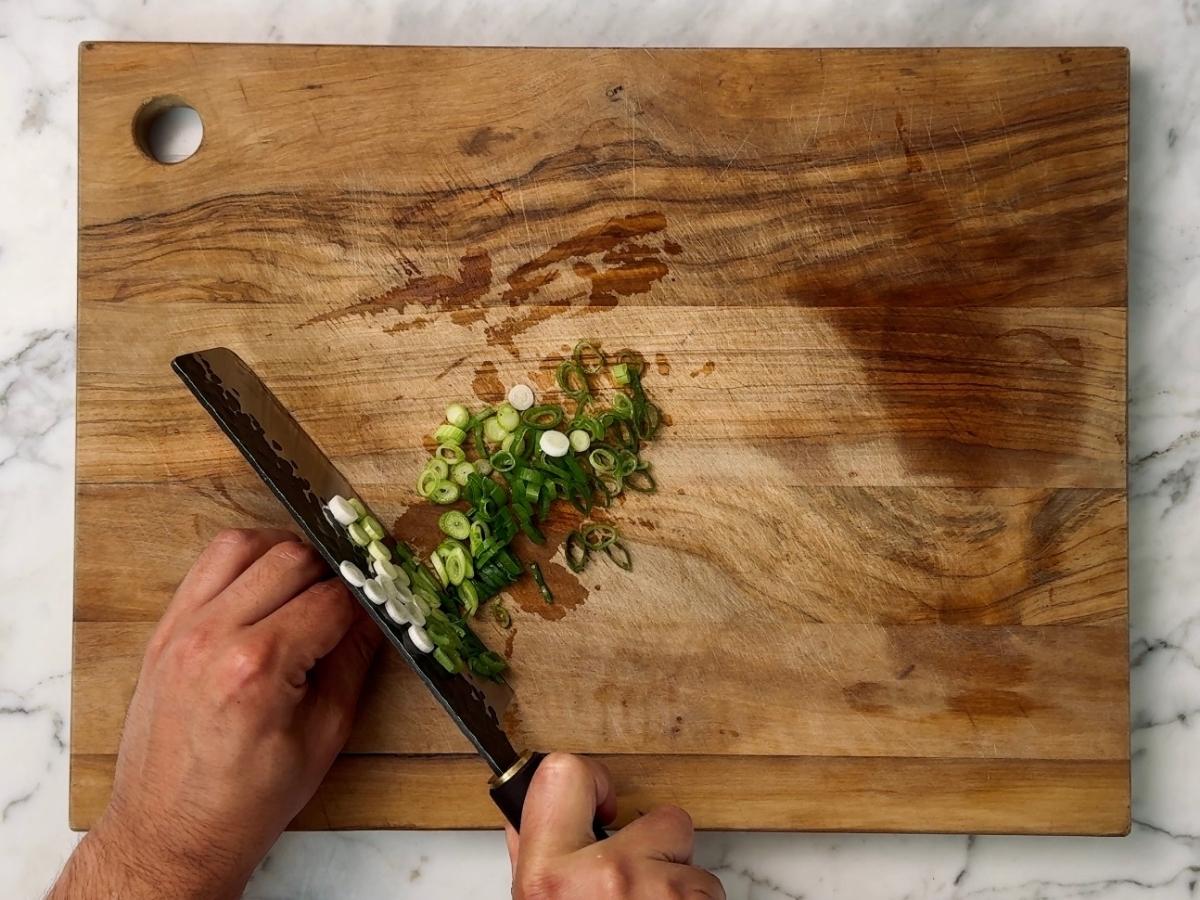
Then wash and slice your spring onions into thin rounds. These little green gems will be the finishing touch on your bowl.
2. Simmer the broth
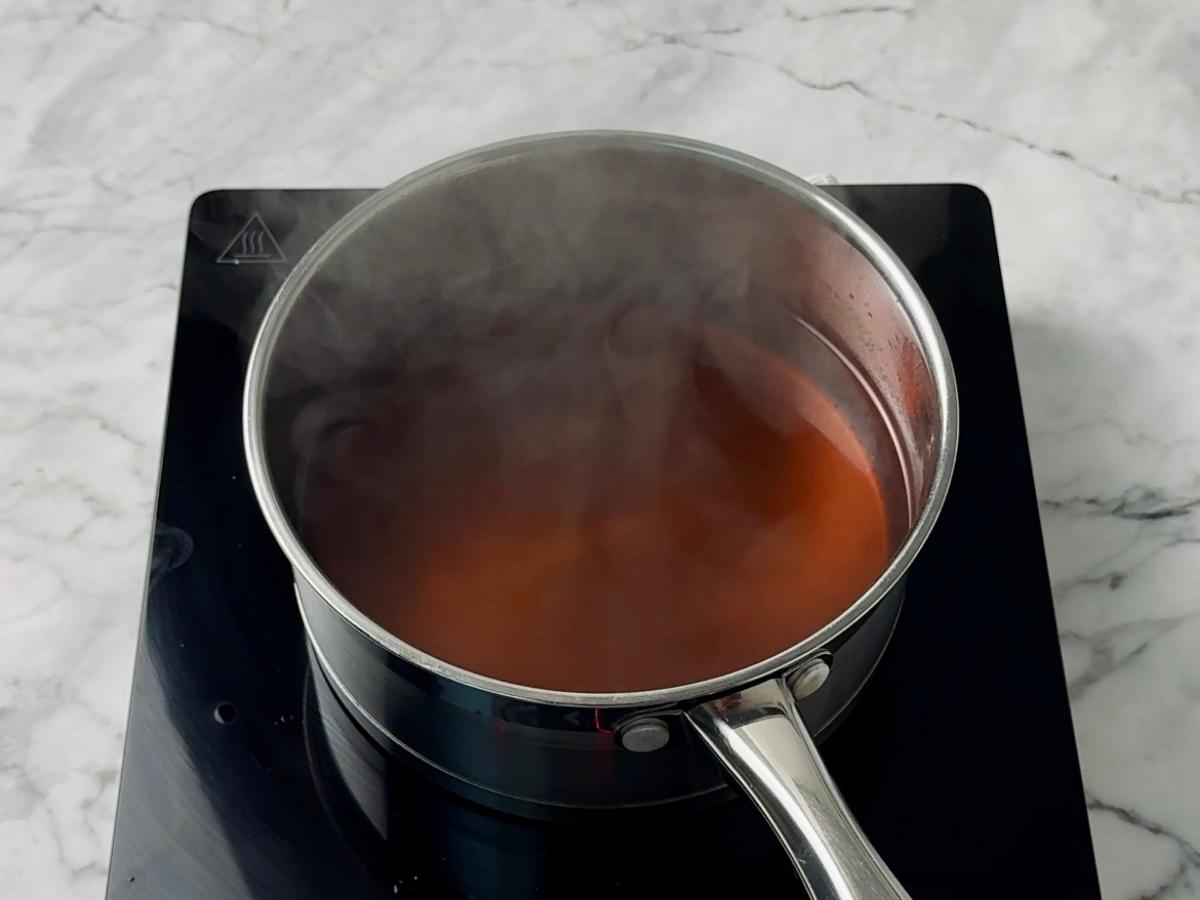
For the broth, pop your dashi, soy sauce, mirin, salt, sugar, and a bit of the spring onion into a saucepan. Bring it to a gentle simmer and let the flavours mingle while you get on with the tofu. Continue to keep it warm on low heat while you cook your noodles.
3. Prepare the tofu
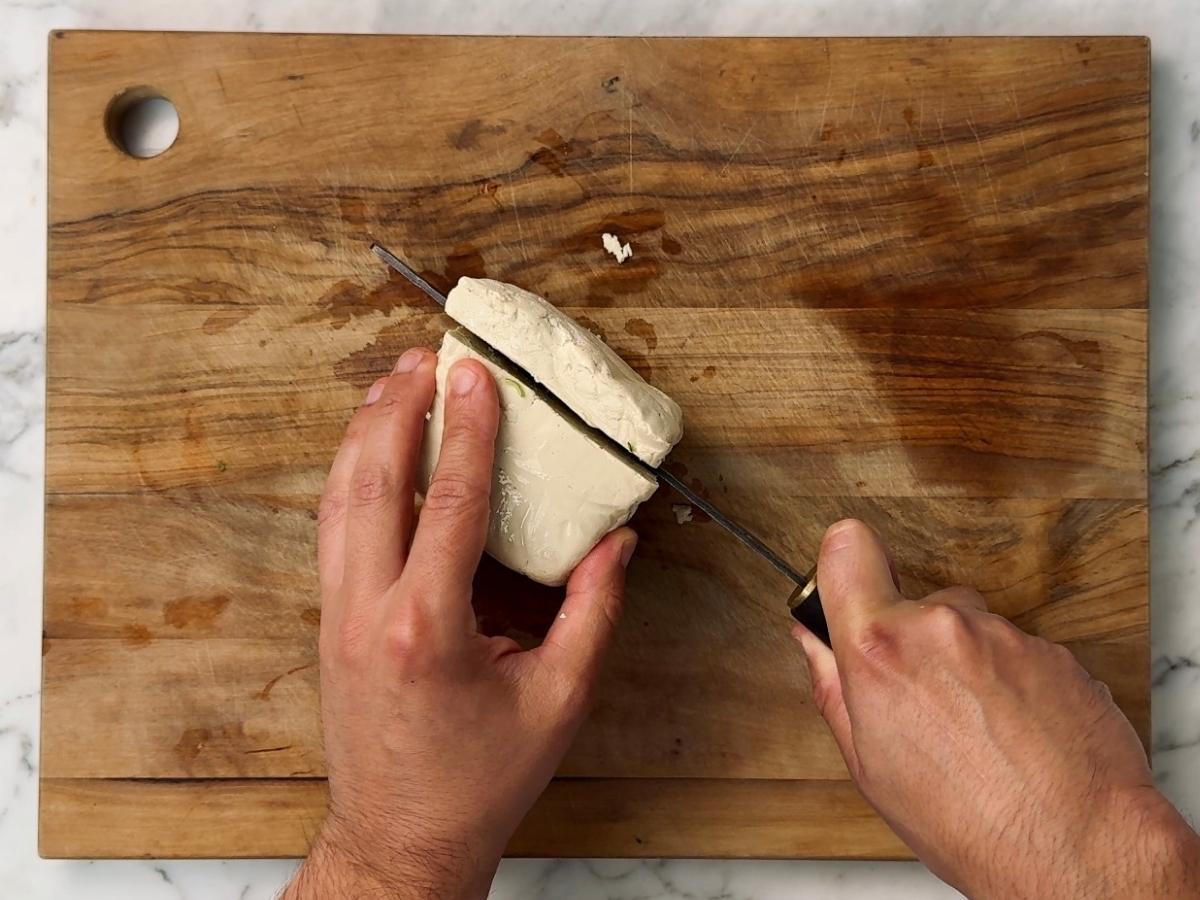
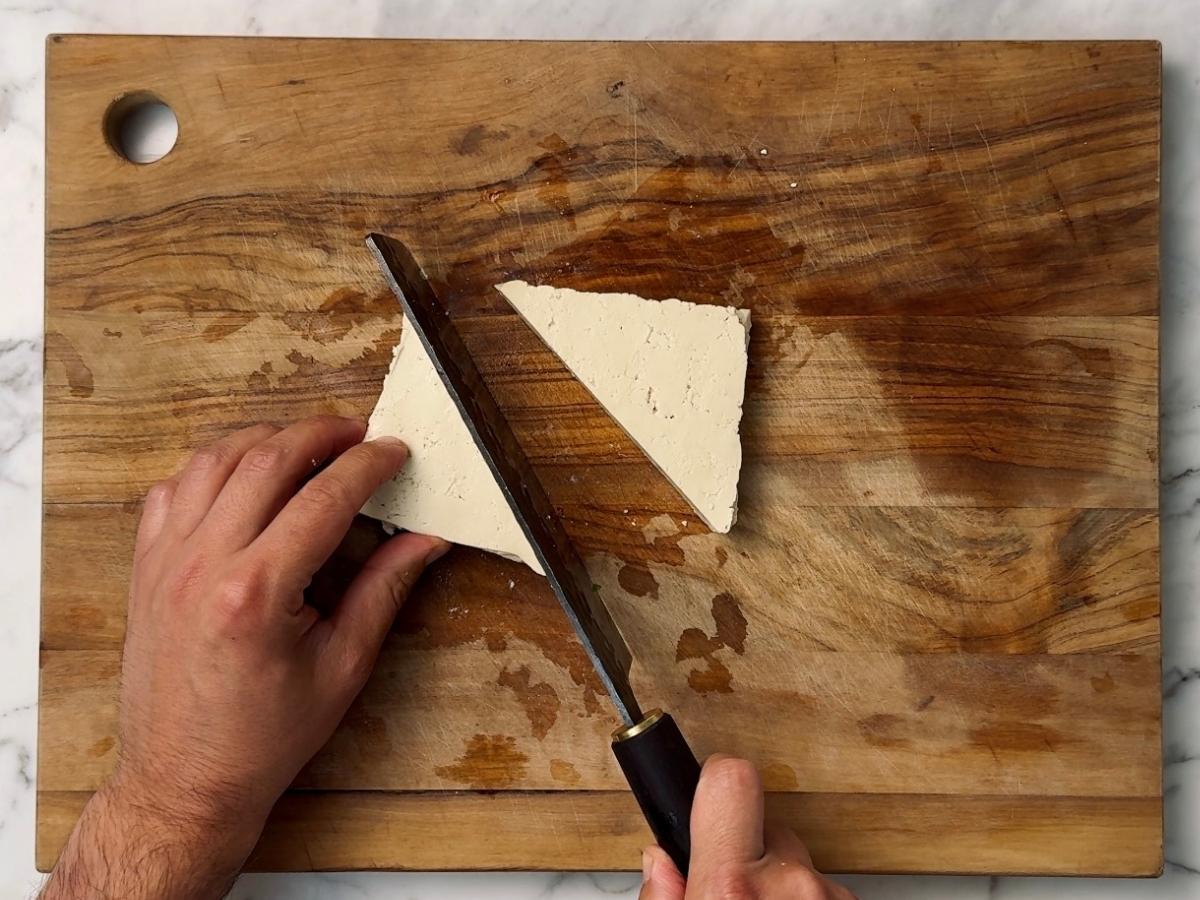
Cut a nice chunky slab from your block of tofu, about an inch thick, then slice it diagonally to make two triangles.
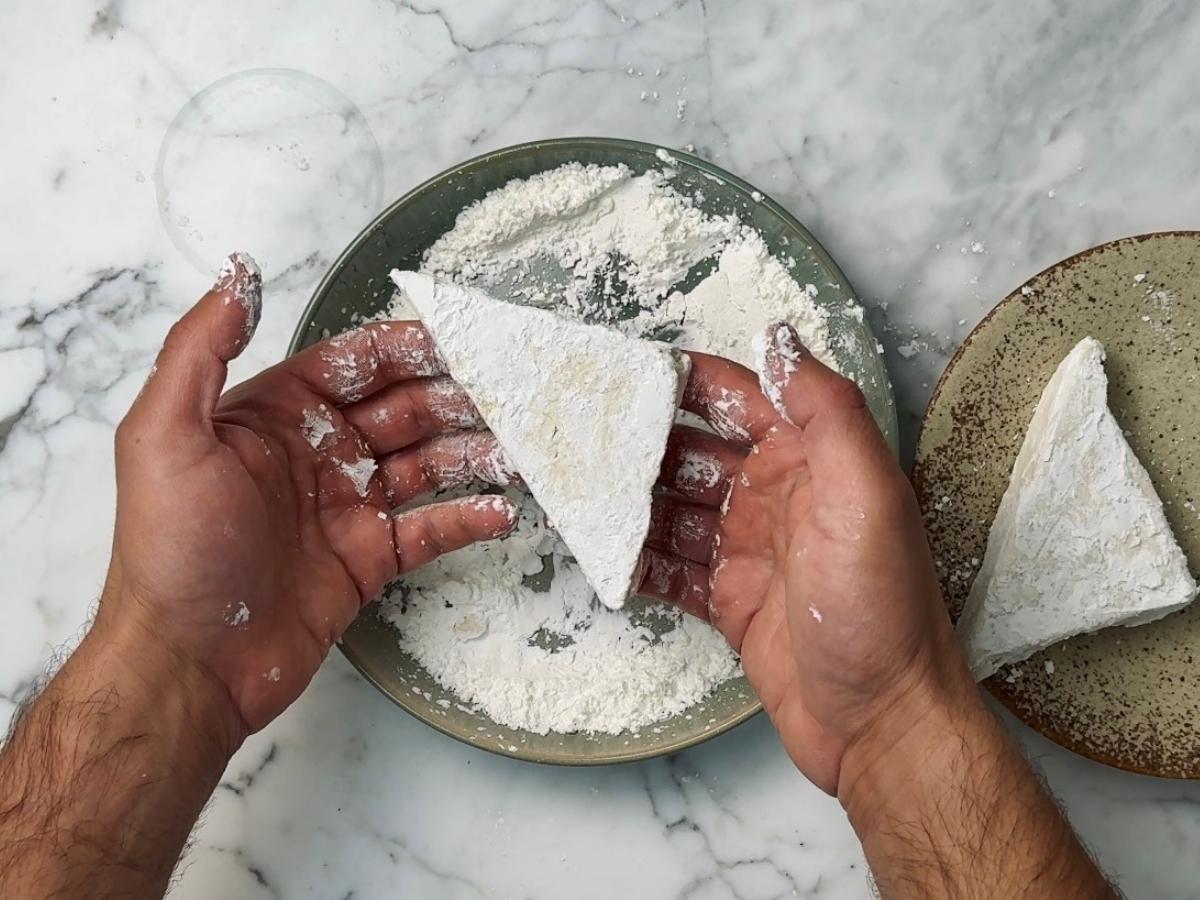

Dust them lightly in cornflour so they are coated all over, which helps them fry up golden. Heat your oil in a small frying pan until it is shimmering, then slip the tofu in. They will sizzle away happily. Give them a turn until they are crisp and lightly golden.

Lift them out onto a rack or paper towel to drain, and finish with a sprinkle of salt while they are still hot. Set aside and leave to cool while you crack on with the noodles.
4. Cook the udon noodles
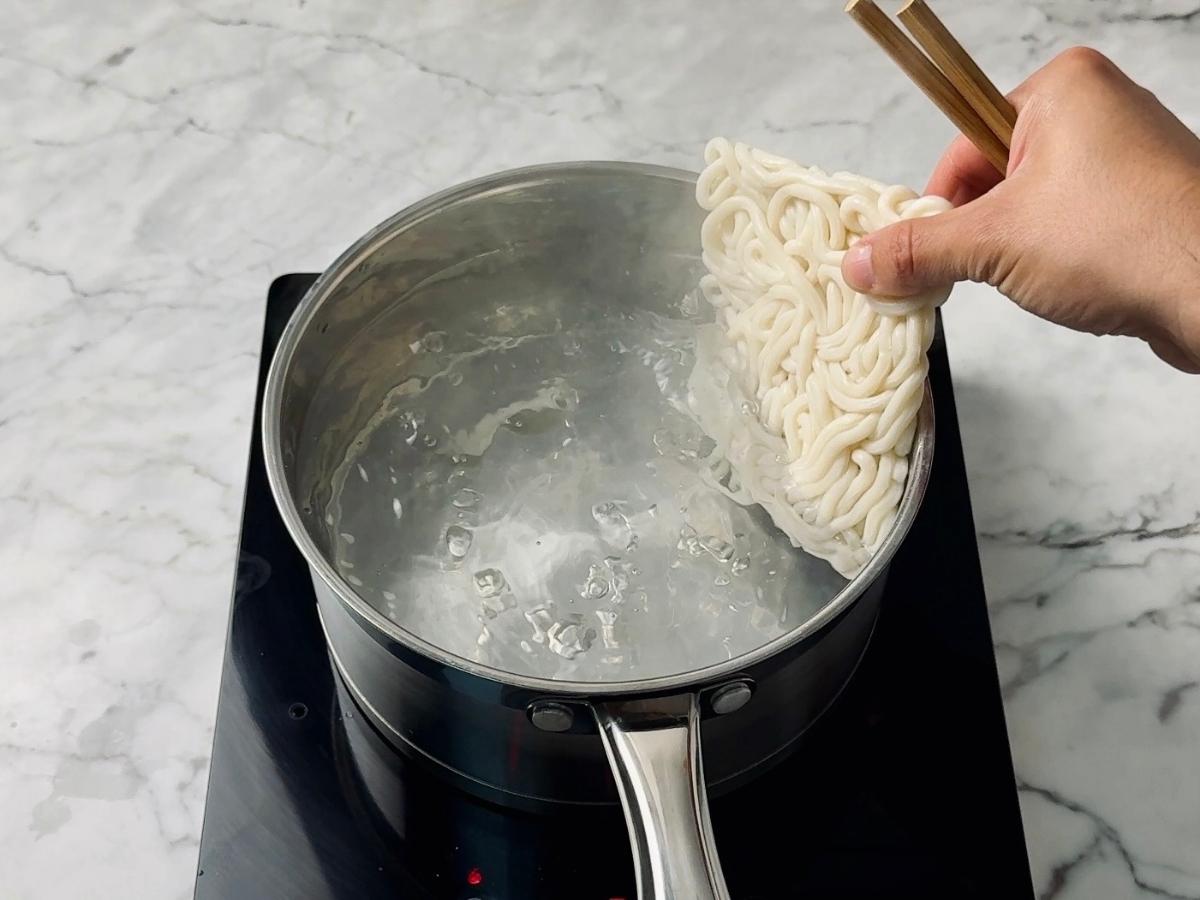
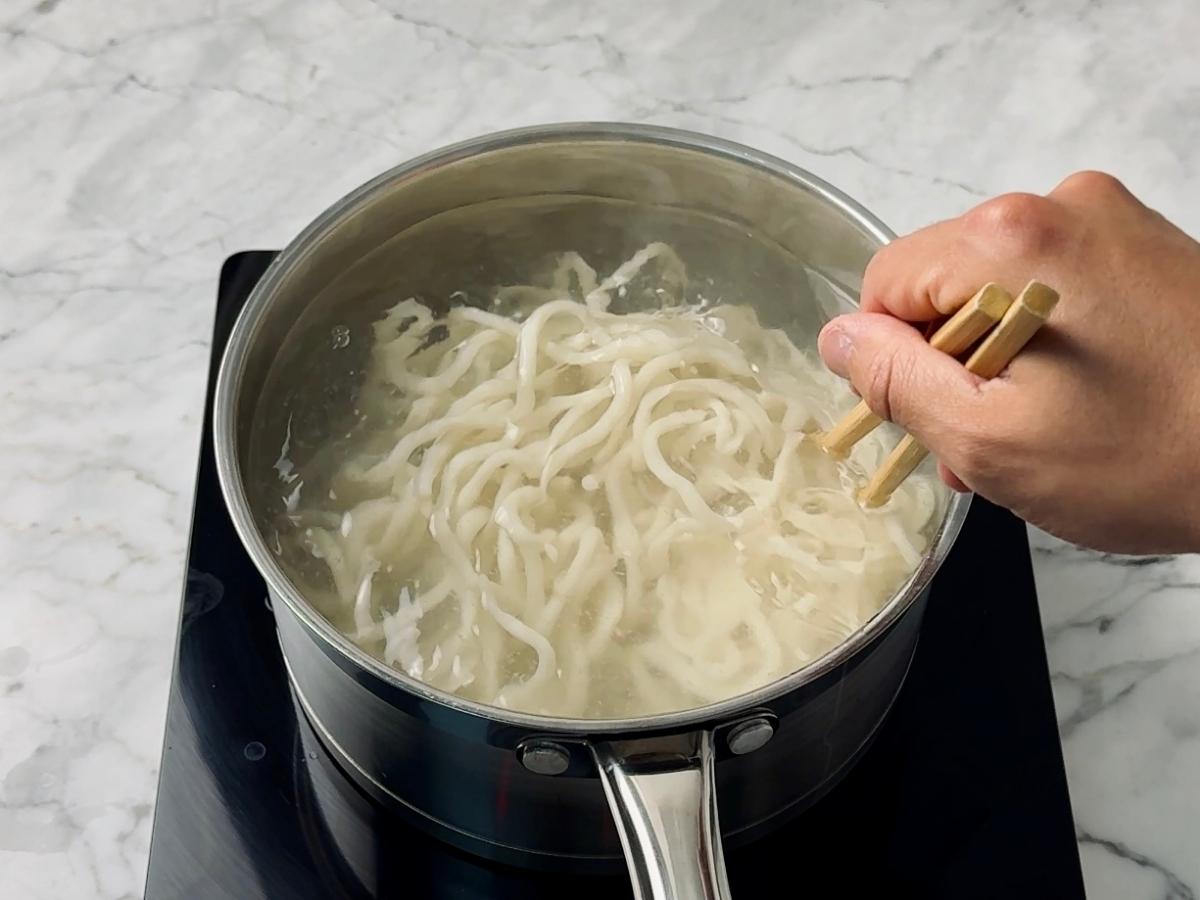
If you are using fresh udon, drop them straight into the boiling water and gently tease them apart with chopsticks until they are loose and bouncy (should take 30-45 seconds). For dried udon, undercook them just by a minute or so, rinse them well under cold water to wash off the starch, then give them a quick blanch in hot water to bring them back to life before serving.
5. Build the bowls and serve

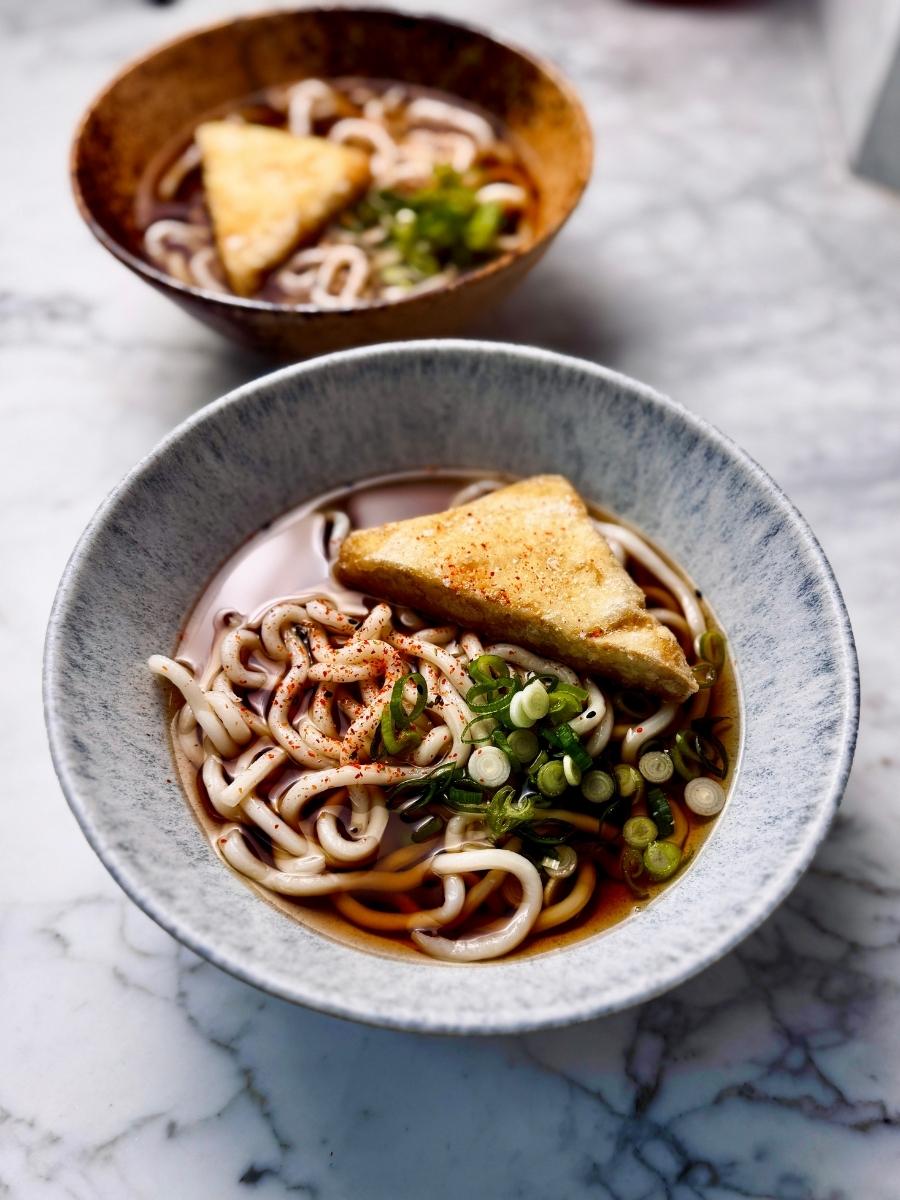
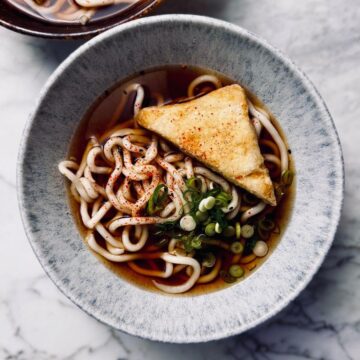
Divide your noodles into bowls, ladle over the hot broth, and crown each bowl with your crispy tofu triangles. Scatter over your spring onions and, if you like a little fire, dust with shichimi togarashi. Grab your chopsticks and a big spoon, serve (and slurp away!).

Love this recipe?
Check out my other vegan udon noodle recipes for more ideas.
Tips for the Perfect Vegan Udon Bowl
Use extra firm tofu
Extra firm tofu, like the Tofoo brand in the UK, is pre-pressed and ready to cook, so no extra pressing needed. Other brands may need pressing to avoid soggy tofu. Unfortunately, labels like "extra firm" and "super firm" are often used interchangeably. A good trick is to check the nutrition label: tofu with 16g protein or more per 100g usually means it has less water and a denser, meatier bite.
Use fresh or frozen noodles
Fresh or frozen udon noodles give the best texture, closest to what you'd enjoy in Japan. Dried noodles are fine too, but they often lack that chewy, bouncy bite that makes udon so good. If you go with dried, rinse them well under cold water after cooking to wash away excess starch. This simple step keeps the broth clear and the flavor clean.
Serving & Variations
This recipe is a wonderful base to play with. Toss in greens like spinach or bok choy, add mushrooms for extra umami, or serve it alongside crispy vegetable tempura. For a flavor twist, brighten it with yuzu zest or give it a little kick with chilli oil. Start with this comforting bowl, then make it your own with simple, yumcious variations.
Make Ahead & Storage
- The broth can be made a day or two ahead and kept in the fridge. It even gets better as the flavours develop overnight. Just warm it gently before serving.
- Crispy tofu is best eaten fresh out of the pan while it is hot and crunchy. If you need to make it ahead, you can fry it and then reheat in the oven or air fryer to bring the crisp back.
- Cooked noodles don't store well once mixed with broth, as they soak up liquid and turn mushy. If you want to prep in advance, keep noodles, broth, and tofu separate, then heat and assemble just before eating.
Equipment
- Ramen bowls - deep bowls to serve the udon
- Large saucepan - for simmering the broth
- Small frying pan - for shallow frying the tofu
- Slotted spoon or tongs - to lift the tofu out of the oil
- Chopping board and knife - for slicing tofu and spring onions
- Cooking chopsticks or tongs - handy for loosening the noodles as they cook
- Measuring cups and spoons - to get your broth balance just right
- Mixing bowl - for dusting the tofu in cornflour
- Colander or sieve - to drain and rinse noodles
Vegan Kake Udon FAQs
Traditionally, kake udon is made with a fish-based dashi, so it isn't vegetarian or vegan. The good news is that it's easy to make a fully plant-based version using vegan dashi made from kombu and shiitake mushrooms. You still get that rich umami flavour without any animal products.
Yes. The broth itself is light and low in fat, and you can easily boost the nutrition by adding greens like spinach, bok choy, or seaweed. Using extra firm tofu also adds plenty of protein, making it a filling and balanced bowl of healthy vegan udon. You can always double up on the tofu if hitting your protein quota is important.
Fresh or frozen udon noodles are ideal because they have that chewy, bouncy texture you'd find in Japan. Dried noodles are fine too, but make sure you rinse them well after cooking to remove excess starch. This keeps the broth clear and the udon noodle soup tasting clean.
Other Popular Recipes

📖 Recipe
Vegan Kake Udon (with Crispy Tofu Topping)
Equipment
- Large saucepan - for simmering the broth
- Small frying pan - for shallow frying the tofu
- Slotted spoon or tongs - to lift the tofu out of the oil
- Chopping board and knife - for slicing tofu and spring onions
- Cooking chopsticks or tongs - handy for loosening the noodles as they cook
- Measuring cups and spoons - to get your broth balance just right
- Mixing bowl - for dusting the tofu in cornflour
- Colander or sieve - to drain and rinse noodles
- Ramen bowls - deep bowls to serve the udon
Ingredients
For the broth
- 400 g Fresh udon you can use dried udon just halve the quantity and cook accrding to packet instructions
- 750 ml vegan dashi either homemade or instant (for every 3 cups water use 2 teaspoon kombu dashi powder)
- 2 tablespoon soy sauce
- 1 tablespoon mirin
- ½ teaspoon salt
- 1½ teaspoon sugar
For crispy tofu
- ¼ block extra or super firm tofu about 1-inch thick slab(s)
- 30 g cornflour
- Pinch of salt
- 125 ml Neutral cooking oil enough for ~2cm depth in a small frying pan
For the garnish
- 2 spring onions thinly sliced
- Pinch Shichimi togarashi Japanese seven spice, to taste
Instructions cook mode
- Bring 2 litres of water to a boil in a large pot for the noodles.
- In a separate saucepan, combine the vegan dashi, soy sauce, mirin, salt and sugar. Bring to a gentle simmer, stir until the sugar dissolves, then keep warm on low heat.
- Slice the spring onions into thin rounds and set aside.
- Cut a 1-inch thick slab from your tofu block and slice it diagonally into two triangles. Dust the tofu lightly with cornflour until coated on all sides.
- Heat 1-2 cm of neutral oil in a small frying pan until it reaches about 180°C. Fry the tofu until golden and crisp on both sides, then drain on a rack or paper towel. Sprinkle with salt while still hot.
- For fresh udon, add the noodles to the boiling water and gently tease them apart with chopsticks until loose and bouncy. For dried udon, cook until just shy of the package instructions, then drain and rinse under cold water to remove excess starch. Briefly reheat in hot water before serving.
- Divide the noodles between serving bowls, ladle over the hot broth, and top with crispy tofu. Garnish with spring onions and a sprinkle of shichimi togarashi if you like spice.




Belle says
Tastes like japan! Any advice on the best Udon noodles?