
Looking to explore the best Japanese eggplant recipes that are 100% vegan and packed with authentic umami? Whether you call it eggplant or aubergine, this glossy purple veggie is one of the most versatile ingredients. From silky miso-glazed sides to comforting rice bowls and even plant-based "unagi" sushi, there's so much you can do with our fleshy friend.
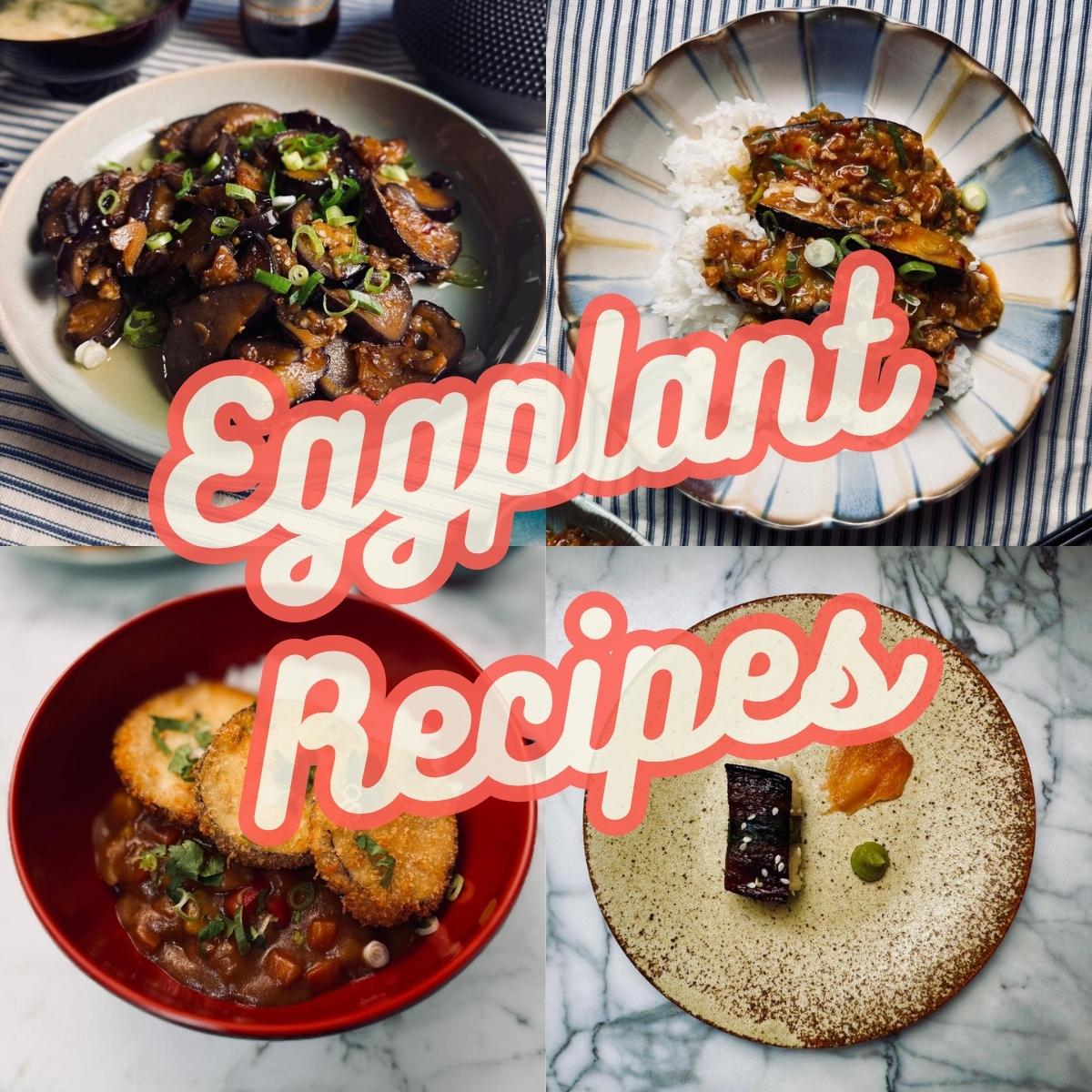
Here are my top five vegan eggplant recipes, each one simple to make, deeply satisfying, and perfect for anyone with a taste for plant based Japanese food.
Jump to:
1. Mabo Nasu
A comforting stir-fry of tender eggplant simmered in a rich, spicy miso and doubanjiang sauce. Mabo Nasu originally came to Japan from Sichuan, China, but it's become a beloved household favorite. Traditionally made with minced pork, this vegan version swaps in tofu or soy mince for the same hearty, satisfying bite.

Serve it over a bowl of fluffy white rice with chopped spring onions and sesame seeds on top.
Why we love it: It's bold, warming, and full of sweet and savory flavor. It turns a simple rice bowl into pure warmth and comfort.
2. Miso Aubergine
Known as Nasu Dengaku in Japan, this is one of the most loved Japanese aubergine dishes. The eggplant is roasted or grilled until creamy and tender. It's then brushed with a sweet and salty glaze made from miso, mirin, and sake. Under the grill, it caramelizes beautifully into a sticky, glossy coating that's pure umami magic.
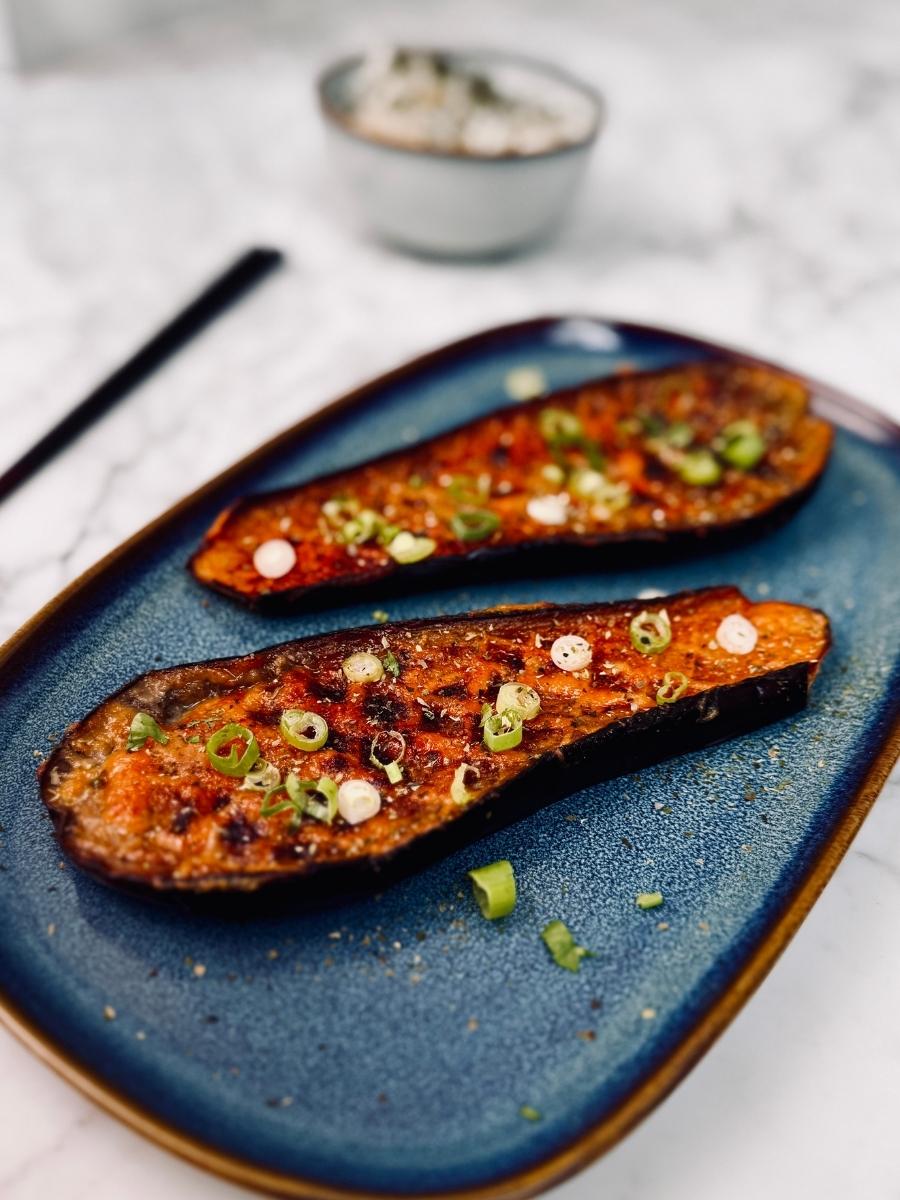
It's ideal as a side dish, served with rice and miso soup, or as a center piece in a vegan Japanese dinner spread.
Why we love it: The glaze caramelizes beautifully, giving each bite a glossy, melt-in-your-mouth texture. Miso adds sweetness and deep umami yummy-ness. Five ingredients, ten minutes of prep, and you get one banger of a rice topper!
3. Aubergine Katsu Curry
If there's one dish that defines Japanese comfort food, it's katsu curry - and this vegan aubergine version absolutely delivers. Thick slices of eggplant are dipped in panko breadcrumbs and fried until crisp, then paired with a smooth, mildly spiced curry sauce.

The contrast of crispy coating and soft, silky interior is unbeatable. Serve with rice, pickles, and a drizzle of homemade vegan kewpie mayo for the full Japanese curry house experience.
Why we love it: The crispy panko crust contrasts perfectly with the silky curry sauce. It's hearty, comforting, and deeply satisfying every time. Each bite combines a crunchy coating, creamy eggplant, and fragrant curry. Enjoy that signature katsu curry flavor at home, made easy and 100% plant-based.
4. Vegan Eel Sushi
This one's a little bit of vegan wizardry. Eggplant, when pan-fried and brushed with a sticky soy-based tare sauce, transforms into something wonderfully silky, smoky, and rich - remarkably close to traditional unagi (eel). Layer it over sushi rice and brush with more glaze for the ultimate plant-based nigiri.
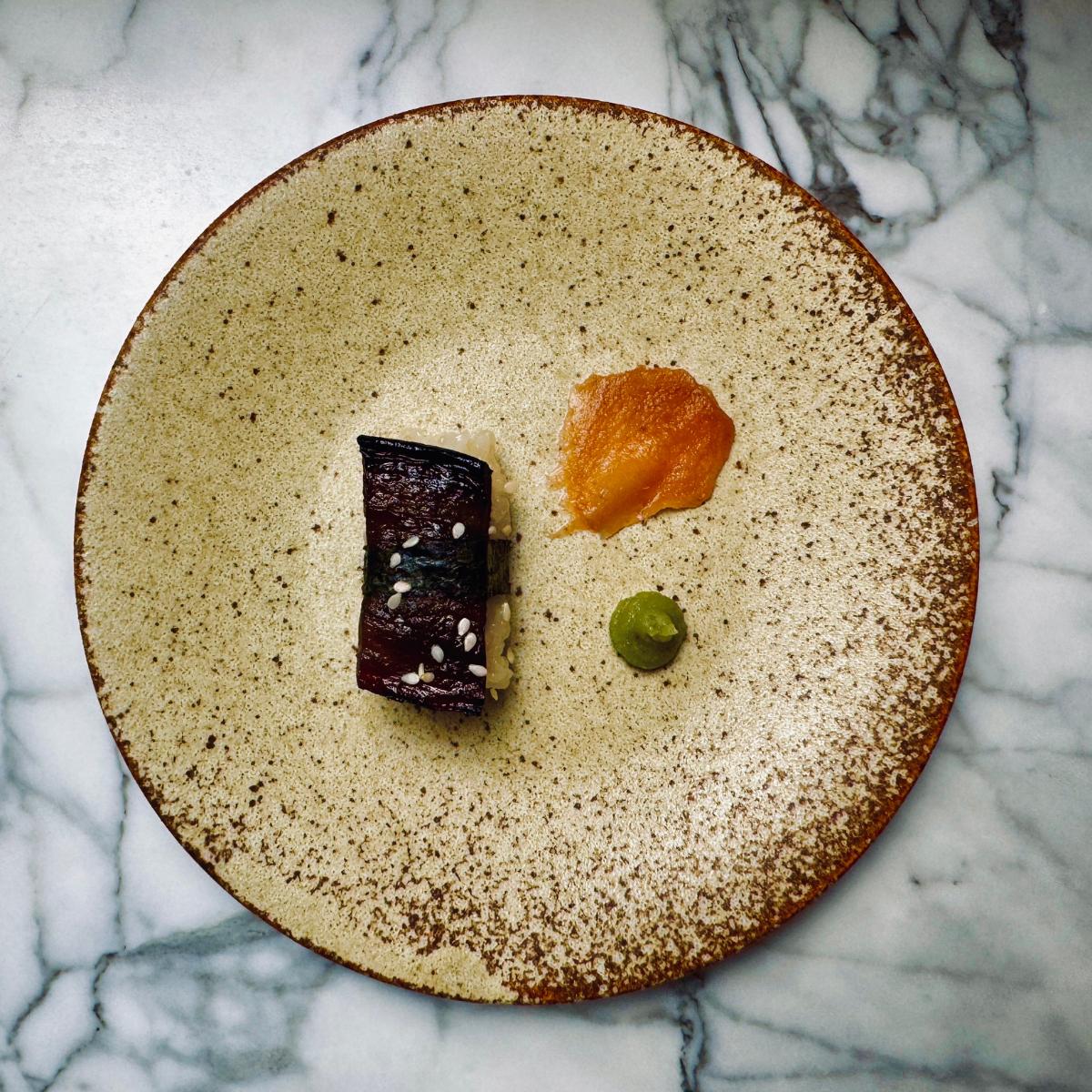
It's a brilliant conversation starter at dinner parties or sushi nights - proof that vegan Japanese eggplant dishes can be just as elegant and indulgent as the originals.
Why we love it: The eggplant absorbs the marinade beautifully, creating a smoky, glossy, umami-packed bite. It's indulgent yet fully plant-based. It's stunning and tastes incredible making it a true showpiece for sushi night.
5. Beer and Eggplant Stir Fry
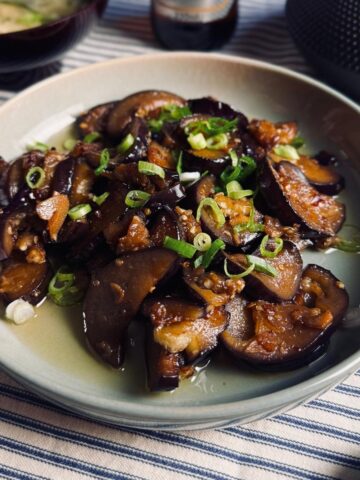
This one's a bit of a hidden gem. The idea came from a home-style Japanese dish where beer is used instead of sake - adding gentle sweetness and a malty depth that's completely unique. The eggplant is pan-fried until golden, then quickly simmered in beer, soy, sesame oil, and garlic until it soaks up every drop of flavor.
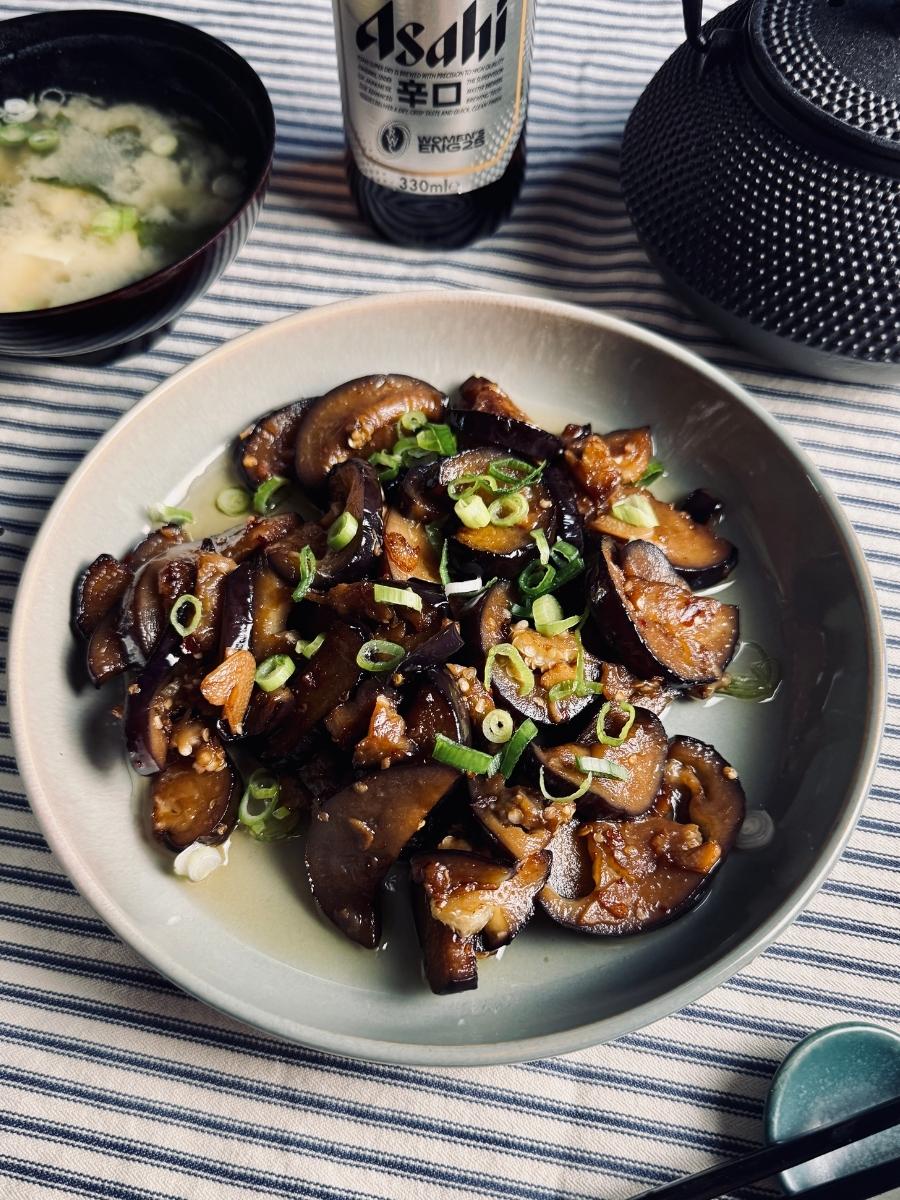
It's ready in under 10 minutes, perfect with rice or noodles.
Why we love it: Beer adds a subtle malt sweetness and depth you might not expect. Soy and sesame bring everything together perfectly. It's fast, flavorful, and exciting. A one-pan wonder that turns everyday ingredients into something special.
6. Eggplant Agebitashi
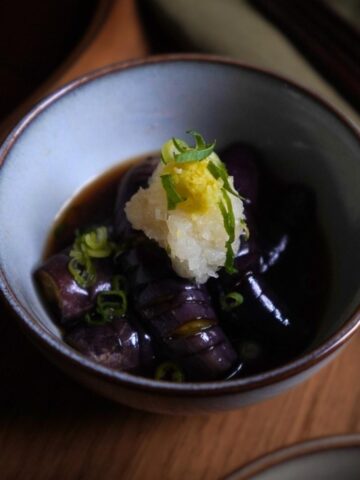
This is a classic Japanese home-cooking dish that doesn't get nearly enough attention outside Japan. Aubergine is deep-fried until golden and tender, then soaked in a light dashi marinade until it becomes silky, juicy and packed with umami. It's served at room temperature, making it perfect as a side dish or part of a Japanese spread.
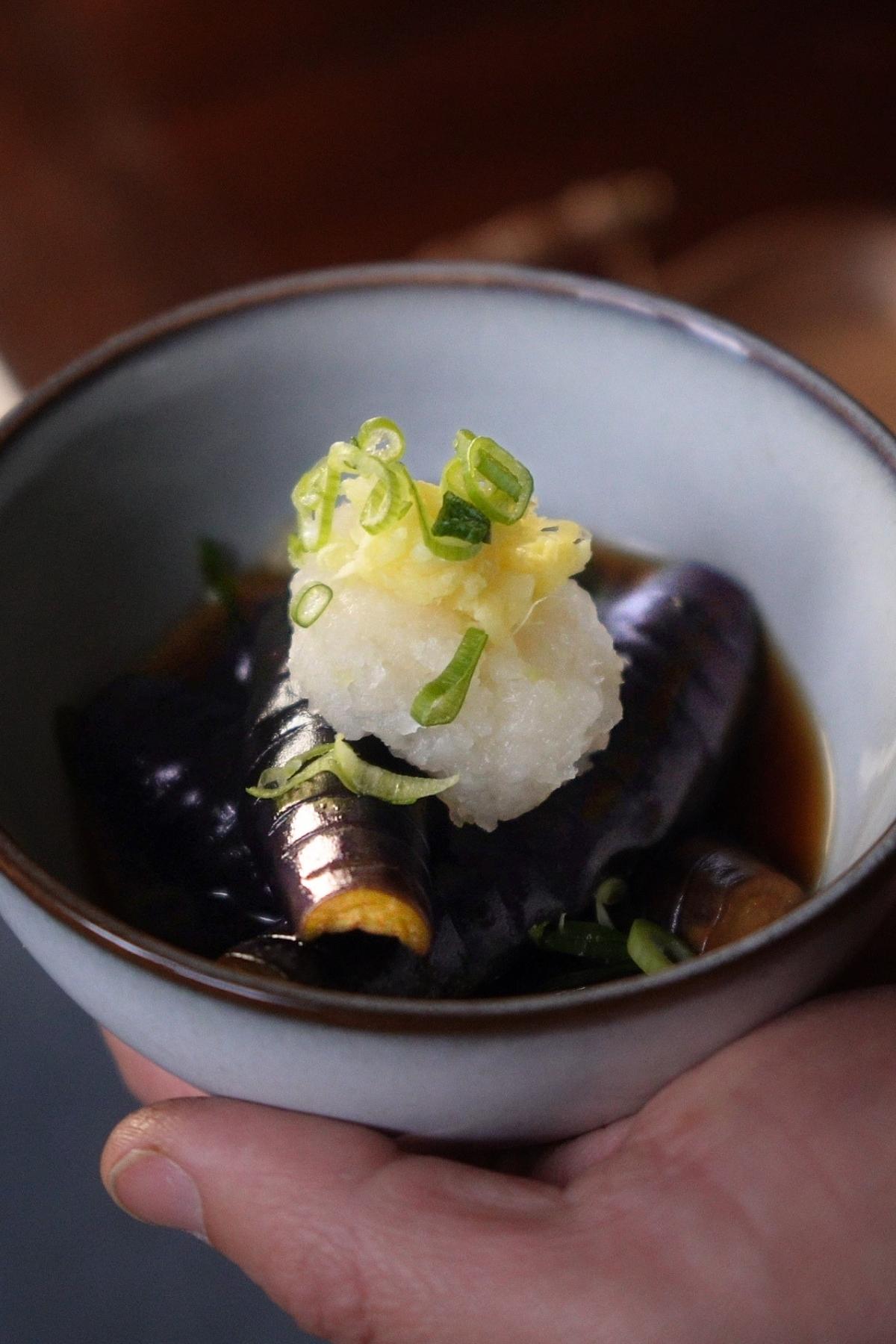
Why we love it: The frying gives the aubergine a gorgeous texture that soaks up the dashi marinade beautifully. It's light, elegant and full of quiet, deep flavour. Perfect alongside rice, miso soup and pickles for a proper Japanese meal.
Top Tip
Japanese eggplants (nasu) are long and slender, with tender skin and a delicate sweetness. If you can't find them, Western globe eggplants work perfectly too - just slice them evenly so they cook at the same rate.
FAQ
Japanese eggplants (nasu) are longer, thinner, and lighter in color than the large globe eggplants you often find in Western supermarkets. They have a tender skin and mild, slightly sweet flavor that makes them perfect for Japanese eggplant recipes. You can easily substitute regular eggplant - just slice it thinly and cook a little longer.
Most of the time, no. Japanese eggplant is naturally mild and low in bitterness, so you can skip salting. If you're using globe eggplants, a quick sprinkle of salt and 10-15 minutes of resting can help draw out excess moisture and prevent sogginess when frying or roasting.
Absolutely. Most vegan eggplant recipes here can be made gluten-free by swapping out soy sauce for tamari or gluten-free soy. For dishes like Aubergine Katsu Curry, simply use gluten-free breadcrumbs or crushed rice crackers instead of panko.
Let the dish cool completely, then store it in an airtight container in the fridge for up to 3 days. Most vegan aubergine recipes reheat beautifully in a pan or microwave. For crispy dishes like Katsu Curry, reheat the curry on the stove top and oven cook the breaded slices separately to keep that golden crunch.
Related
Looking for other recipes like this? Try these:




Leave a Reply