
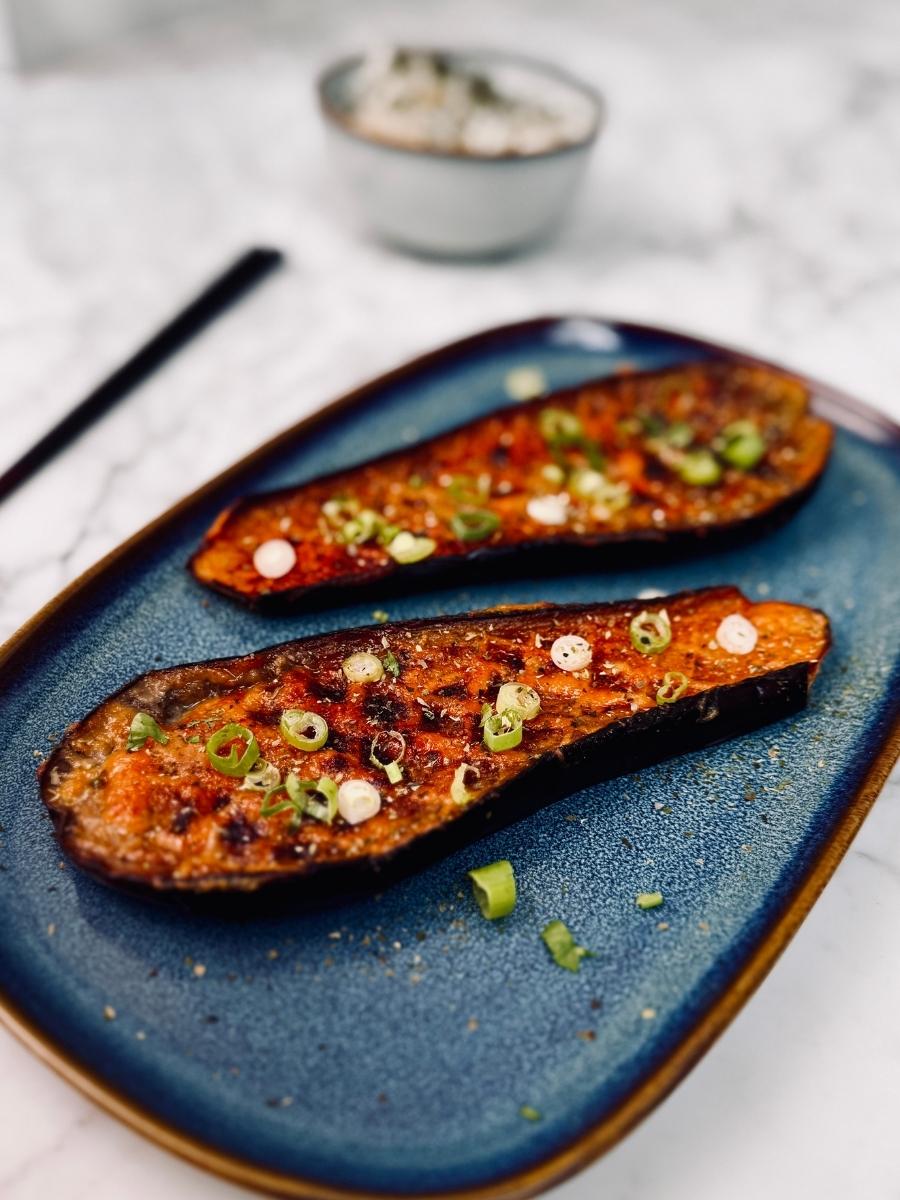
Miso eggplant, or nasu dengaku, looks restaurant-level but is genuinely easy at home. Roast the aubergine until soft, brush with a sweet miso glaze, then grill until the top bubbles and caramelises. Silky inside, sticky on top. If you love cooking with miso, try my miso pesto pasta too.
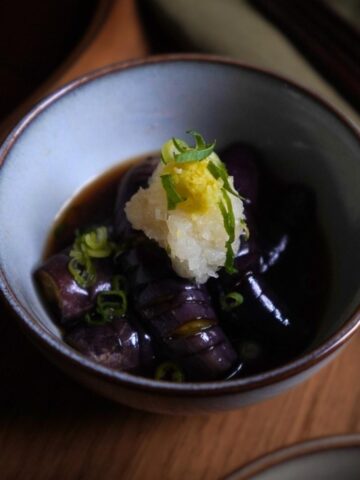
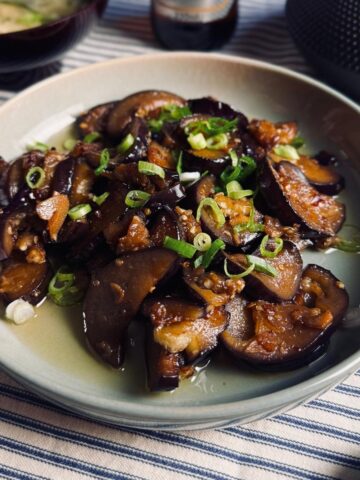
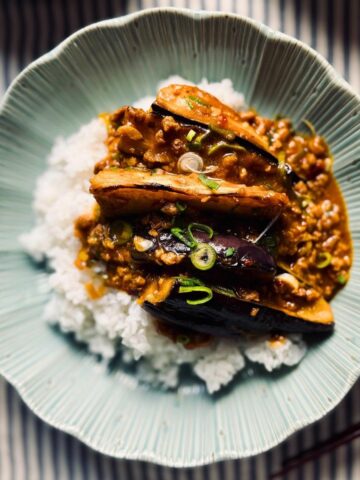
Love aubergine? Try my Eggplant Agebitashi, Mabo Nasu, or Eggplant Katsu Curry for more ideas.

Miso Eggplant – At a Glance
Ask AI about this recipe
Summaries, substitutions, scaling, allergen checks — or save this site to your AI for future recipe ideas.
AI answers can be wrong. Treat them as suggestions, not as a substitute for the recipe above.
Why You'll Love This Miso Eggplant
- The glaze is salty, sweet, and packed with umami
- The eggplant turns soft and creamy in the oven
- You only need a handful of ingredients
- It's ready in under 30 minutes
- Works as a side, in bento boxes, or alongside rice and noodles
What is Miso Eggplant (Miso Aubergine)?
This dish is known in Japan as nasu dengaku. Eggplants are halved, scored, brushed with sesame oil, then roasted until tender. They're finished with a miso glaze that caramelises under the grill into a golden, savoury-sweet topping.
Outside Japan you'll hear it called miso aubergine, miso eggplant, or miso-glazed eggplant. It's especially popular in autumn when eggplants are in season, but honestly, it's good to make any time of year.
Jump to:
Ingredients for Miso Eggplant
Serves 2 | Prep time 5 mins | Cooking time 25 mins
This is an overview with my guidance and tips. See the recipe card below for exact quantities.
- Eggplant (aubergine): Japanese eggplants have thinner skin and a sweeter taste, but regular Italian ones work just as well and are easier to find in most supermarkets outside of Japan.
- Miso paste: White miso (shiro miso) is the best choice here. It's milder and a little sweet, which lets the flavour of the eggplant shine. Red miso is stronger and saltier which works really well in other dishes, but it can overpower this one.
- Mirin and sake: These bring sweetness and depth to the glaze, and help it caramelise beautifully.
- Sugar: A touch of sugar balances the savoury-saltiness of the miso.
- Sesame oil: Brush this on before roasting for a nutty aroma and golden colour.
- Garnishes: Spring onions, sesame seeds, and aonori (seaweed flakes) make a simple dish look and taste extra special.
How to Make Miso Eggplant
Making miso eggplant is simple, but a few small details make all the difference. Here's how we do it at home.
Prep the eggplant
Start by preheating your oven. Wash the eggplant and slice off the green top. Cut it in half lengthwise so you have two long pieces.


Score the flesh
Take a sharp knife and score the inside in a criss-cross pattern. Keep the cuts shallow. This helps the glaze soak into the flesh for a more satisfying bite, but if you cut too far the eggplant can split and lose its shape.

Add sesame oil
Brush the cut sides generously with sesame oil. This adds nutty flavour and helps the surface roast to a golden colour instead of drying out.

Roast until tender
Lay the halves cut-side up on a baking tray and roast until the flesh is soft and the top is turning lightly golden. Depending on your oven and the size of the eggplant, this usually takes about 20 minutes. You are looking for silky flesh that gives easily when pressed with a fork.

Mix the glaze
While the eggplant roasts, stir together the miso paste, mirin, sake, and sugar until smooth. The mixture should be glossy and easy to spread. If it feels too thick, add a splash more mirin to loosen it.

Brush and grill
Once the eggplant is tender, brush the glaze generously over the scored flesh, making sure it seeps into the cuts. Slide the tray under a hot grill for a few minutes until the glaze is bubbling and starting to caramelise. Keep a very close eye at this stage. Miso can go from beautifully charred to burnt in seconds. You want bubbling and a few darker patches, not a blackened top.


Serve with toppings
Take the eggplant out and scatter over spring onions, sesame seeds, and aonori if you have it. Serve straight away while the flesh is still hot and silky, and the glaze is sticky and fragrant.
Serving Suggestions
Enjoy miso eggplant with a simple spread of rice, miso soup, and a couple of tasty sides to create a balanced Japanese meal at home. Pick one or more, such as:
Finish with toppings like furikake and Japanese pickles. For drinks, miso eggplant pairs perfectly with a cold Asahi, or see our Japanese beer guide for more options.

Love this recipe?
Check out my other Japanese eggplant recipes for more ideas.
Easy Ingredient Swaps
Need to swap something? Here are easy alternatives that keep the recipe tasting great.
- No sesame seeds → Try crushed toasted peanuts or cashews.
- No eggplants → Use tofu instead. The miso glaze works beautifully on it and makes a protein-packed alternative for your rice bowl.
- Gluten-free → Swap soy sauce for tamari or a certified gluten-free option. You'll still get the same rich umami flavour.
Variations
These simple variations show how flexible miso eggplant can be:
Crispy: Sprinkle panko over the glaze before grilling. They'll toast up under the heat for a satisfying crunch.
Spicy: Add a drizzle of chili oil or a pinch of red pepper flakes to the glaze for gentle heat that balances the sweetness of the eggplant.
Nutty: Stir a spoonful of tahini into the glaze for extra creaminess and a nutty depth. It blends beautifully with the miso.
How to Store and Reheat
Store any leftover miso eggplant in an airtight container in the fridge for up to 2 days. To reheat, pop it back in a hot oven until warmed through. Avoid the microwave, it makes the flesh soggy and the glaze loses its texture.
Miso Eggplant FAQs
Yes. Roast the eggplants first, then when you are ready to serve brush on the glaze and grill until caramelised. Warm them through gently before turning up the heat to finish, so the miso does not burn.
Miso eggplant is perfect with rice, miso soup, and Japanese pickles. It also pairs well with sides like korokke, this agedashi tofu recipe, gyoza, or tempura.
You can, but red miso has a stronger, saltier flavour that can overpower the eggplant. White miso is milder and slightly sweet, which balances better with the glaze.
Yes. If you do not have sake, replace it with a splash of dry white wine or even water. The flavour will be lighter, but the glaze will still work.
It is best enjoyed fresh. Roasted eggplant does not freeze well and can turn watery once thawed.
Other Popular Recipes
- Eggplant Agebitashi (Nasu Agebitashi)
- Vegan Fried Chicken
- Beer and Eggplant Stir-Fry (10 Minute Recipe)
- Sticky Tofu: 10-Minute Recipe


📖 Recipe

Miso Eggplant (Miso Aubergine, Nasu Dengaku)
Ingredients
For the eggplant
- 1 medium Italian eggplant Japanese eggplants are ideal (1 per person)
- 1 tablespoon sesame oil
For the miso glaze
- 1 tablespoon white miso paste (shiro miso)
- ½ tablespoon sugar
- 1 tablespoon mirin
- ½ tablespoon sake (or dry white wine as a substitute)
For the garnish
- 1 Spring onion or chives (japanese Nira if you can find it)
- 1 pinch White sesame seeds
- Aonori (optional, for extra yum)
Instructions cook mode
- Preheat oven to 200°C (180°C fan). Wash the eggplant and cut off the green top. Slice lengthwise into two halves.
- Score the flesh in a shallow criss-cross pattern. Do not cut too deep or the eggplant may split.
- Brush the cut sides with sesame oil and place cut-side up on a baking tray.
- Roast for about 20 minutes, until the flesh is tender and lightly golden.
- While roasting, mix the miso paste, sugar, mirin, and sake in a small bowl until smooth.
- Remove the eggplant from the oven and brush the glaze generously over the scored sides.
- Place under a hot grill (broiler) for 3-5 minutes, until the glaze is bubbling and caramelised. Watch closely, as miso burns quickly.
- Serve hot, topped with spring onions, sesame seeds, and aonori if using.
Notes
- Cook the eggplant until it's completely soft and creamy inside, this is what makes nasu dengaku so good.
- Keep an eye on it under the grill, the glaze can catch quickly once it starts to caramelise.
- If your glaze feels too thick and strong, loosen it with a splash of mirin or water to mellow it out.
- Japanese eggplants are ideal, but regular aubergine works fine, just cut it evenly so it cooks through.
- Serve straight away while it's hot, soft, and glossy. That's when it's at its best.




Leave a Reply