Vegan Japanese

  • Start Here
  • Recipes
  • About
  • Contact
menu icon
go to homepage
  • Start Here
  • Recipes
  • About
  • Contact
  • Socials

    • Instagram
    • Pinterest
    • YouTube
  • search icon
    Homepage link
    • Start Here
    • Recipes
    • About
    • Contact
  • Socials

    • Instagram
    • Pinterest
    • YouTube
  • ×
    Home » Recipes » Rice

    Vegan Eel Sushi (unagi nigiri)

    Last updated: Apr 29, 2026 by Aaron Fukuyama · This post may contain affiliate links · Leave a Comment

    Jump to Recipe

    Unagi nigiri, the classic eel sushi, is known for its silky texture and sweet savoury glaze. In this recipe, aubergine takes centre stage as the perfect plant based alternative. When brushed with homemade unagi sauce and caramelised in the pan, it transforms into tender slices with that familiar depth of flavour. The result is vegan unagi nigiri, a beautiful eggplant sushi that captures the spirit of the traditional dish without using fish.
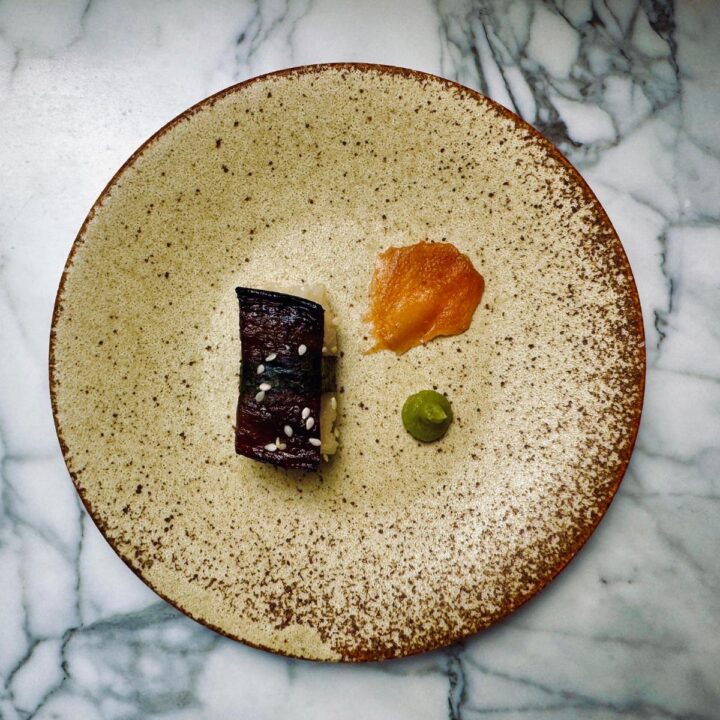
    one piece of vegan eel sushi on a round plate next to a petal of sushi giner and a dollop of wasabi

    Unagi Nigiri – At a Glance

    Recipe Vegan Unagi Nigiri (Eggplant Eel Sushi)
    Ready in 45 min
    Serves 4
    Calories ~277 per serving (est.)
    Key ingredients medium eggplant, salt, cooked and seasoned sushi rice, mirin, sake, sugar, soy sauce, sunflower oil, nori , sesame seeds, Wasabi, sushi ginger, and soy sauce
    Course Side Dish

    Ask AI about this recipe

    Summaries, substitutions, scaling, allergen checks — or save this site to your AI for future recipe ideas.

    ChatGPT Grok Perplexity Claude Google AI

    AI answers can be wrong. Treat them as suggestions, not as a substitute for the recipe above.

    Add us as a trusted Google source

    This vegan eel sushi works for any occasion, whether it is a simple dinner at home or part of a bigger spread for a gathering or special occasion. It's also a great addition to our favorite plant based sushi post. Serve it with sides such as Yasai Tempura, gyoza or yasai korokke, and enjoy with a Japanese beer or a refreshing yuzu cocktail.

    Jump to:
    • Unagi Nigiri – At a Glance
    • Ingredients for Vegan Unagi Nigiri
    • How to Make Unagi Nigiri
    • Substitutions
    • Variations
    • Equipment
    • Storage
    • Unagi Nigiri FAQs
    • Other popular recipes
    • 📖 Recipe

    Ingredients for Vegan Unagi Nigiri

    Serves 2 | Prep time 30 minutes | Cooking time 15 minutes

    This is an overview of the ingredients along with my notes and guidance. For quantities see the recipe card. Here's what you will need:

    • Aubergine (eggplant)
    • Salt
    • Japanese short-grain rice
    • Rice vinegar
    • Sugar
    • Soy sauce
    • Mirin
    • Sake
    • Sunflower oil (or another neutral oil)
    • Nori sheets
    • Sesame seeds
    • Wasabi and pickled sushi ginger, for serving

    Ingredient notes:

    • Aubergine makes the perfect swap for traditional unagi. Choose one that is firm and medium-sized. Once glazed, it becomes tender and silky. If you enjoy aubergine, try our miso aubergine or aubergine katsu curry.
    • Sushi rice is key for nigiri. Use short-grain Japanese rice and season lightly with vinegar, sugar, and salt. See our seasoned sushi rice recipe for step-by-step guidance.
    • Unagi sauce is a quick glaze made from soy sauce, mirin, sake, and sugar. Homemade is fresher than bottled and gives the aubergine that deep caramelised flavour.
    • Nori strips hold the nigiri together, while sesame seeds add a nutty finish.
    • Serve with wasabi, pink pickled ginger, and soy sauce for a traditional touch.

    How to Make Unagi Nigiri

    Prepare the aubergine
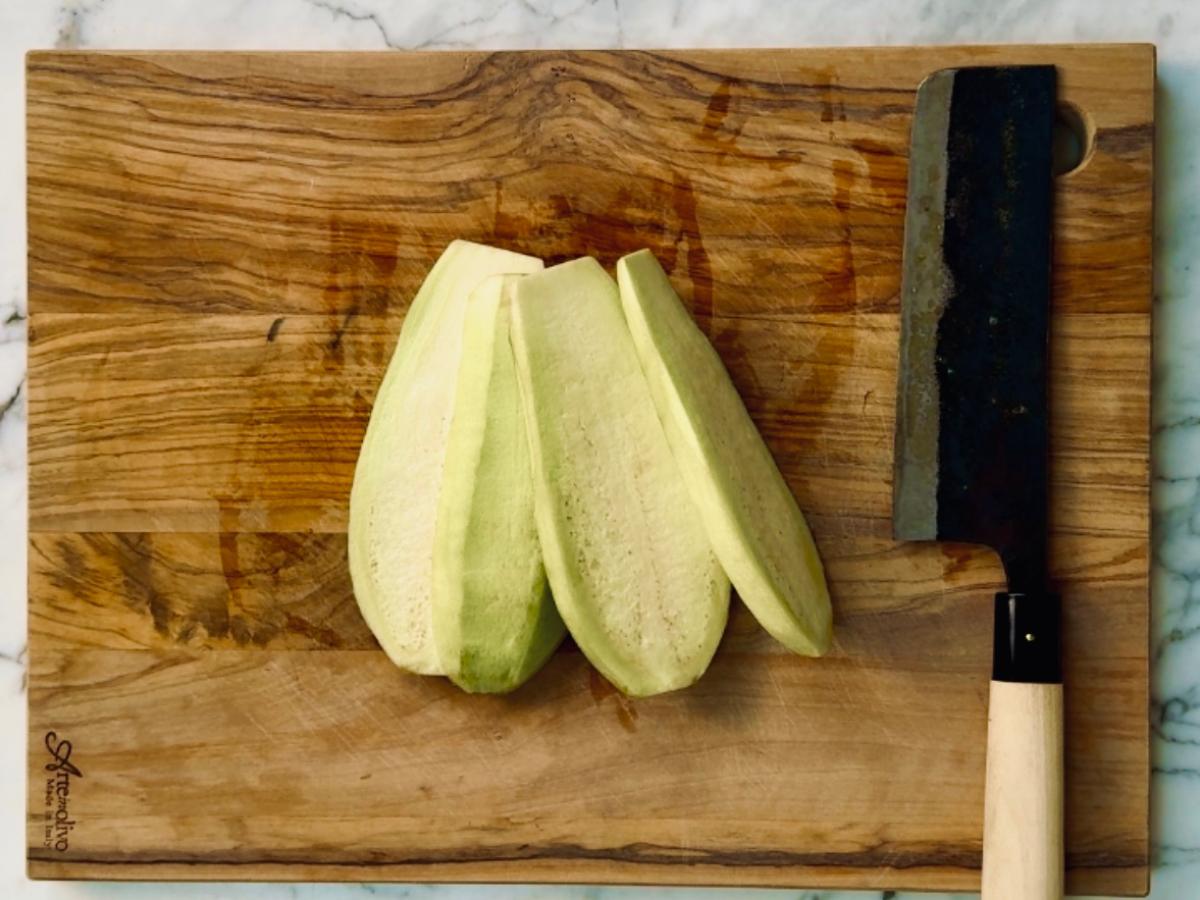
    sliced eggplant on a wooden chopping board
    1. Peel the aubergine and slice it lengthwise into long, wide strips, about 1.5 cm thick. This shape mimics the look of traditional eel sushi and gives you silky layers once glazed.
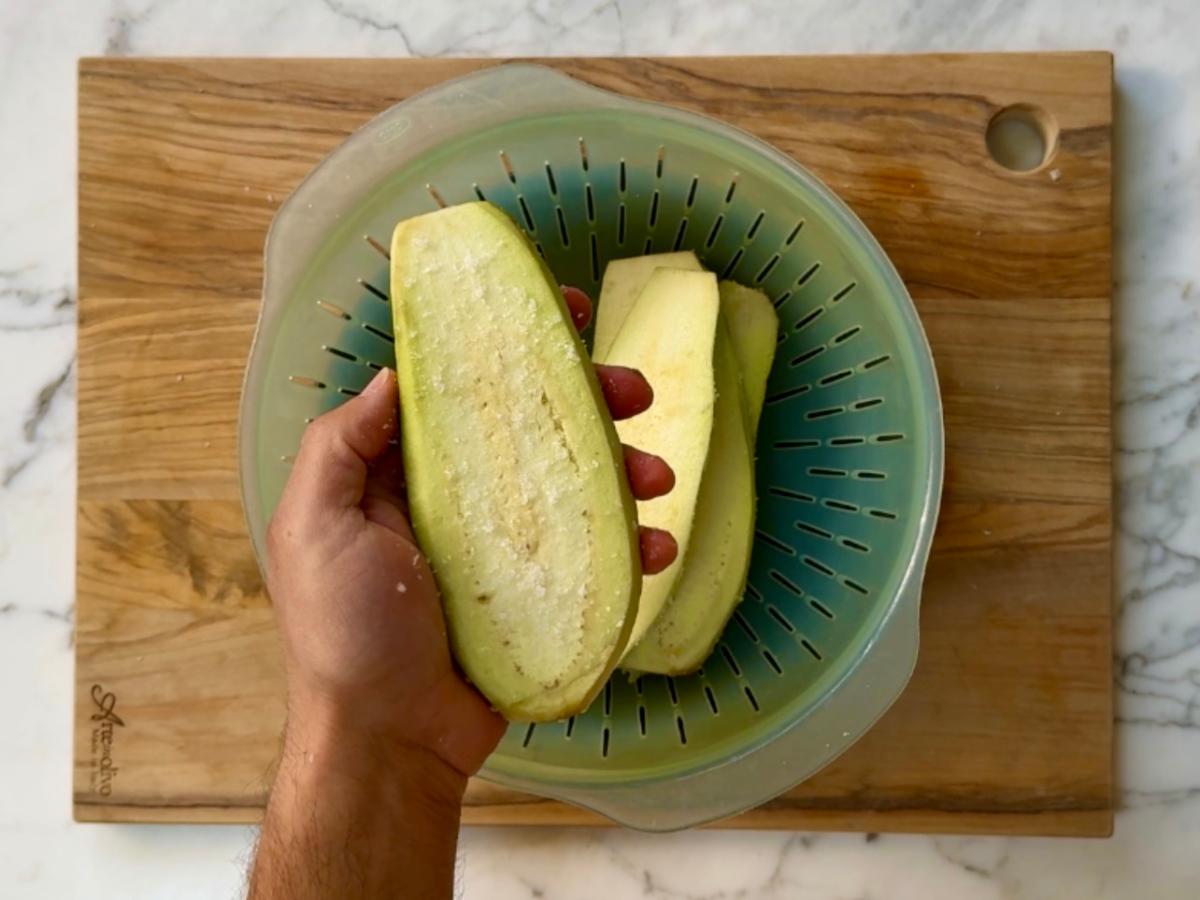
    salted sliced eggplant being handled
    1. Place the slices into a colander, sprinkle generously with salt, and let them rest for 15-20 minutes. Salting removes excess moisture and bitterness so your vegan eel sushi has the right texture.

    Make the unagi sauce
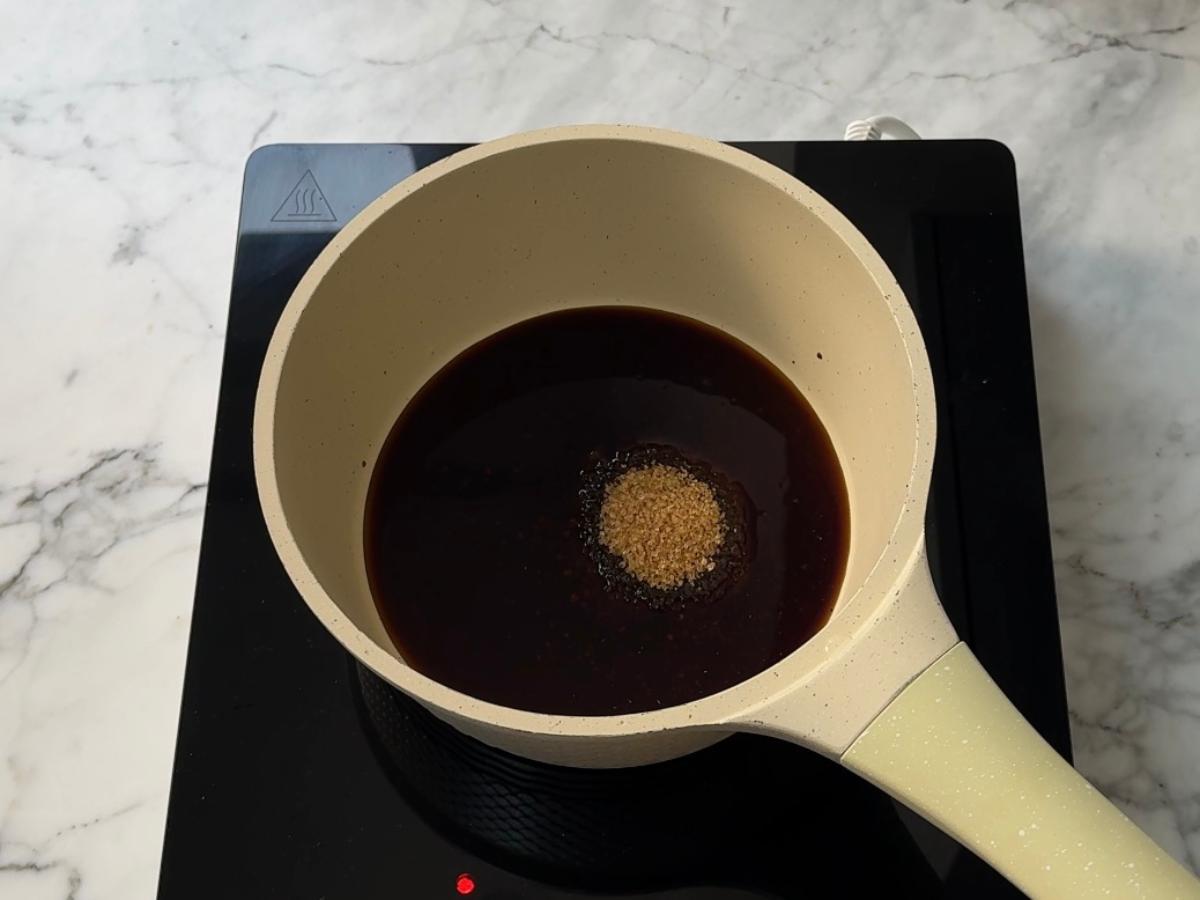
    sugar dissolving in unagi sauce in a saucepan
    1. While the aubergine rests, prepare the unagi sauce that will glaze it. Combine mirin, sake, sugar, and soy sauce in a small saucepan over low heat.
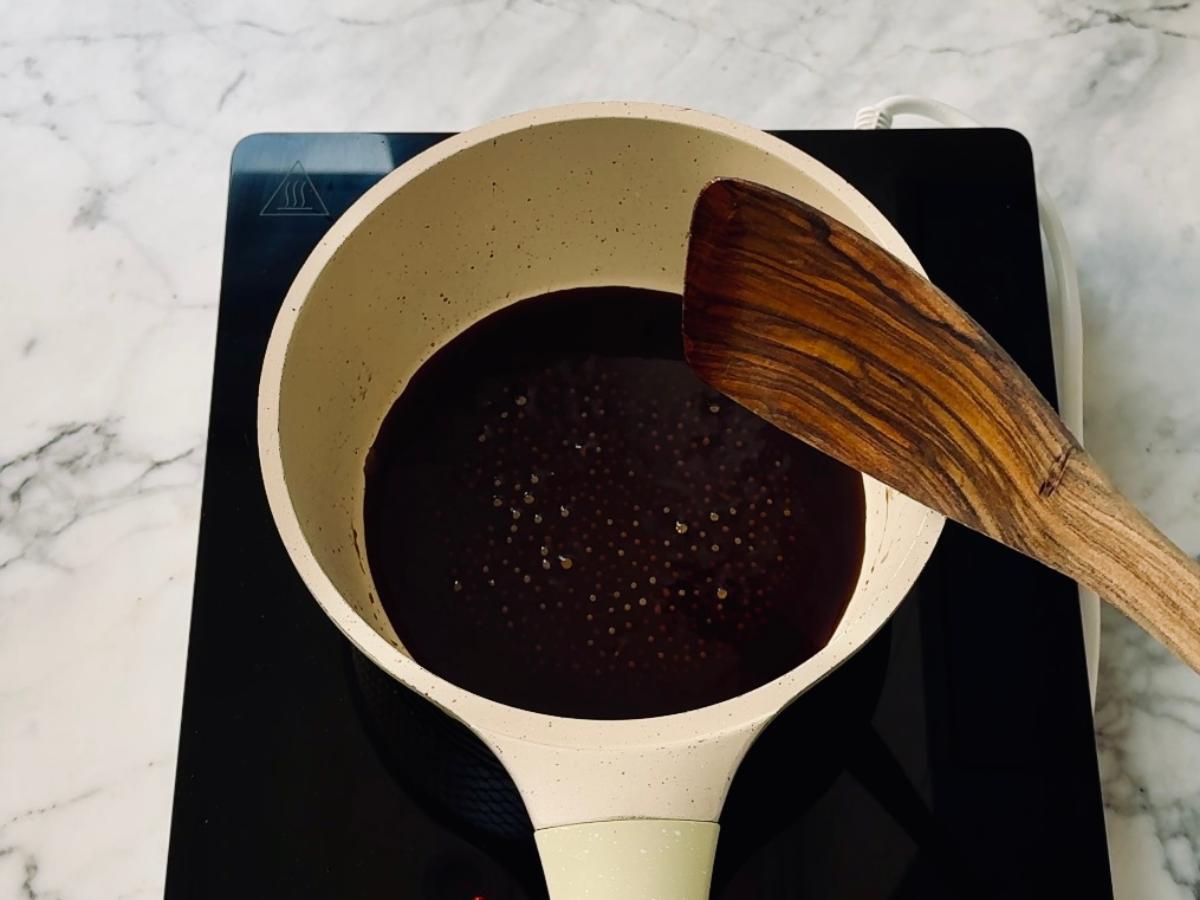
    unagi sauce simmering in a pan
    1. Simmer gently for about 5 minutes, stirring until the sugar dissolves and the sauce thickens slightly. Set aside. This glossy sauce is what gives vegan unagi nigiri its signature sweet savoury flavour.

    Cook the aubergine

    First, rinse the salted aubergine slices under cold water, then squeeze them gently to remove moisture. The colour will turn pale green, which is a sign they are ready to cook.
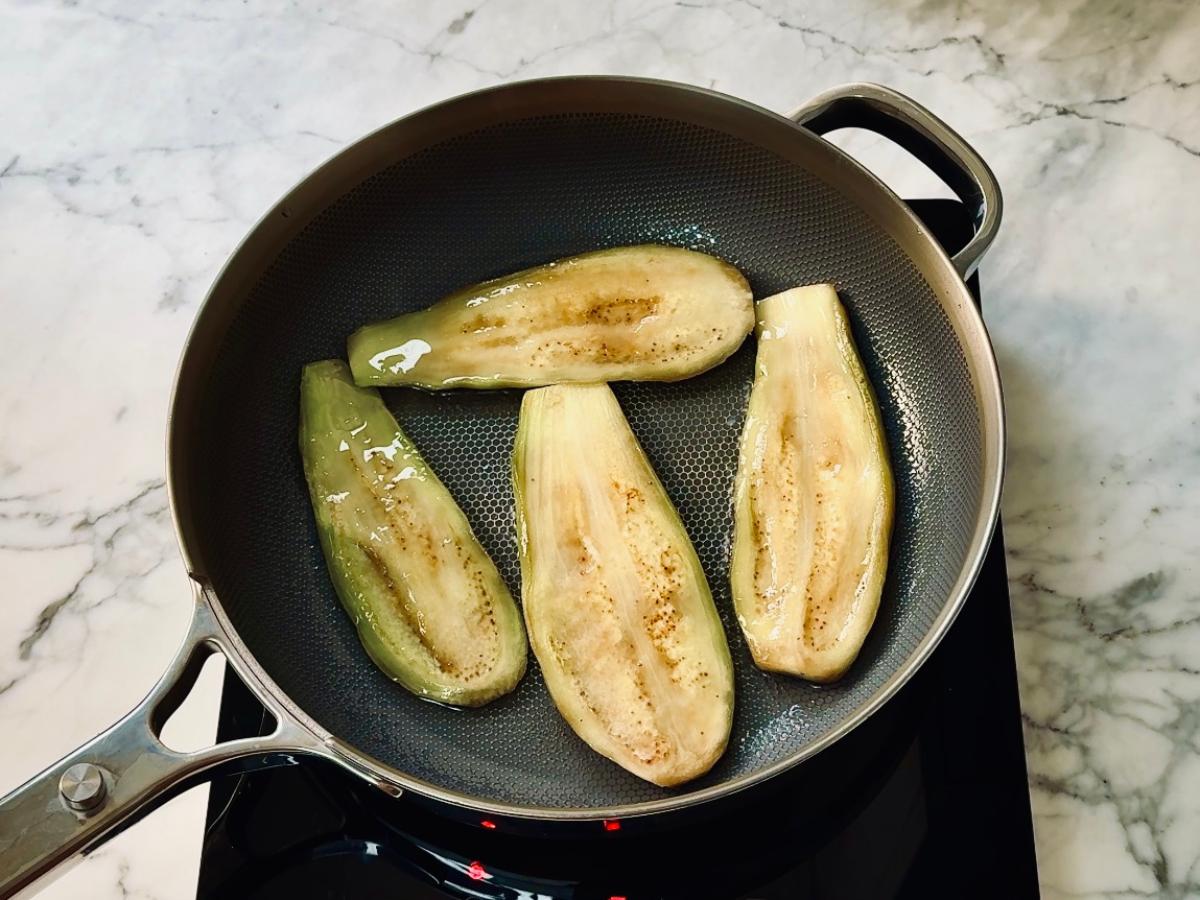
    eggplant fryng in a large frying pan
    1. Heat sunflower oil in a frying pan over medium heat. Fry the aubergine slices until browned evenly on each side.
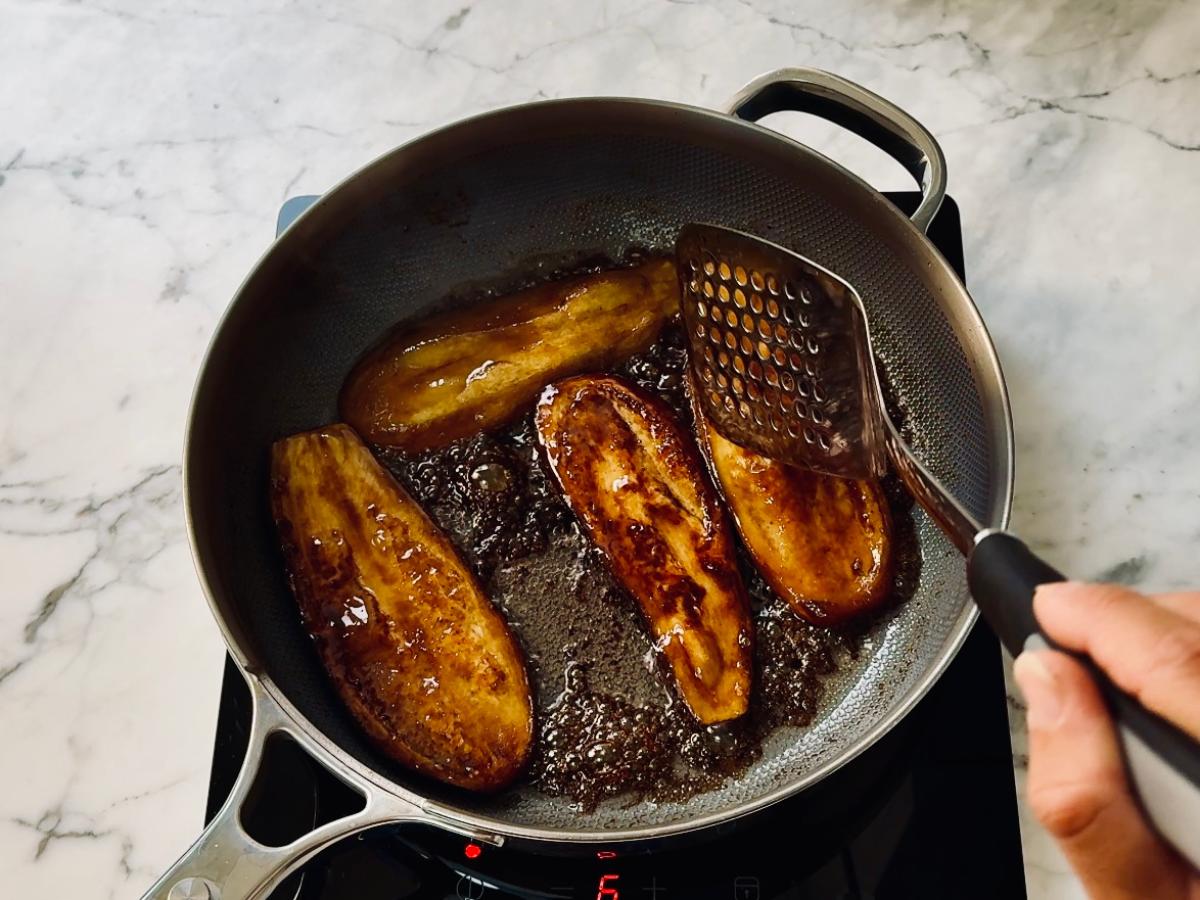
    eggplant frying in unagi sauce
    1. Pour the unagi sauce over the aubergine and turn the slices often so they soak up the glaze without burning. Cook until the sauce is absorbed and the aubergine looks caramelised and glossy, just like classic unagi.

    Top tip: Cook the aubergine until the exterior is golden and slightly caramelised. This creates a balance between the sweetness and umami. Each piece of your vegan 'eel' should be lightly seared to help lock in the flavours.
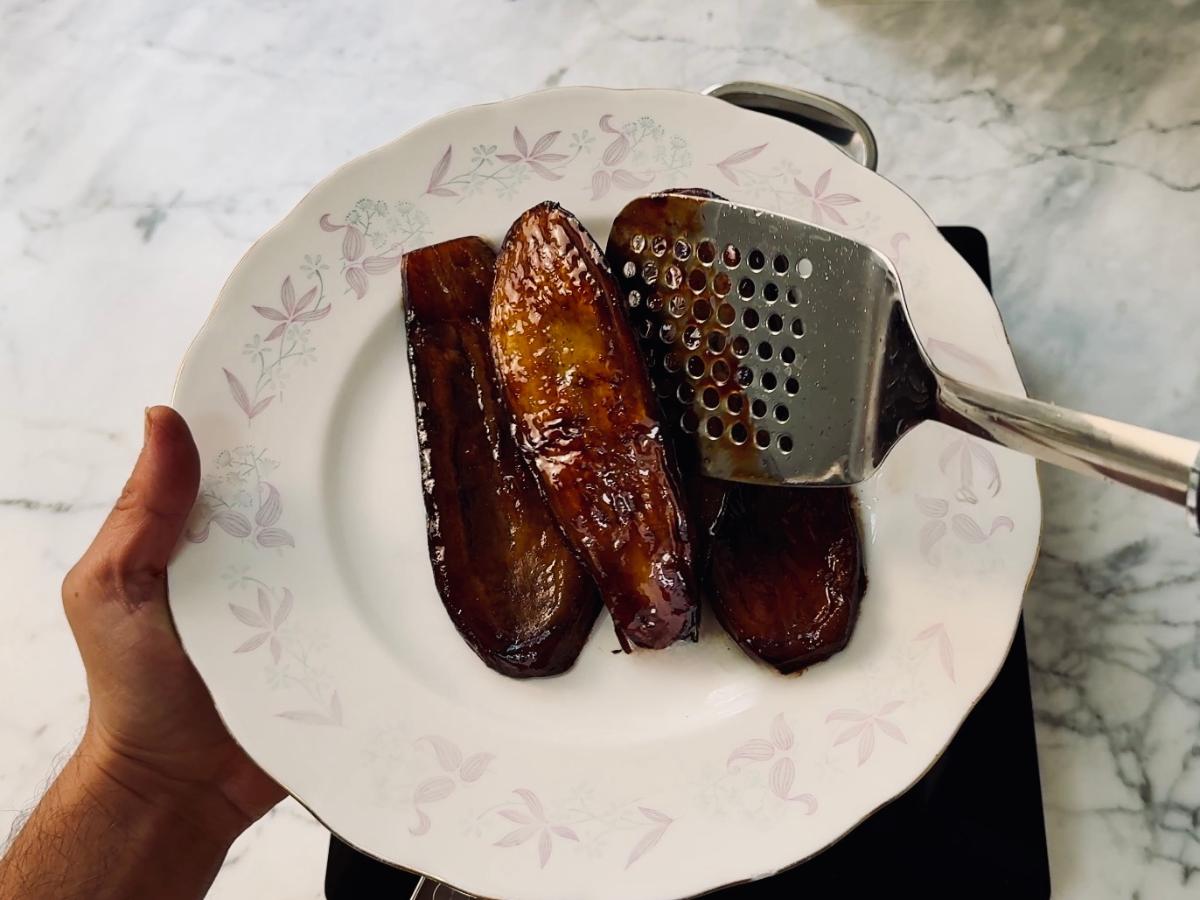
    cooked unagi eggplant being set aside on a plate
    1. Set the glazed aubergine aside to cool. Cooling helps the slices firm up so they sit neatly on the nigiri rice.

    Prepare the sushi rice

    We're nearly there. It's time to season our cooked sushi rice and then we can assemble the unagi nigiri.
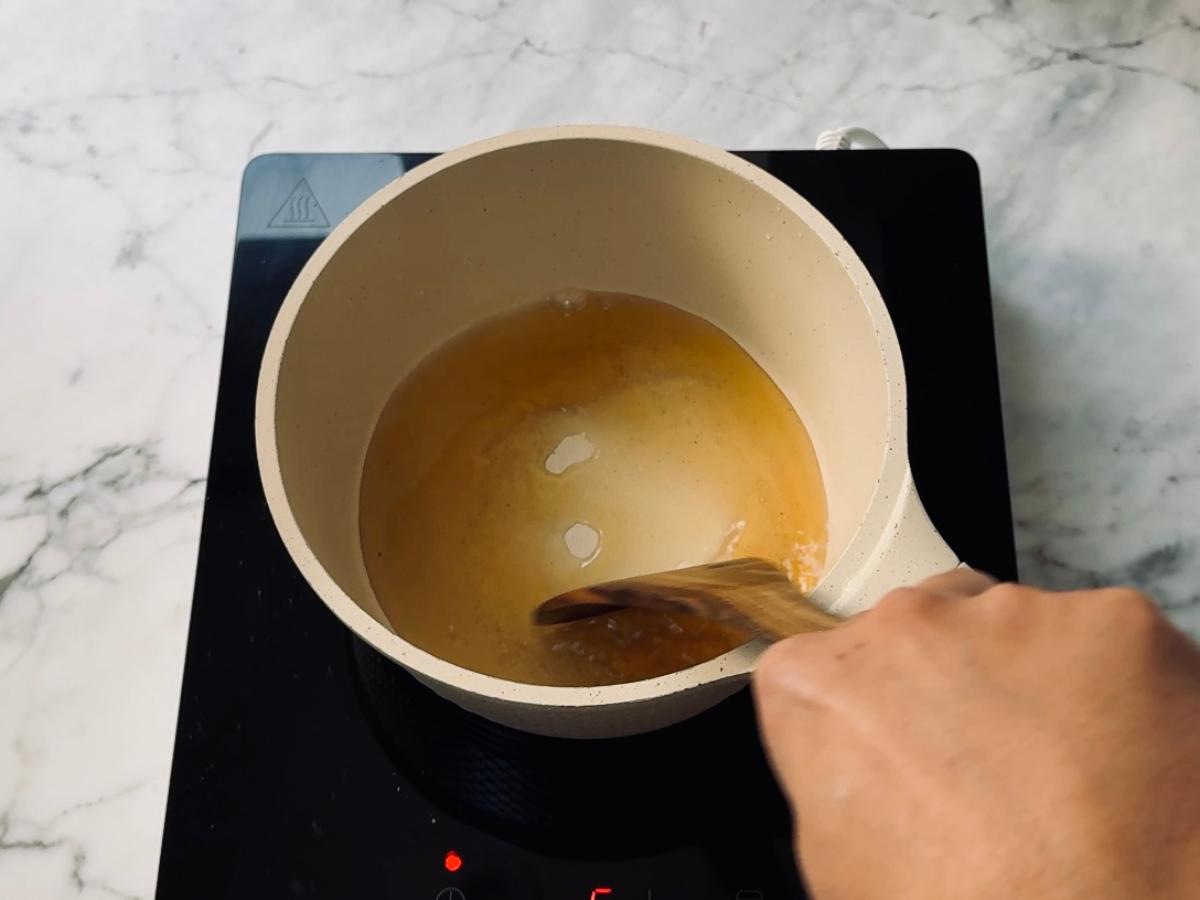
    sushi dressing being stirred in a pan over a low heat
    1. Make the sushi seasoning by combining vinegar, sugar, and salt in a small pan over low heat. Stir gently until everything dissolves completely.
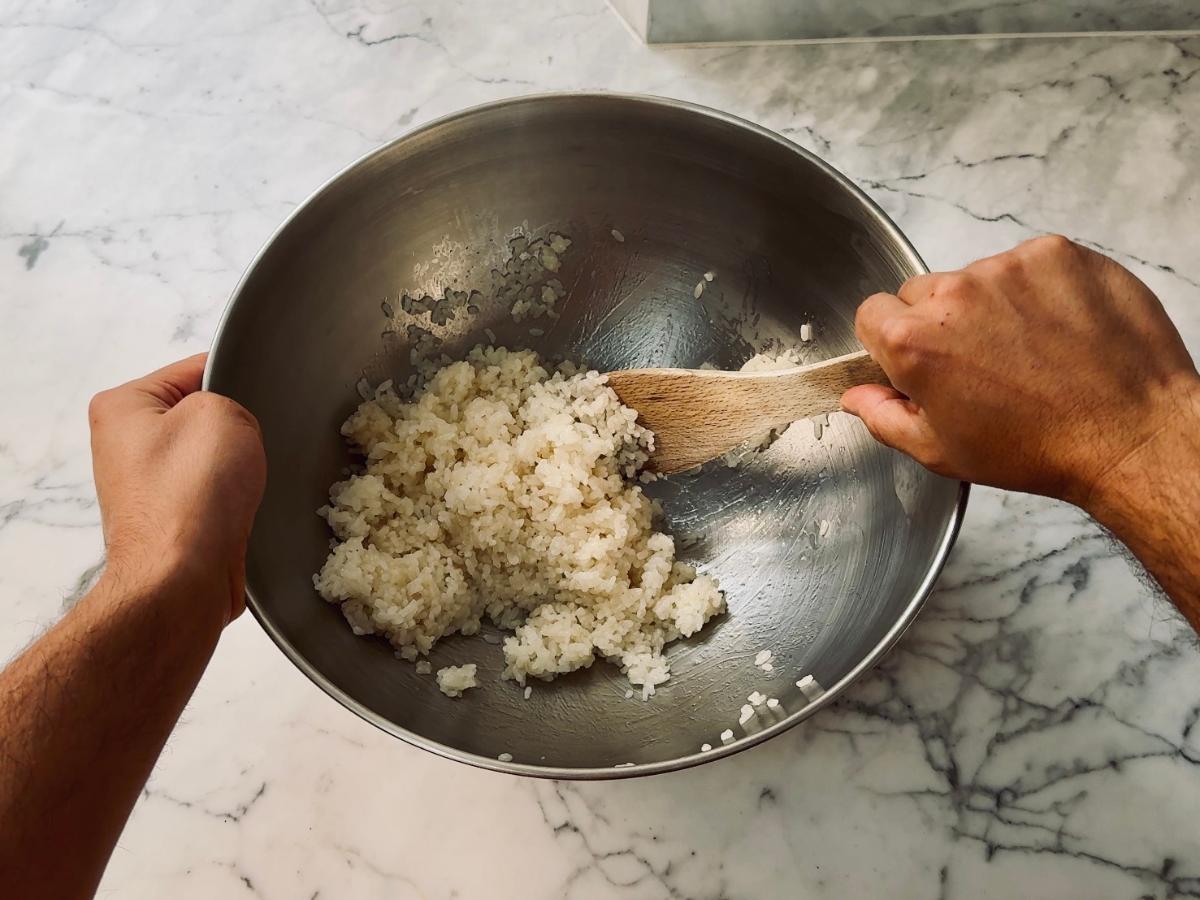
    sushi rice being stirred in a large bowl
    1. Fold the seasoning into your cooked Japanese short-grain rice. Work lightly so you don't crush the grains. Fluffy but sticky rice is the base for any good vegan nigiri.

    Shape and assemble the sushi

    Bringing all the components together is so satisfying, this is my favorite part! Shaping the rice, topping it with the glazed aubergine, and seeing your homemade vegan nigiri take form is always rewarding. Let's roll, assemble, and get it ready to serve.
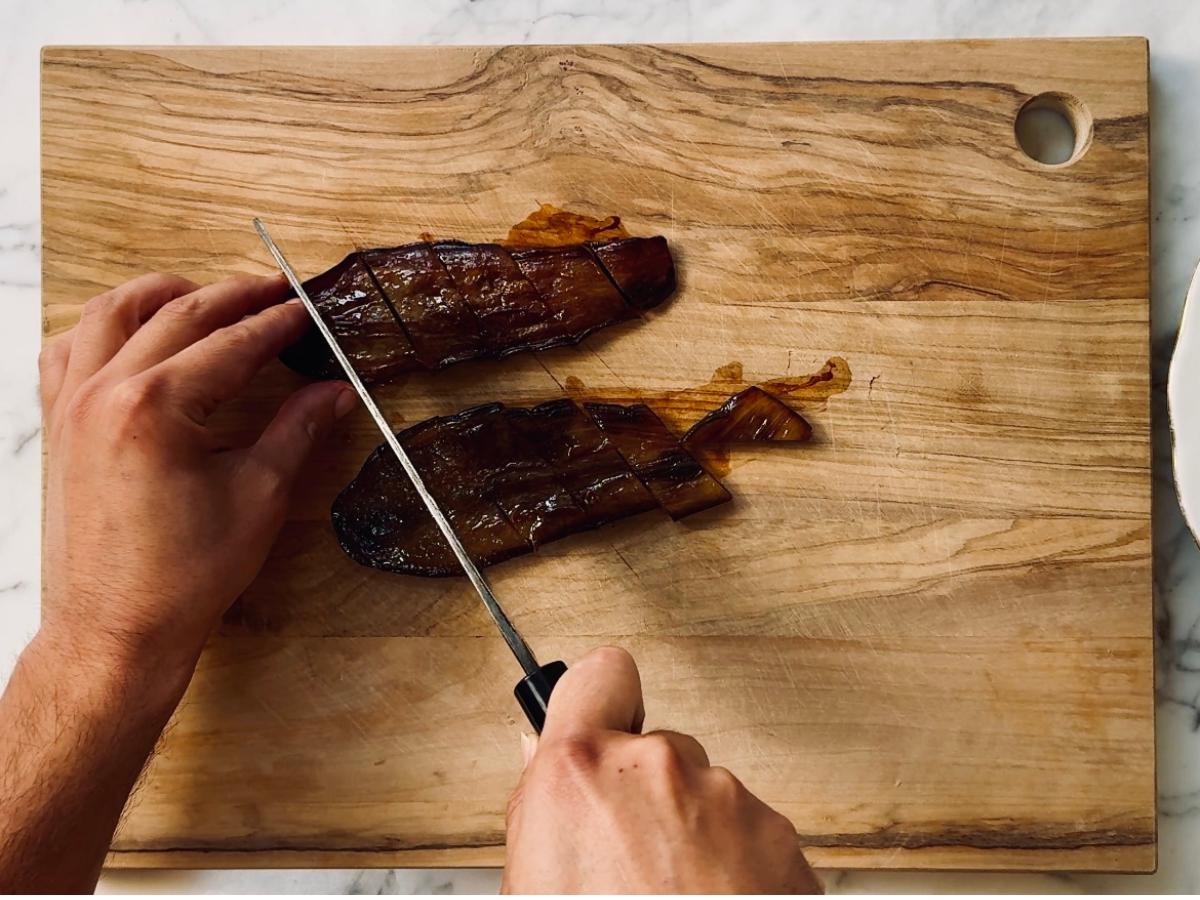
    Cooked eggplant being sliced on a wooden chopping board
    1. Cut the cooled aubergine into strips about 2-3 cm (1 inch) wide.
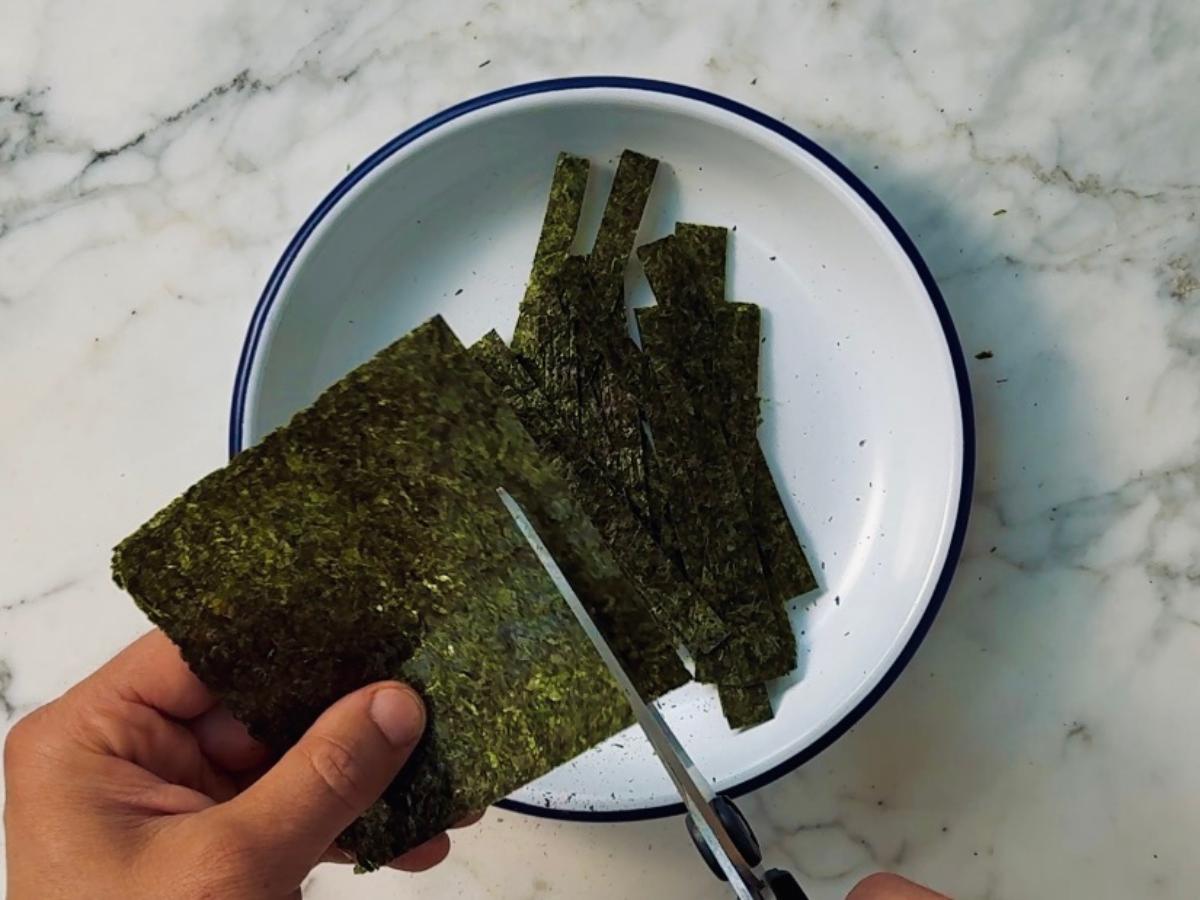
    Nori being sliced into strips with scissors
    1. Use kitchen scissors to cut the nori into thin strips (about 1 cm by 10 cm). These will hold the sushi together.
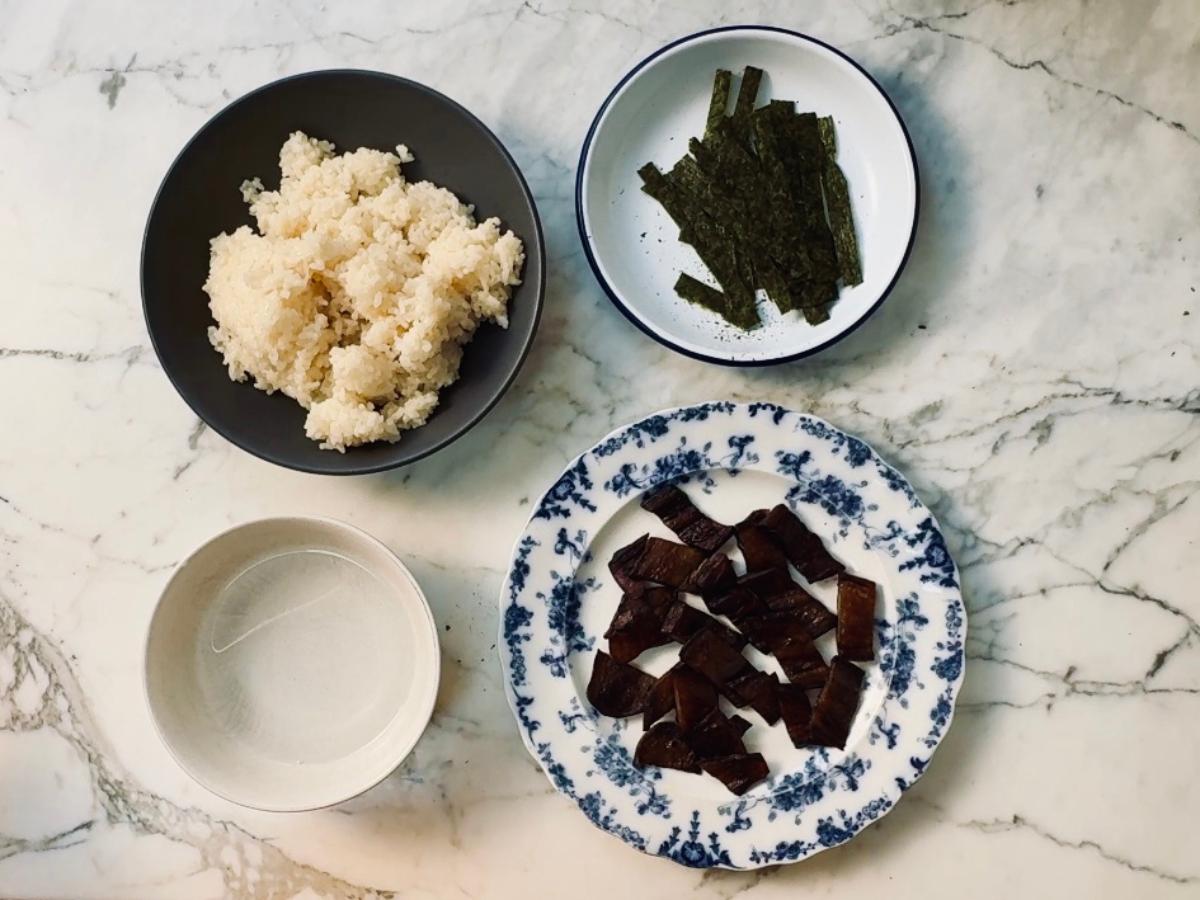
    A bowl of sushi rice, some nori strips, sliced eggplant and a bowl of water.
    1. Lay out your essentials: sushi rice, aubergine strips, nori strips, a bowl of water for your hands, and sesame seeds for garnish.
    rice being shaped by dampened hands
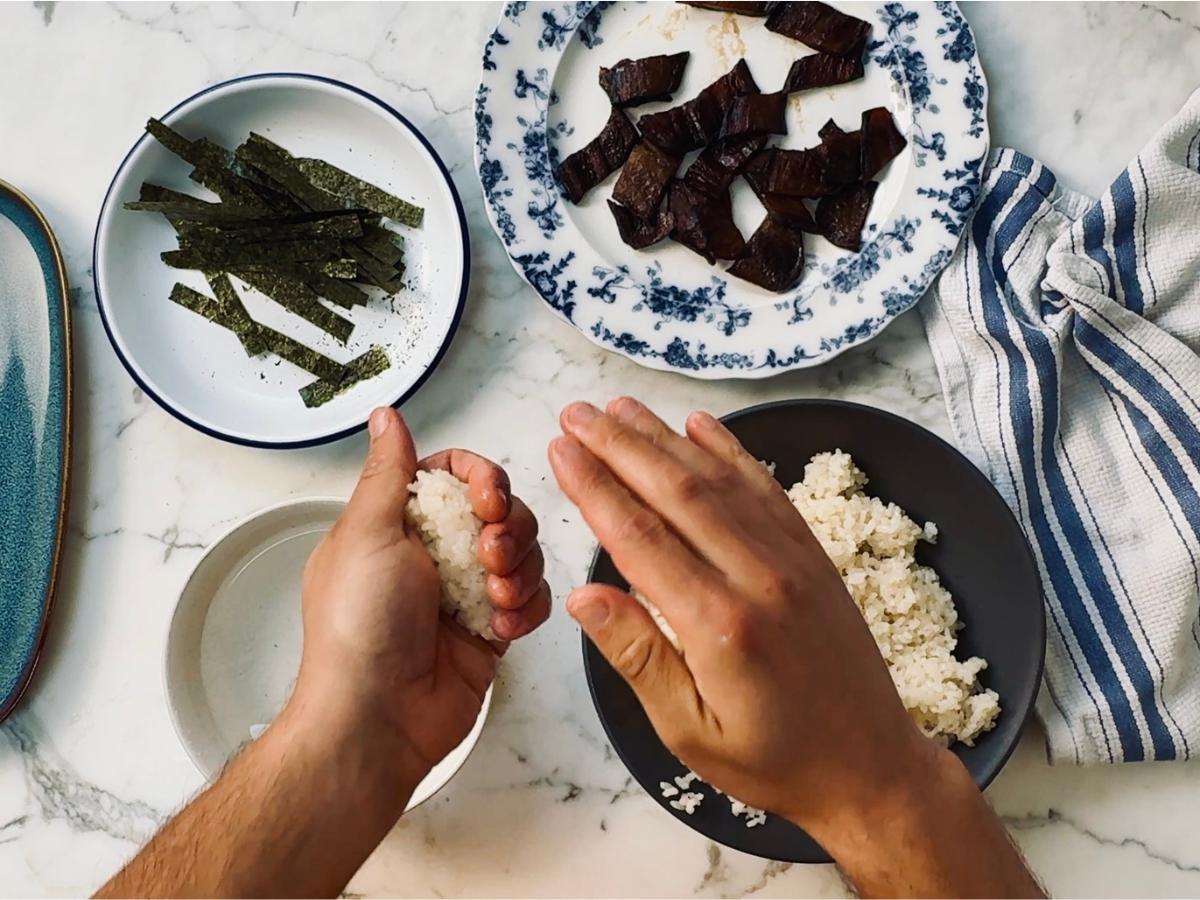
    1. Wet your hands lightly (not dripping) and take a ping-pong-ball-sized amount of rice in your non-dominant hand. Gently press it into a small oblong for nigiri.

    Top tip: When preparing nigiri, you want your hands to be damp but not dripping wet. By keeping your hands slightly moist, the rice won't stick excessively, allowing you to form each piece with more precision and ease.
    a pair of hands shaping rice into nigiri
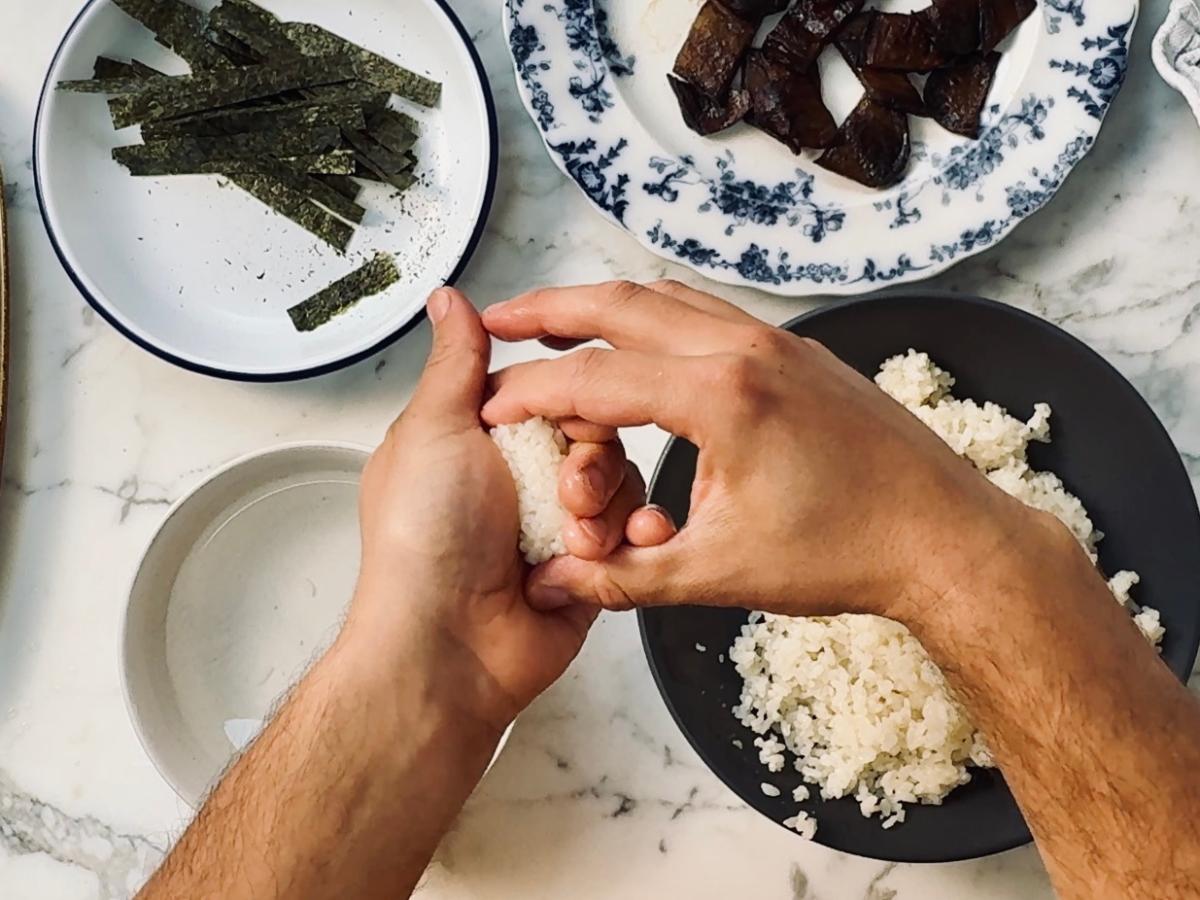
    1. With your other hand, gently pinch the top and bottom of the rice between your thumb and fingers. This compacts the grains lightly so the nigiri holds its shape.
    A pair of hands shaping a rice ball into nigiri
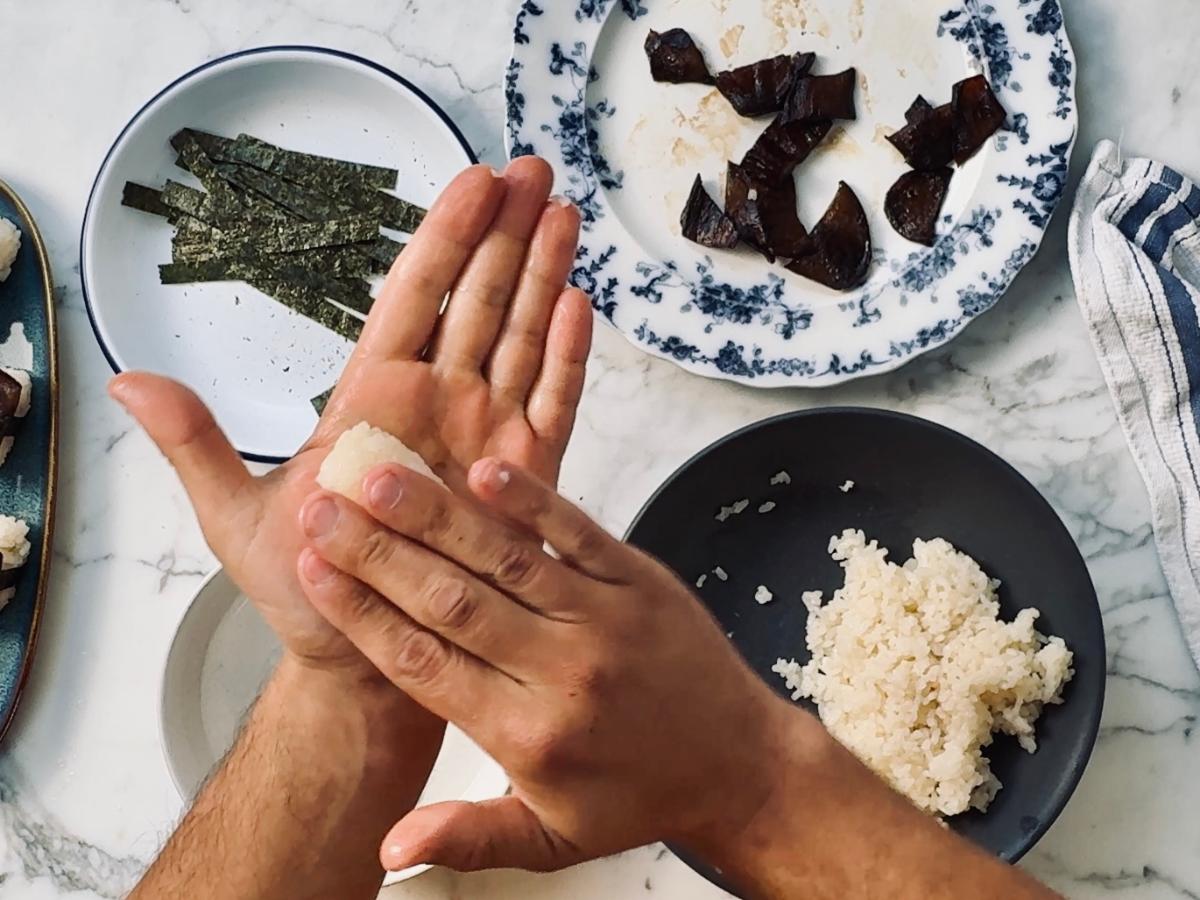
    1. Roll the rice gently to round the edges and create a smooth oblong, like a small sausage. Set the nigiri shape aside and continue with the rest of the rice, repeating until all portions are shaped into neat nigiri bases
    eggplant piece being placed on top of nigiri shaped rice
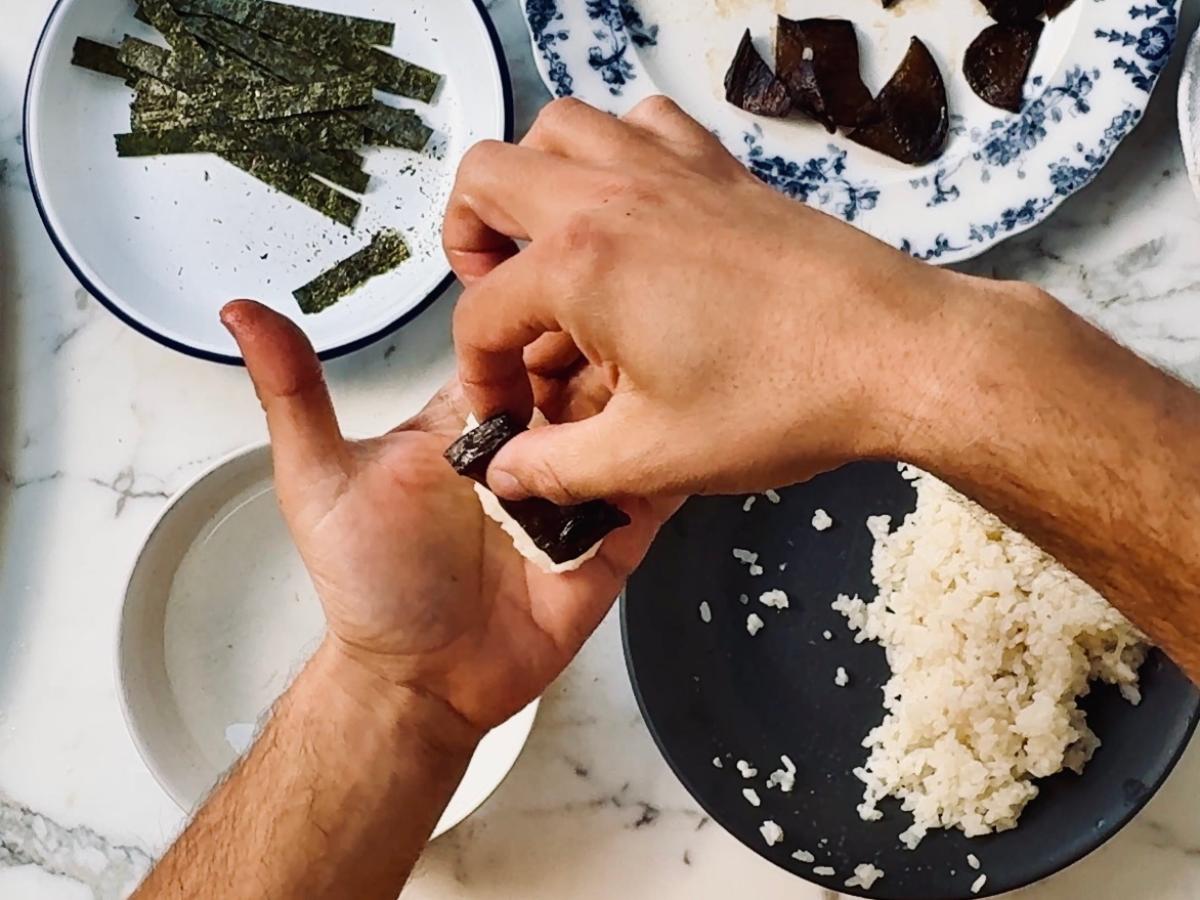
    1. Place an aubergine strip on top of each rice ball.
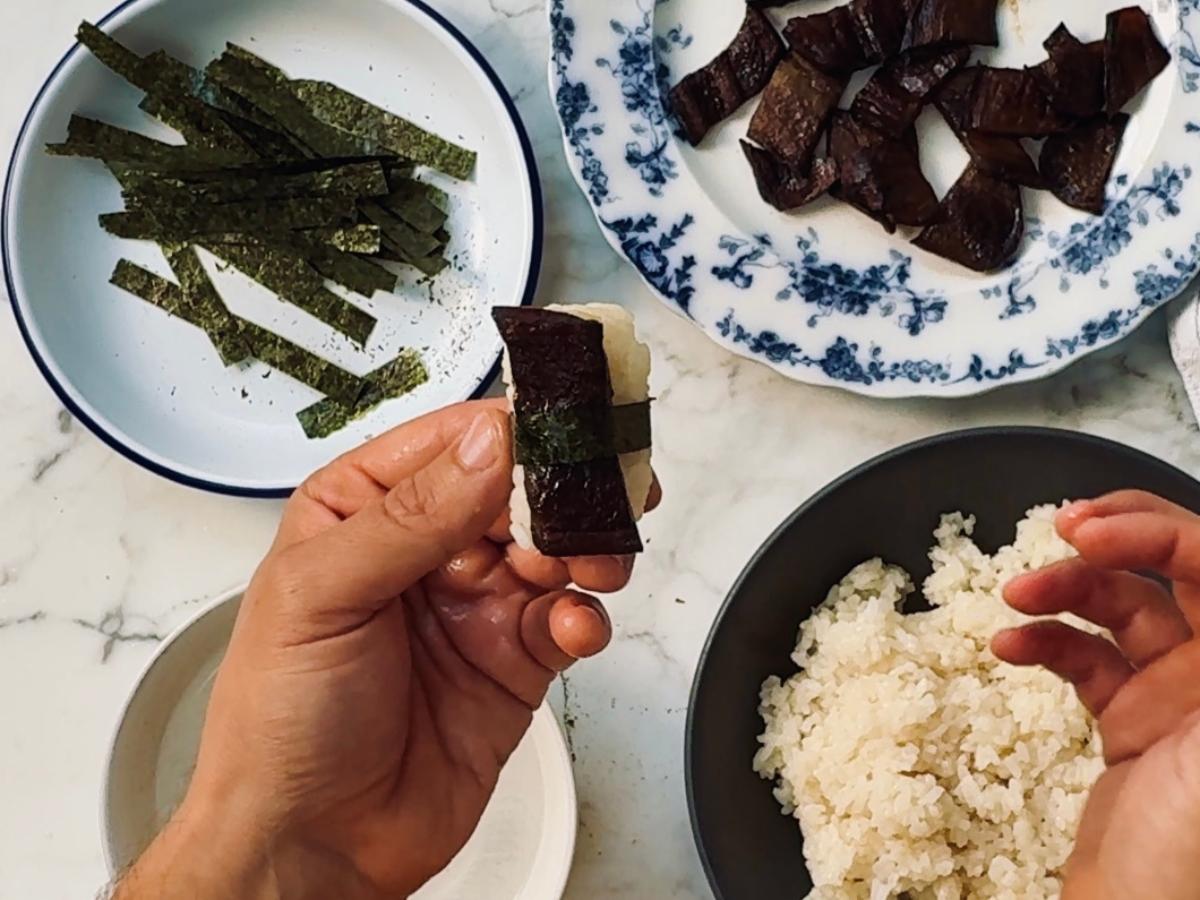
    nori strip wrapped around eggplant nigiri
    1. Wrap a nori strip around the middle to hold the rice and aubergine together. The sticky rice will help seal the nori in place.
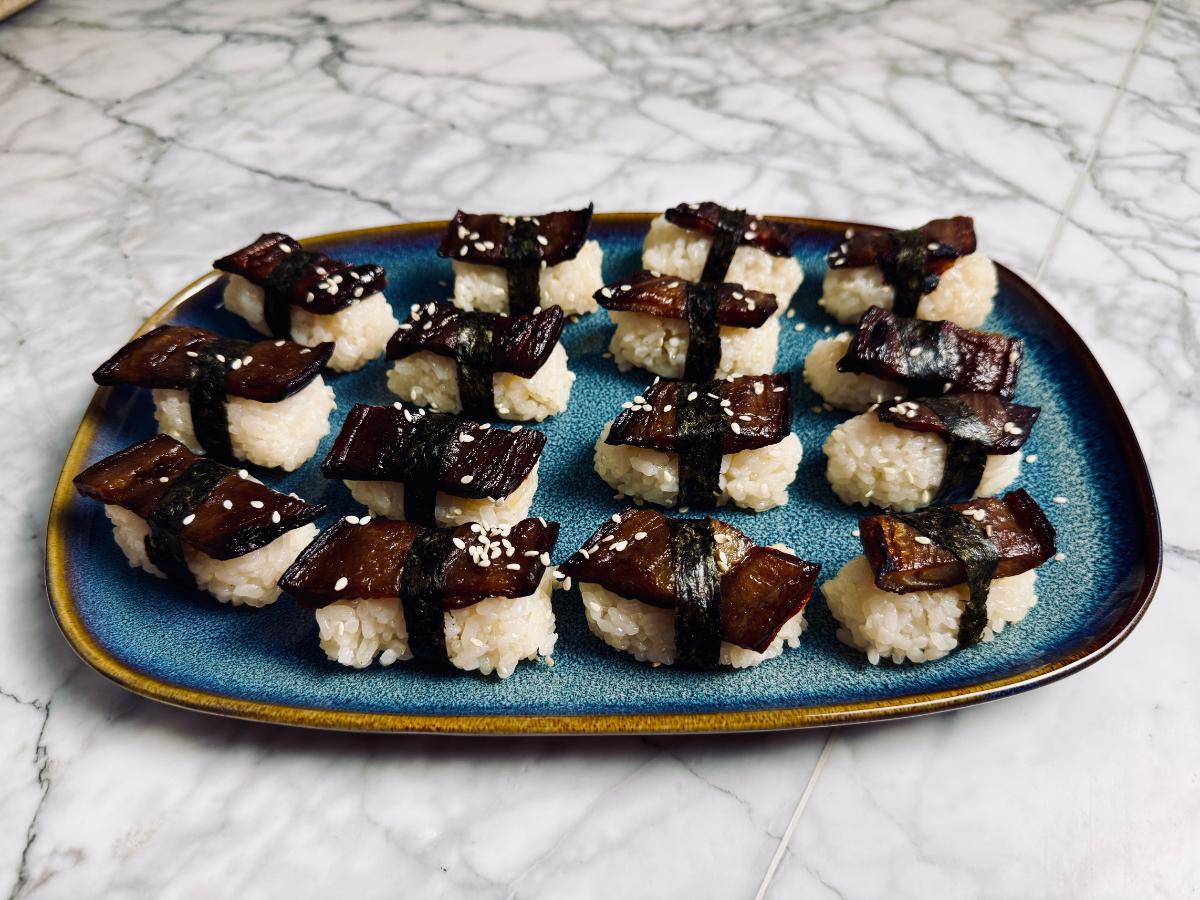
    sesame seeds sprinkled over eggplant nigiri
    1. Arrange the finished nigiri on a serving plate, or on a larger platter if making for a group. Sprinkle sesame seeds evenly over the top for garnish and extra flavour.
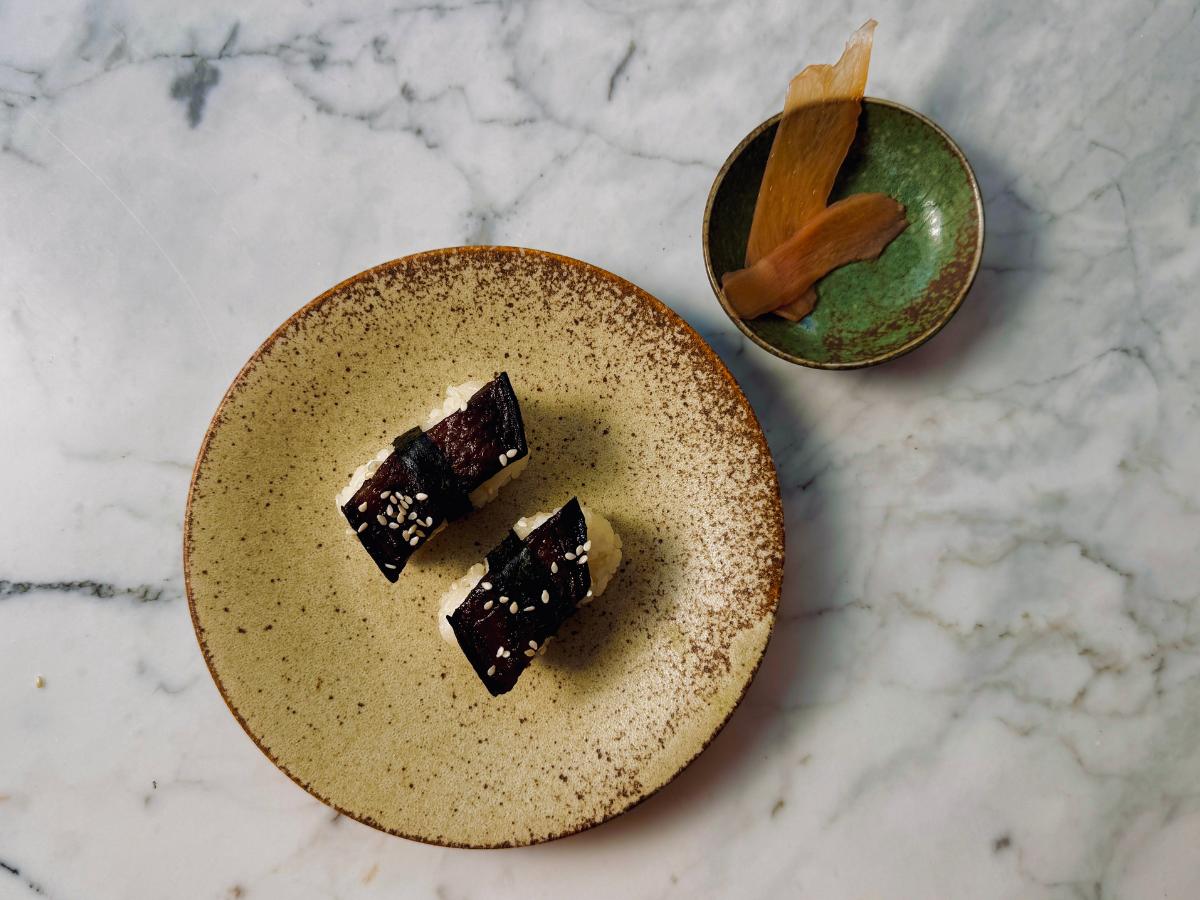
    two vegan eel sushi on a plate next to a small dish of pickled ginger
    1. Serve your vegan eel sushi with a small dish of soy sauce, a dab of wasabi, and slices of pickled ginger.


    How to Serve Vegan Unagi Nigiri

    For an extra flourish, lightly torch the glazed aubergine before assembly. It adds a smoky note and makes the vegan unagi nigiri look even closer to the real thing.

    For the freshest flavour, make your own pink pickled ginger to serve alongside. It adds colour to the plate and tastes beautiful with the aubergine.

    Other sides and drinks that pair beautifully with vegan unagi nigiri:

    • Vegan tempura
    • Mushroom gyoza
    • Yasai korokke
    • A refreshing yuzu cocktail
    • One of our favorite Japanese beers
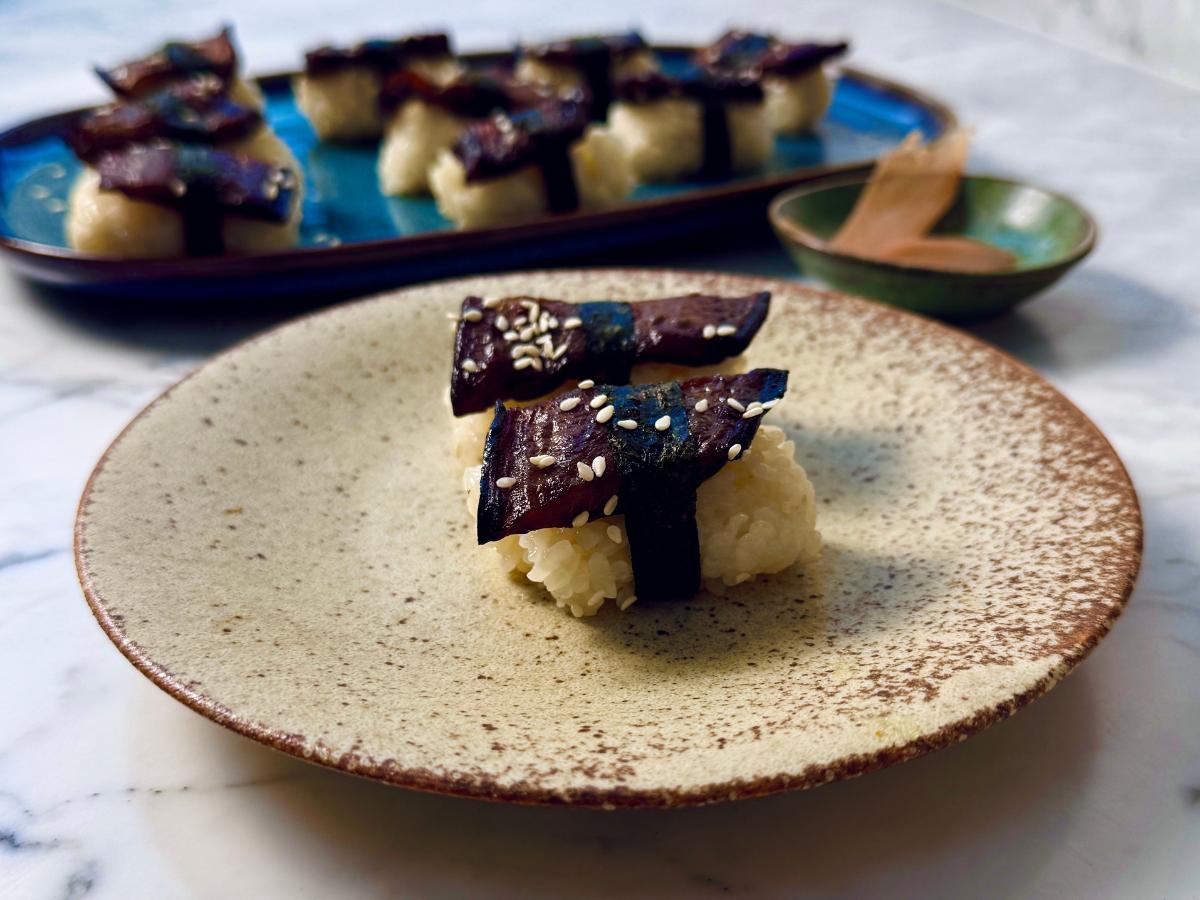
    two vegan eel sushi in front of a platter

    Substitutions

    To make vegan eel sushi completely gluten free, swap soy sauce for tamari or coconut aminos. Both give the same rich, savoury depth and dark colour as soy sauce, making them excellent alternatives.

    Variations

    You can easily change up the topping for your vegan nigiri:

    • Tofu or jackfruit: Marinated tofu or smoky jackfruit both have great texture and soak up flavour beautifully.
    • Classic options: Try creamy avocado, pickled radish, or roasted sweet potato.
    • Creative twists: Spicy mango sauce, cashew cream, or crispy tempura vegetables work well as extra toppings.
    • Mediterranean inspired: Sun dried tomatoes, tahini, and roasted peppers make a bold and tasty combination.

    We are always testing new ideas and have some new nigiri recipes coming soon. Let us know what we should try next!

    Equipment

    A sharp pair of kitchen scissors is essential for cutting nori cleanly, as it can tear easily. A simple bamboo sushi mat is also worth having. It does not need to be expensive, but it gives you the structure you need to shape rolls and nigiri neatly. Silicone mats are not recommended, as they are too flimsy and make shaping harder.

    Storage

    Vegan eel sushi is best eaten fresh, when the rice is fluffy and the aubergine glaze is at its best. If you have leftovers, store them in an airtight container in the refrigerator and eat within 24 hours. Freezing is not recommended, as it changes the texture of both the rice and aubergine.


    Unagi Nigiri FAQs

    What is vegan unagi nigiri made of?

    Instead of eel, this recipe uses aubergine (eggplant) glazed in homemade unagi sauce. Once caramelised, it has a silky texture and sweet savoury flavour similar to traditional eel sushi.

    Can you make eel sushi vegan?

    Yes. By swapping eel for aubergine, tofu, or even mushrooms, you can recreate the same style of nigiri with a plant based twist. The key is the unagi sauce, which gives this sushi its signature taste.

    What vegetables work best for vegan nigiri?

    Aubergine is the most popular, but avocado, pickled radish, roasted sweet potato, and marinated tofu all make delicious toppings for vegan nigiri.

    Is eel sauce vegan?

    Traditional eel sauce often contains fish, but this recipe makes it fully vegan with soy sauce, mirin, sake, and sugar. It has the same glossy, sweet savoury finish.

    Can I make vegan unagi nigiri gluten free?

    Yes. Simply replace soy sauce with tamari or coconut aminos when making the unagi glaze and sushi rice seasoning.

    Other popular recipes
    • Eggplant agebitashi on a wooden tray garnished with grated daikon, spring onions and ginger
    • Vegan fried chicken tofu piled on a small plate
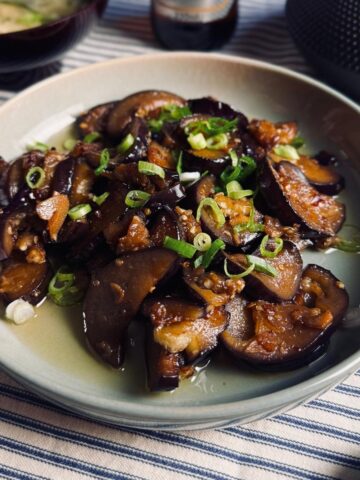
    • Beer and eggplant stir-fry in a shallow bowl garnished with spring onions
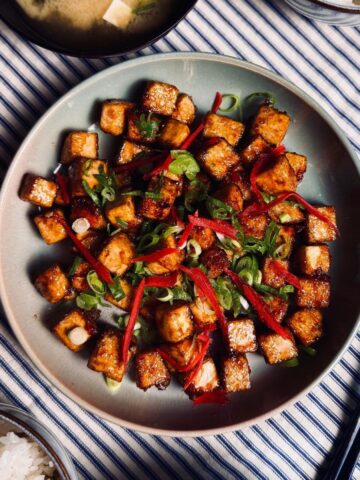
    • Sticky tofu on a plate garnished with spring onions and pickled ginger
    See more Side dishes →

    📖 Recipe

    Piece of vegan eel nigiri on a plate with pickled sushi ginger and wasabi

    Vegan Unagi Nigiri (Eggplant Eel Sushi)

    Aaron Fukuyama
    Tender aubergine slices glazed in sweet savoury unagi sauce, served over seasoned sushi rice and wrapped with nori. A plant based take on classic eel sushi.
    No ratings yet
    Print Recipe Pin Recipe
    Prep Time 30 minutes mins
    Cook Time 15 minutes mins
    Total Time 45 minutes mins
    Course Side Dish
    Cuisine Japanese, vegan, vegetarian
    Servings 4
    Calories 277 kcal

    Ingredients


    For the 'Eel':

    • 1 medium eggplant
    • 1 tablespoons salt just enough to salt the eggplant

    For the Sushi Rice:

    • 550 g cooked and seasoned sushi rice seasoned sushi rice recipe

    For the Unagi Sauce:

    • 2 tablespoons mirin
    • 2 teaspoons sake
    • 1 tablespoon sugar
    • 2 tablespoons soy sauce
    • 1 tablespoon sunflower oil or any other neutral cooking oil

    For presentation and serving:

    • 1 sheet nori cut into thin strips
    • 1 teaspoon sesame seeds (for garnish)
    • Wasabi, sushi ginger, and soy sauce (for serving)

    Instructions
      cook mode 

    Cook and prep the sushi rice

    • Get your rice on first - I've got a full guide covering both rice cooker and stovetop methods if you need it. Whilse it's cooking, crack on with the steps below and then season it just before you're ready to shape and assemble; timing it right makes all the difference.

    Prepare the aubergine

    • Peel the aubergine and slice into long strips, about a half inch thick
    • Place the slices in a colander, sprinkle with salt, and leave for 15-20 minutes to draw out excess moisture and bitterness.

    Make the unagi sauce

    • In a small saucepan, combine mirin, sake, sugar, and soy sauce.
    • Simmer over low heat for 5 minutes until slightly thickened, then set aside.

    Cook the aubergine

    • Rinse the salted aubergine and gently squeeze out the water.
    • Heat oil in a frying pan and cook the slices until browned on both sides.
    • Add the unagi sauce and cook until the aubergine is glazed and the liquid absorbed. Set aside to cool.

    Shape and assemble

    • Cut the cooled aubergine into strips about 2-3 cm wide.
    • Cut nori into thin strips (about 1 × 10 cm).
    • Wet your hands lightly and take a small ball of rice in one hand. Shape it into a neat oblong for nigiri, then set aside. Repeat until all the rice is shaped.
    • For each nigiri rice base: Place an aubergine strip on top, then wrap with a strip of nori to hold it together.
    • Arrange the finished nigiri on a plate, sprinkle with sesame seeds, and serve with soy sauce, wasabi, and pickled ginger.

    Notes

    Salt the aubergine first: Sprinkle generously with salt and leave for 15-20 minutes. This draws out excess moisture and bitterness, giving you the right silky texture once glazed.
    Rinse and squeeze well: After salting, rinse the aubergine slices under cold water and gently squeeze out the moisture. The colour will turn pale green — that's your sign they're ready to cook.
    Glaze slowly: Add the unagi sauce to the pan and turn the slices often so they soak up the glaze evenly without burning. Cook until caramelised and glossy.
    Cool before assembling: Let the glazed aubergine cool before slicing and placing on the nigiri. Cooling helps the slices firm up so they sit neatly on the rice.
    Damp hands for shaping: Keep your hands lightly damp when shaping the rice — not dripping wet. This stops the rice sticking while still letting you form clean, compact nigiri.
    Torch for extra authenticity: Lightly torch the glazed aubergine before assembly for a smoky note that makes it look and taste even closer to traditional unagi.
    Gluten free: Swap soy sauce for tamari or coconut aminos in both the unagi glaze and sushi rice seasoning.
    Best eaten fresh: The rice and glaze are at their best straight away. Leftovers can be stored in an airtight container in the fridge for up to 24 hours — freezing is not recommended.

    Nutrition

    Serving: 4 piecesCalories: 277kcalCarbohydrates: 54gProtein: 5gFat: 5gSaturated Fat: 1gPolyunsaturated Fat: 0.4gMonounsaturated Fat: 3gSodium: 2637mgPotassium: 324mgFiber: 4gSugar: 14gVitamin A: 59IUVitamin C: 3mgCalcium: 23mgIron: 1mg
    Tried this recipe?Let us know how it was!

    More Rice

    • Vegan Japanese rice recipes collage poster
      My Favourite Vegan Japanese Rice Recipes
    • Vegan Japanese sushi recipes collage poster
      Our Favourite Vegan Sushi
    • Two pieces of vegan California roll on a scallop edged plate
      Vegan California Rolls
    • Bowl of vegan Japanese mountain vegetable rice (sansai gohan) with seasonal greens and wild vegetables over sticky rice
      Sansai Gohan (山菜ご飯 - Mountain Vegetable Rice)

    Leave a Reply Cancel reply

    Your email address will not be published. Required fields are marked *

    Recipe Rating


    profile photo of Aaron (founder/recipe creator)

    Hi, I'm Aaron!

    Half Japanese and passionate about plant-based cooking. I'm Aaron Fukuyama - here to help you bring simple, delicious Japanese flavours into your own kitchen.

    More about me →

    Popular Recipes

    • Serving of tofu noodles in a patterned bowl
      Tofu Noodles: Quick Vegan Stir-Fry in 20 Minutes
    • Yuzu cocktails collage poster
      Top 5 Yuzu Cocktails (Japanese Citrus Drinks to Try)
    • Yuzu gin fizz served in an old-fashioned glass over ice with a fresh herb garnish
      Yuzu Gin Fizz | Vegan Japanese Pink Gin Fizz Cocktail
    • Yuzu ramen in a bowl
      Yuzu Ramen (Japanese Citrus Noodle Soup Recipe)
    • Yuzu gin sour in an old fashioned glass on a garden table
      Yuzu Gin Sour (Easy Japanese Gin Cocktail Recipe)
    • White dish with thinly sliced Japanese-style pink radish pickles in pickling liquid
      Pink Radish Pickles

    Trending Recipes

    • Homemade rayu Japanese chili oil in a jar
      Homemade Rayu (Japanese Ramen Chili Oil) Recipe
    • Vegan miso ramen in a bowl with toppings and chopsticks resting on the rim
      Vegan Miso Ramen - Quick 10 Minute Recipe
    • Miso walnut pesto spaghetti on a plate garnished with thyme
      Miso Pesto: A Japanese Twist on Classic Pesto
    • Vegan tofu recipes collage featuring agedashi tofu, sticky tofu, kake udon and tofu noodles
      Top 9 Vegan Tofu Recipes
    • Four Japanese eggplant recipes collage
      Top 5 Japanese Eggplant Recipes
    • Mabo nasu mapo eggplant served on a bed of white rice
      Mabo Nasu (Mapo Eggplant 麻婆茄子)

    Footer

    ↑ back to top

    About

    • Privacy Policy
    • Terms & Conditions
    • Accessibility Policy

    Newsletter

    • Sign up

    Contact

    • Contact
    • Services

    Copyright © 2026 Vegan Japanese. All rights reserved.

    Vegan Japanese
    Manage Consent
    To provide the best experiences, we use technologies like cookies to store and/or access device information. Consenting to these technologies will allow us to process data such as browsing behavior or unique IDs on this site. Not consenting or withdrawing consent, may adversely affect certain features and functions.
    Functional Always active
    The technical storage or access is strictly necessary for the legitimate purpose of enabling the use of a specific service explicitly requested by the subscriber or user, or for the sole purpose of carrying out the transmission of a communication over an electronic communications network.
    Preferences
    The technical storage or access is necessary for the legitimate purpose of storing preferences that are not requested by the subscriber or user.
    Statistics
    The technical storage or access that is used exclusively for statistical purposes. The technical storage or access that is used exclusively for anonymous statistical purposes. Without a subpoena, voluntary compliance on the part of your Internet Service Provider, or additional records from a third party, information stored or retrieved for this purpose alone cannot usually be used to identify you.
    Marketing
    The technical storage or access is required to create user profiles to send advertising, or to track the user on a website or across several websites for similar marketing purposes.
    • Manage options
    • Manage services
    • Manage {vendor_count} vendors
    • Read more about these purposes
    View preferences
    • {title}
    • {title}
    • {title}
    Vegan Japanese
    Manage Consent
    To provide the best experiences, we use technologies like cookies to store and/or access device information. Consenting to these technologies will allow us to process data such as browsing behavior or unique IDs on this site. Not consenting or withdrawing consent, may adversely affect certain features and functions.
    Functional Always active
    The technical storage or access is strictly necessary for the legitimate purpose of enabling the use of a specific service explicitly requested by the subscriber or user, or for the sole purpose of carrying out the transmission of a communication over an electronic communications network.
    Preferences
    The technical storage or access is necessary for the legitimate purpose of storing preferences that are not requested by the subscriber or user.
    Statistics
    The technical storage or access that is used exclusively for statistical purposes. The technical storage or access that is used exclusively for anonymous statistical purposes. Without a subpoena, voluntary compliance on the part of your Internet Service Provider, or additional records from a third party, information stored or retrieved for this purpose alone cannot usually be used to identify you.
    Marketing
    The technical storage or access is required to create user profiles to send advertising, or to track the user on a website or across several websites for similar marketing purposes.
    • Manage options
    • Manage services
    • Manage {vendor_count} vendors
    • Read more about these purposes
    View preferences
    • {title}
    • {title}
    • {title}

    Rate This Recipe

    Your vote:


    A rating is required
    A name is required
    An email is required

    Vegan Unagi Nigiri (Eggplant Eel Sushi)

    Vegan Unagi Nigiri (Eggplant Eel Sushi)

    Ingredients

    For the ‘Eel’:
    • 1 medium eggplant
    • 1 tablespoons salt (just enough to salt the eggplant)
    For the Sushi Rice:
    • 550 g cooked and seasoned sushi rice (seasoned sushi rice recipe)
    For the Unagi Sauce:
    • 2 tablespoons mirin
    • 2 teaspoons sake
    • 1 tablespoon sugar
    • 2 tablespoons soy sauce
    • 1 tablespoon sunflower oil (or any other neutral cooking oil)
    For presentation and serving:
    • 1 sheet nori (cut into thin strips)
    • 1 tsp sesame seeds ((for garnish))
    • Wasabi, sushi ginger, and soy sauce ((for serving))
    1
    Get your rice on first - I've got a full guide covering both rice cooker and stovetop methods if you need it. Whilse it's cooking, crack on with the steps below and then season it just before you're ready to shape and assemble; timing it right makes all the difference.
    2
    Peel the aubergine and slice into long strips, about a half inch thick
    3
    Place the slices in a colander, sprinkle with salt, and leave for 15–20 minutes to draw out excess moisture and bitterness.
    4
    In a small saucepan, combine mirin, sake, sugar, and soy sauce.
    5
    Simmer over low heat for 5 minutes until slightly thickened, then set aside.
    6
    Rinse the salted aubergine and gently squeeze out the water.
    7
    Heat oil in a frying pan and cook the slices until browned on both sides.
    8
    Add the unagi sauce and cook until the aubergine is glazed and the liquid absorbed. Set aside to cool.
    9
    Cut the cooled aubergine into strips about 2–3 cm wide.
    10
    Cut nori into thin strips (about 1 × 10 cm).
    11
    Wet your hands lightly and take a small ball of rice in one hand. Shape it into a neat oblong for nigiri, then set aside. Repeat until all the rice is shaped.
    12
    For each nigiri rice base: Place an aubergine strip on top, then wrap with a strip of nori to hold it together.
    13
    Arrange the finished nigiri on a plate, sprinkle with sesame seeds, and serve with soy sauce, wasabi, and pickled ginger.

    Hope you enjoyed cooking this recipe!

    Please rate this recipe to help others find it.

    step 1 of 13