Vegan Japanese

  • Recipes
  • About
  • Contact
menu icon
go to homepage
  • Recipes
  • About
  • Contact
    • Instagram
    • TikTok
  • search icon
    Homepage link
    • Recipes
    • About
    • Contact
    • Instagram
    • TikTok
  • ×
    Home » Noodles & Pasta

    Published: Dec 4, 2023 · Modified: Oct 20, 2025 by Aaron Fukuyama · This post may contain affiliate links · Leave a Comment

    Japanese Mushroom Spaghetti

    Jump to Recipe Print Recipe

    This Japanese Mushroom Spaghetti is one of the simplest examples of wafu pasta, or Japanese-style spaghetti. Instead of tomato or cream sauces, wafu pasta leans on soy sauce, mushrooms, seaweed, and other everyday Japanese pantry staples. By combining fresh mushrooms with dried shiitake, then garlic, soy sauce, and mirin, you end up with a pasta sauce that is full of umami and ready in less than half an hour.

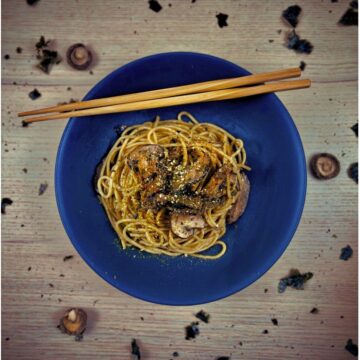
    A ceramic bowl, with chopsticks resting on the edge, containing spaghetti topped with mushrooms, seaweed flakes and red Japanese spice powder.

    What is wafu pasta?

    Wafu pasta is the name given to Japanese-style pasta dishes. When spaghetti first became popular in Japan more than a century ago, cooks began pairing it with familiar seasonings like soy sauce, miso, and nori. Over time, these combinations developed into a whole category of pasta that you'll now find everywhere from family kitchens to casual cafés. If you would like to try another classic example, take a look at our recipe for Takana Spaghetti, which uses Japanese mustard greens for a completely different but equally delicious version.

    For us, this mushroom spaghetti has become a weeknight staple because it is quick, vegan-friendly, and works with any mushroom or combination of mushrooms available. It's also straightforward to make without being complicated.

    Let's look at some of the mushrooms and other ingredients that make this wafu spaghetti work.

    Jump to:
    • Mushrooms and Seasonings for Japanese Spaghetti
    • Ingredients
    • How to Make Japanese Mushroom Spaghetti
    • Toppings and Variations
    • Storage and Leftovers
    • FAQ
    • Other popular recipes
    • 📖 Recipe

    Mushrooms and Seasonings for Japanese Spaghetti

    The mushrooms are the heart of this recipe. We like using a mix of chestnut, flat field, and shiitake because they each bring something different to the table. Chestnut mushrooms are earthy, flat fields are meaty and soft, and I love the texture of shiitake mushrooms and their delicious umami flavor. If you can't find these exact ones, don't worry. This pasta works with any mushroom or combination of mushrooms. Enoki, oyster, or king oyster mushrooms are delicious but we often just use the more commonly available baby button or closed cup mushrooms that you can pick up cheaply at the supermarket.

    If you enjoy cooking with mushrooms, you might also like our Oyster Mushroom Burger or this Donburi Bowl with Mushrooms and Teriyaki Tofu. Both recipes use mushrooms in very different ways while celebrating their flavour and texture.

    The other key players are simple but powerful. Soy sauce and mirin form the base of the wafu pasta seasoning. Soy brings saltiness and umami, while mirin adds a gentle sweetness that balances the dish. Garlic and olive oil tie it all together, making the sauce light and glossy so it coats every strand of spaghetti.

    For toppings, we keep it classic. Aonori (dried green seaweed) adds a subtle ocean note and a pop of colour. If you can't find it, shredded nori is an easy swap. A sprinkle of shichimi togarashi, the Japanese seven-spice blend, gives a warming kick if you enjoy heat. And for those who like bold flavours, a spoonful of natto stirred in at the end transforms the dish into something even more uniquely Japanese.

    Ingredients

    Serves 4-5 | Prep time 10 mins | Cooking time 20 mins

    • Spaghetti
    • Fresh mushrooms (chestnut, flat field, shiitake, or any mix you like)
    • Dried shiitake
    • Garlic
    • Soy sauce
    • Mirin
    • Olive oil
    • Hot water
    • Salt
    • Aonori or nori
    • Shichimi togarashi
    • Optional: natto

    We'll be using three different types of fresh mushrooms to create our marinade. Use any combination you like, it doesn't matter. What we're after is a nice contrast in textures and you'll get that with any mixture of two, three or more types of mushroom. The main thing is to make sure your mushrooms are fresh and firm, so choose the ones that look, smell and feel best at your local supermarket or grocer.

    Dried shiitake are a little extra step that makes a big difference. Soaking them in hot water creates a quick mushroom broth that deepens the sauce without needing stock cubes or cream. Once rehydrated, the shiitake can be sliced and added back in for even more bite. If you have sushi mushrooms already prepped in the fridge, you can also use those here to save you a little time.

    How to Make Japanese Mushroom Spaghetti

    Step 1: Soak the dried shiitake

    Place the dried shiitake in a bowl and cover them with hot water. As they soften, the water will darken into a broth full of umami. If you have extra time, let them sit for 20 to 30 minutes, but even a quick 10-minute soak gives you a good base to work with. Keep the soaking liquid to use later.

    A bowl full of bubbling water with three dried shitake mushrooms floating in it.

    Step 2: Prepare the fresh mushrooms

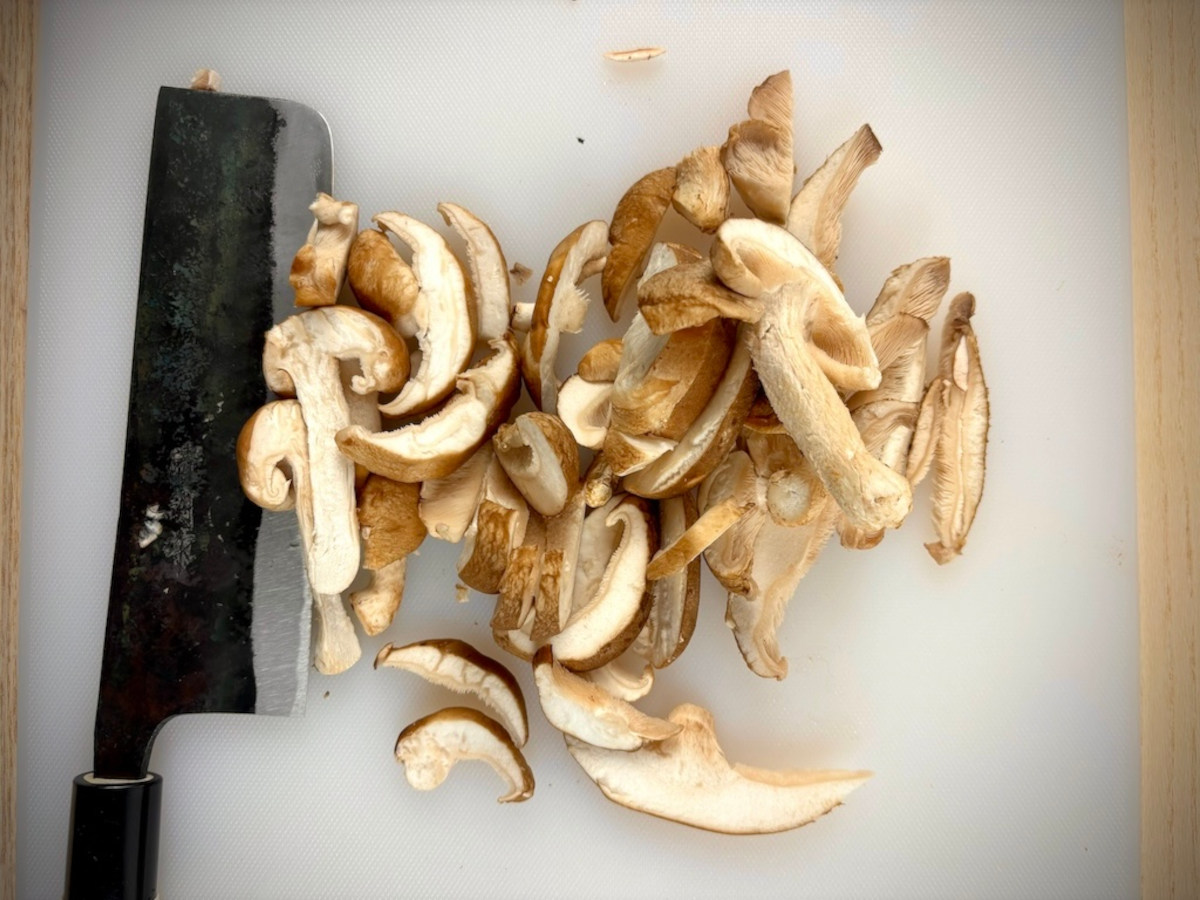
    Slice the fresh mushrooms into even strips, about a centimetre thick. Keeping the pieces similar in size helps them cook evenly. If you are mixing varieties, cut sturdier mushrooms like shiitake a little thinner so they cook at the same speed as softer ones. Brush off any dirt or wipe with kitchen paper instead of rinsing to keep them from turning soggy.

    A white chopping board with a pile of 1cm thick sliced mushrooms sitting in the middle, and a large Japanese chopping knife resting on the left side.

    Step 3: Make the marinade

    In a large bowl, whisk together garlic, soy sauce, mirin, and olive oil until smooth. This mixture is the backbone of the dish. Taste it. It should be salty from the soy, gently sweet from the mirin, and aromatic from the garlic. Adjust to your liking before adding the mushrooms.

    Step 4: Marinate the mushrooms

    Add the sliced mushrooms to the bowl and toss until every piece is coated. Let them sit for at least 10 minutes. This short step helps them soak up flavour and release some of their juices, which will become part of the sauce. If you are short on time you can skip the marinade, but the taste will be lighter.

    A white bowl containing yellow oil, black liquid (soy sauce) and some dollops of white (crushed garlic).
    A white bowl half filled with chopped marinated mushrooms.

    Step 5: Cook the spaghetti

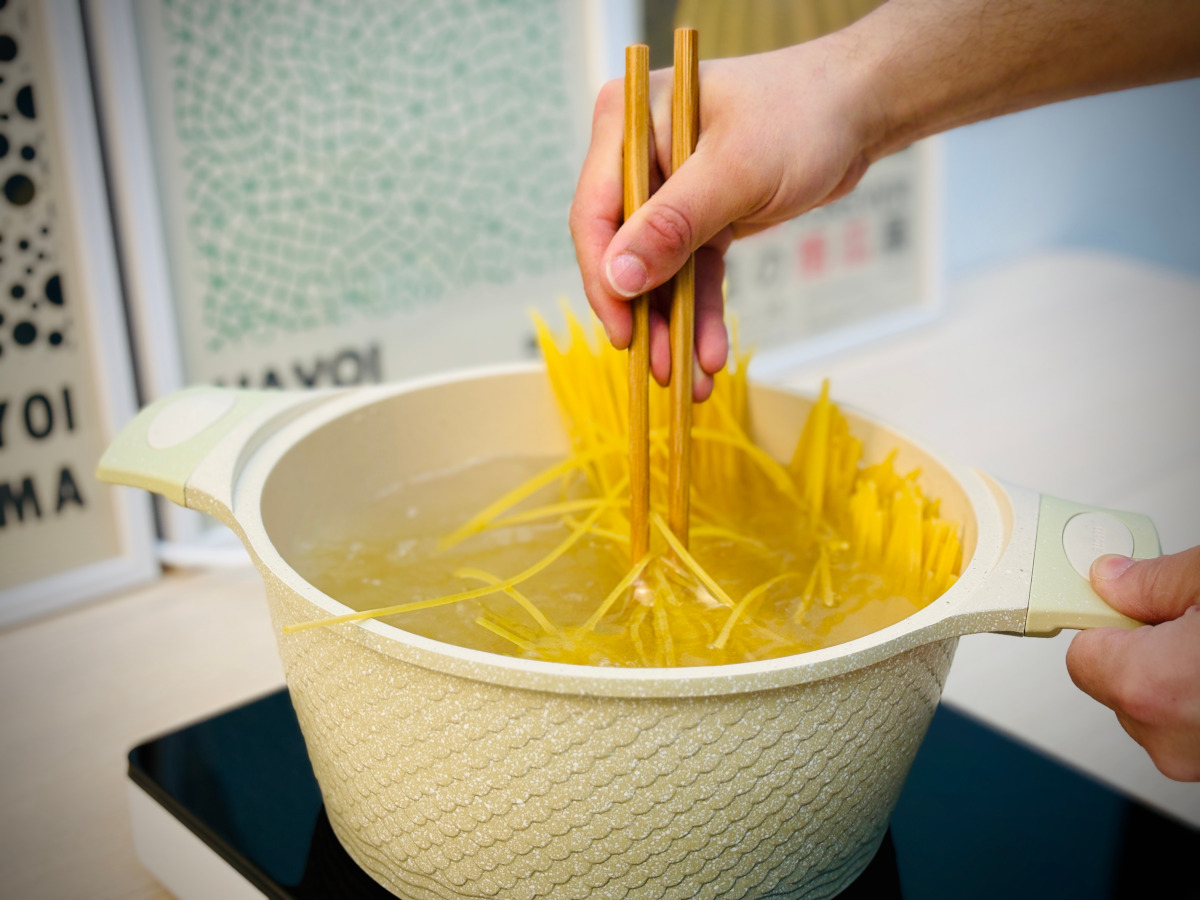
    Bring a large pot of water to the boil and add a generous pinch of salt. Cook the spaghetti until just al dente so it still has some bite. Before draining, scoop out a cup of the pasta water and set it aside. The starch in this water will help you adjust the sauce later if needed.

    Step 6: Fry the mushrooms

    Heat a wide frying pan over medium heat and add the marinated mushrooms. Spread them out so they cook in contact with the pan. This helps them brown slightly instead of steaming. Cook for around 5 minutes, stirring occasionally, until they soften and turn golden at the edges.

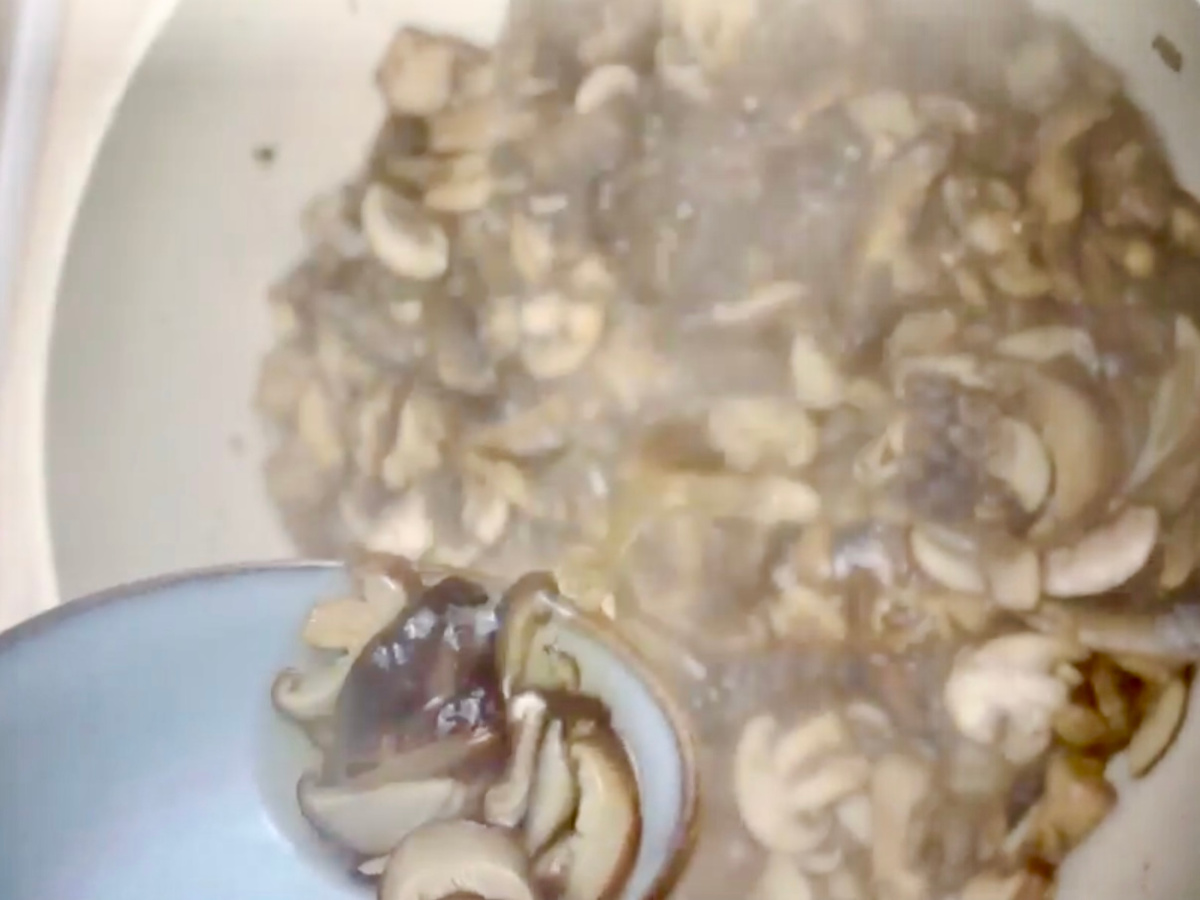
    Mushrooms in broth, steaming and simmering in a white frying pan.
    Small bowl of shitake mushrooms in broth being poured in to a large pan of frying mushrooms.

    Step 7: Add the shiitake broth

    Remove the soaked shiitake from their bowl and squeeze them firmly over the soaking liquid to capture as much flavour as possible. Slice them thinly, then return both the sliced mushrooms and the broth to the pan. Simmer gently for 2 to 3 minutes so the flavours blend.

    Step 8: Combine pasta and sauce
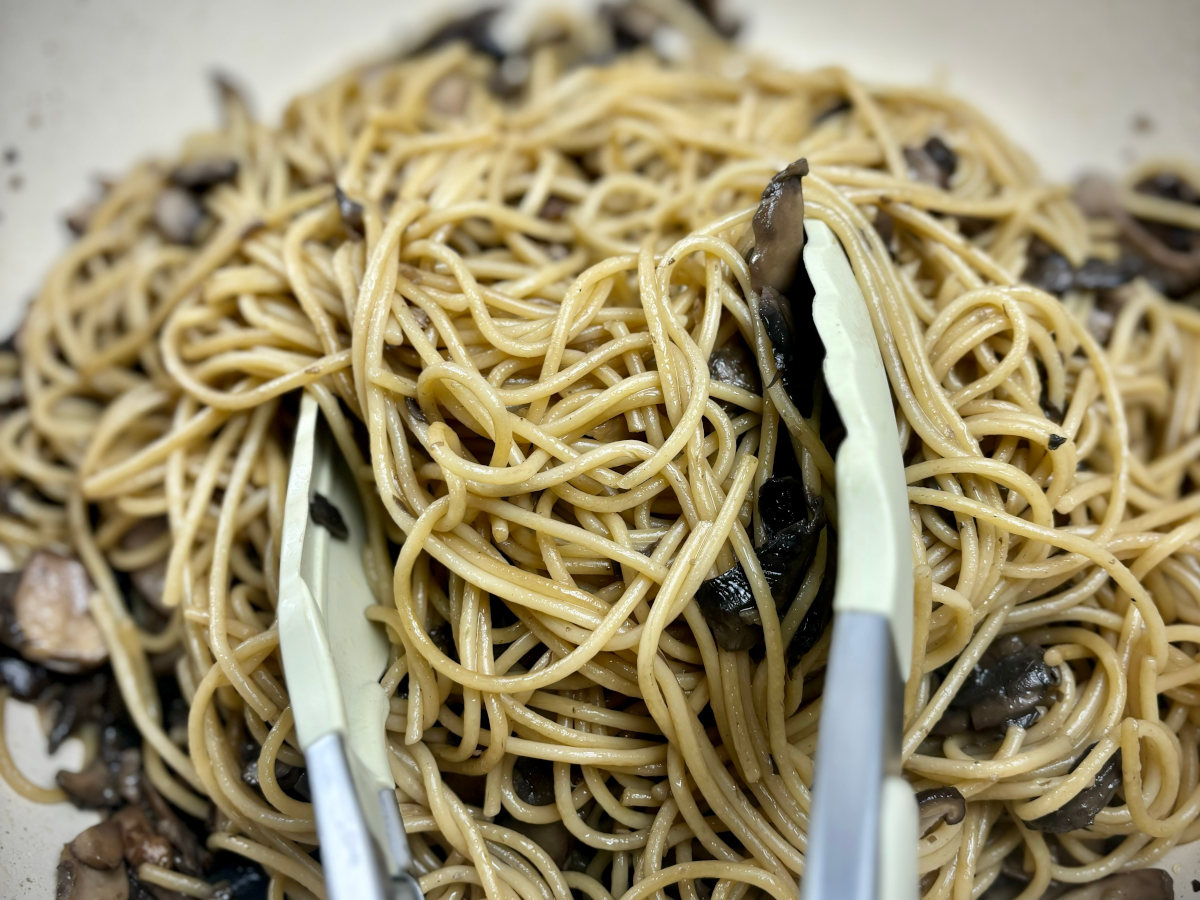
    Add the cooked spaghetti to the pan with the mushrooms and broth. Toss everything together so the pasta absorbs the sauce and looks glossy. If it seems dry, add a splash of the reserved pasta water. Keep stirring until every strand is coated.

    Pair of tongs handling cooked spaghetti with mushrooms combined through it.

    Step 9: Garnish and serve

    Divide the spaghetti into bowls and top with aonori or shredded nori. Add a pinch of shichimi togarashi for heat if you like spice. Serve immediately while hot. We often enjoy this Japanese mushroom spaghetti with a cold Japanese beer, but sparkling water or green tea are also perfect companions.

    A bowl of cooked spaghetti with fried mushrooms on top, sprinkled with green and red flakes.

    Toppings and Variations

    Less is more with this Japanese spaghetti with mushrooms, but a few extras can really take it in different directions. These are some of our favourites:

    • Black pepper - a little or a lot, add according to your personal taste
    • Homemade vegan parmesan - made from cashews and nutritional yeast. This is a family favourite in our house and adds a salty, nutty layer of umami.
    • Natto - sticky and savoury with a strong flavour. It is an acquired taste but pairs beautifully with mushrooms.
    • Nori seaweed - instead of ou nori (which can be hard to find) you can chop some nori sheets and sprinkle over the top

    We usually keep it classic with ou nori and shichimi togarashi, but experimenting is half the fun. This wafu spaghetti is delicious however you choose to top it. Is there a topping you love to use on your Japanese mushroom spaghetti? Let us know your favourites, we'd love to know what else should be on this list.

    Storage and Leftovers

    Japanese mushroom spaghetti can be made ahead and stored for later, which makes it a handy option for busy weeks. Keep any leftovers in an airtight container in the fridge for up to three days.

    When reheating, warm the pasta gently in a pan over medium heat. Add a splash of water or soy sauce to loosen the noodles and bring the sauce back together. It is best to only reheat the pasta once. If you know you will be eating it in portions, divide it into single-serving containers before refrigerating. That way you only reheat what you plan to eat.

    For best results, avoid reheating in the microwave if you can. A pan on the stove keeps the texture of the mushrooms and pasta closer to how it was when freshly cooked.

    FAQ

    What is wafu pasta (or wafu spaghetti)?


    Wafu means Japanese-style. Wafu pasta is the name given to spaghetti and other pastas cooked with Japanese seasonings such as soy sauce, miso, seaweed, mushrooms or seafood. This recipe is a classic example of wafu spaghetti, combining pasta with soy-marinated mushrooms and traditional toppings.

    What makes Japanese pasta different?

    Japanese pasta recipes usually have lighter sauces than Italian versions. Instead of cream or tomato, the base is often soy sauce, miso, mirin or dashi, which give the dish a very savoury, umami-rich character. Toppings like seaweed, shichimi togarashi or natto are also common, making Japanese pasta feel distinct from European styles.

    What does Japanese spaghetti taste like?

    Japanese spaghetti is typically lighter than Italian-style spaghetti. It often has umami depth from soy sauce or miso, without the heaviness of cream. In this mushroom version, the taste is earthy and savoury with a touch of sweetness from mirin, and you can add toppings like seaweed or spice for extra layers.

    Is spaghetti common in Japan?


    Yes. Pasta is very popular in Japan and has developed into its own style called wafu pasta. You can find Japanese spaghetti dishes in cafés, family restaurants and even convenience stores. Many households also make versions like this mushroom spaghetti at home because it is quick, affordable and adaptable.

    Can I switch out the spaghetti for another type of pasta?


    Absolutely. We often make this recipe with penne, fusilli, rigatoni or linguine instead of spaghetti. The mushroom and soy sauce base works with almost any pasta shape, so use whatever you prefer or have on hand.

    Other popular recipes
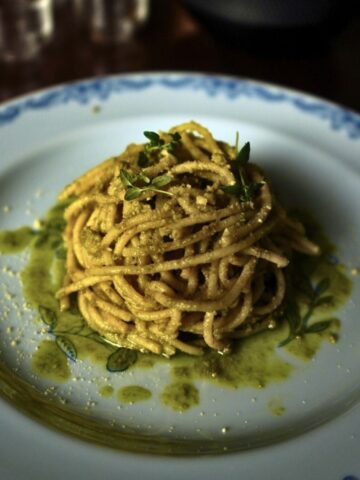
    • miso walnut pesto spaghetti on a large ound plate. Garnished with thyme
      Miso Pesto, a Quick Umami Twist on Classic
    • vegan fried chicken piled high on a small plate
      Vegan Fried Chicken
    • yuzu ramen pictured from above
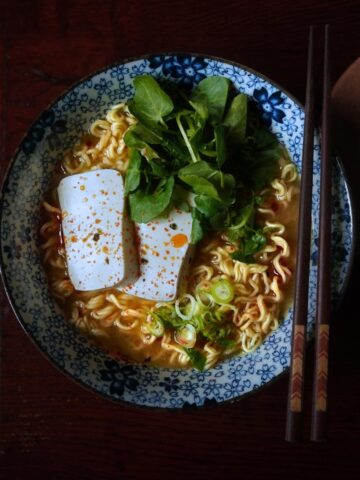
      Yuzu Ramen (Japanese Citrus Noodle Soup Recipe)
    • vegan tofu recipes poster - a collage of 4 photos of finished tofu dishes. 1. agedashi, 2. sticky tofu, 3. kake udon, 4. tofu noodles - one image in each corner with graphic text overlayed which says "tofu recipes"
      Top 9 Vegan Tofu Recipes

    📖 Recipe

    A ceramic bowl, with chopsticks resting on the edge, containing spaghetti topped with mushrooms, seaweed flakes and red Japanese spice powder.

    Japanese Mushroom Spaghetti

    Aaron Fukuyama
    Quick Japanese mushroom spaghetti, or wafu pasta, made with soy sauce, mirin, and garlic. A light, umami-rich vegan meal ready in 30 minutes.
    Print Recipe Pin Recipe
    Prep Time 10 minutes mins
    Cook Time 20 minutes mins
    Course Main Course
    Cuisine Japanese, vegan, vegetarian

    Ingredients
      

    • 500 grams dried spaghetti

    Mushrooms

    • 300 grams fresh chestnut mushrooms
    • 250 grams fresh flat field mushrooms
    • 80 grams fresh shitake mushrooms

    Broth

    • 2 dried shitake mushrooms
    • Half cup Boiling hot water

    Marinade

    • 5-6 cloves garlic, crushed
    • 4 tablespoon olive oil
    • 3 tablespoon soy sauce
    • 1 tablespoon mirin

    Toppings

    • Aonori
    • Shichimi (spicy) to taste
    • Natto (optional)

    Instructions
     

    • Place the dried shiitake in a small bowl with hot water. Let soak while you prepare the other ingredients.
    • Slice the fresh mushrooms into strips about 1 cm thick.
    • In a large bowl, whisk together the garlic, olive oil, soy sauce, and mirin.
    • Add the fresh mushrooms to the bowl and toss to coat. Leave to marinate for 10 minutes.
    • Cook the spaghetti in salted boiling water until al dente. Reserve 1 cup of pasta water before draining.
    • Heat a large frying pan over medium heat. Add the marinated mushrooms and cook for 5 minutes until softened.
    • Remove the rehydrated shiitake from their soaking liquid. Squeeze out excess liquid, slice thinly, and return both the slices and broth to the pan. Simmer for 2-3 minutes.
    • Add the spaghetti to the pan and toss with the mushrooms and broth. Add reserved pasta water if needed to loosen.
    • Serve topped with ou nori or shredded nori, and a sprinkle of shichimi togarashi. Add natto if desired.

    Notes

    • Mushroom swaps: Works with any fresh mushrooms. Shiitake, chestnut, oyster, or enoki are great choices, but baby button or closed cup mushrooms from the supermarket also work well.
    • Dried shiitake tip: The soaking liquid becomes a quick mushroom broth. Let them soak longer for more depth and squeeze well before slicing. Use pre-prepared sushi mushrooms to save time.
    • Pasta swaps: Can be made with penne, rigatoni, fusilli, or linguine instead of spaghetti.
    • Extra toppings:
      • Black pepper
      • Homemade vegan parmesan (crushed cashews + nutritional yeast)
      • Natto (fermented soybeans)
      • Ou nori or shredded nori
      • Shichimi togarashi for spice
    • Serve with: Pairs well with a cold Japanese beer, sparkling water, or green tea.
    • Other mushroom recipes: Try our Oyster Mushroom Burger or Donburi Bowl with Mushrooms and Teriyaki Tofu.
    • Storage: Store leftovers in an airtight container in the fridge for up to 3 days. Reheat gently in a pan with a splash of water or soy sauce. Reheat only once.
    Keyword 30 minute meals, easy lunches and dinners, mushrooms, noodles, spaghetti

    More Noodles & Pasta

    • Our Favourite Vegan Udon Noodle Recipes
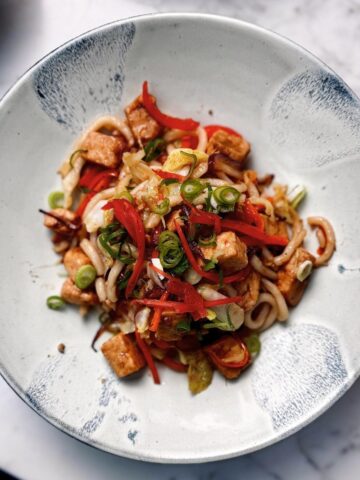
    • yaki udon noodles garnished with pickled ginger and spring onions
      Vegan Yaki Udon — Easy 25-Minute Stir-Fried Noodles
    • Curry udon noodles in a ramen bowl garnished with spring onions and choi sum leaves
      Curry Udon – Japanese Comfort in under 30 Minutes
    • a bowl of kake udon (thick udon noodles in a translucent soy based broth)
      Vegan Kake Udon (with Crispy Tofu Topping)

    Leave a Reply Cancel reply

    Your email address will not be published. Required fields are marked *

    Recipe Rating


    Aaron Zahl heads and shoulders photo in a cafe.

    Hi, we're Aaron and Jess!

    We love cooking vegan Japanese dishes and sharing tips for creating delicious recipes.

    Join us on this cooking adventure!

    More about us →

    Popular

    • japanese eggplant recipes thumbnail image
      Top 5 Japanese Eggplant Recipes
    • Close up of the beer and eggplant stir-fry served in a shallow bowl, garnished with spring onions.
      Beer and Eggplant Stir-Fry (10 Minute Recipe)
    • mabo eggplant on a bed of rice
      Mabo Nasu (Mapo Eggplant 麻婆茄子)
    • sticky tofu on a round plate garnished with spring onions and pickled ginger
      Sticky Tofu: Easy 10-Minute Recipe

    Footer

    ↑ back to top

    About

    • Privacy Policy
    • Terms & Conditions
    • Accessibility Policy

    Newsletter

    • Sign up

    Contact

    • Contact
    • Services

    Copyright © 2026 Vegan Japanese. All rights reserved.

    Manage Consent
    To provide the best experiences, we use technologies like cookies to store and/or access device information. Consenting to these technologies will allow us to process data such as browsing behavior or unique IDs on this site. Not consenting or withdrawing consent, may adversely affect certain features and functions.
    Functional Always active
    The technical storage or access is strictly necessary for the legitimate purpose of enabling the use of a specific service explicitly requested by the subscriber or user, or for the sole purpose of carrying out the transmission of a communication over an electronic communications network.
    Preferences
    The technical storage or access is necessary for the legitimate purpose of storing preferences that are not requested by the subscriber or user.
    Statistics
    The technical storage or access that is used exclusively for statistical purposes. The technical storage or access that is used exclusively for anonymous statistical purposes. Without a subpoena, voluntary compliance on the part of your Internet Service Provider, or additional records from a third party, information stored or retrieved for this purpose alone cannot usually be used to identify you.
    Marketing
    The technical storage or access is required to create user profiles to send advertising, or to track the user on a website or across several websites for similar marketing purposes.
    • Manage options
    • Manage services
    • Manage {vendor_count} vendors
    • Read more about these purposes
    View preferences
    • {title}
    • {title}
    • {title}
    Manage Consent
    To provide the best experiences, we use technologies like cookies to store and/or access device information. Consenting to these technologies will allow us to process data such as browsing behavior or unique IDs on this site. Not consenting or withdrawing consent, may adversely affect certain features and functions.
    Functional Always active
    The technical storage or access is strictly necessary for the legitimate purpose of enabling the use of a specific service explicitly requested by the subscriber or user, or for the sole purpose of carrying out the transmission of a communication over an electronic communications network.
    Preferences
    The technical storage or access is necessary for the legitimate purpose of storing preferences that are not requested by the subscriber or user.
    Statistics
    The technical storage or access that is used exclusively for statistical purposes. The technical storage or access that is used exclusively for anonymous statistical purposes. Without a subpoena, voluntary compliance on the part of your Internet Service Provider, or additional records from a third party, information stored or retrieved for this purpose alone cannot usually be used to identify you.
    Marketing
    The technical storage or access is required to create user profiles to send advertising, or to track the user on a website or across several websites for similar marketing purposes.
    • Manage options
    • Manage services
    • Manage {vendor_count} vendors
    • Read more about these purposes
    View preferences
    • {title}
    • {title}
    • {title}