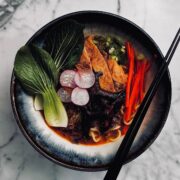
Spicy Ramen
This vegan spicy ramen brings deep umami flavors with miso, dashi, and chili bean paste—topped with mushrooms, inari age, and fresh veggies.
Servings: 2
Calories: 810kcal
Ingredients
For the Inari Age
- 2 sheets abura-age (fried tofu sheets)
- 160 ml vegan dashi
- 2 ½ teaspoons sugar
- 2 teaspoons soy sauce
For the soup broth
- 4 cloves garlic
- 1 teaspoon ginger
- 1 small onion
- 1 ½ tablespoons toasted white sesame seeds
- 2 tablespoons toasted sesame oil
- 1.5 teaspoons doubanjiang (spicy chili bean paste)
- 2 tablespoons miso paste
- 1 tablespoon sugar
- 1 tablespoon mirin
- 2 teaspoons sake
- 875 ml vegetable stock
- 250 ml vegan dashi homemade dashi or instant (1 teaspoon kombu dashi powder per 1 cup of water)
- 1 teaspoon salt
- pinch of ground pepper
- 50 ml of hot water thinning out miso paste
For the ramen noodles
- 400 g fresh/frozen ramen noodles if using dried noodles, use half the amount and cook until al dente
For the mushroom topping:
- 4-5 shiitake mushrooms
- 1 tablespoon sesame oil
- 1 teaspoon mirin
- 2 teaspoons soy
- pinch of sugar
For the garnish
- 1 small carrot shopped into thin matchsticks
- 3 radishes small round red, white or purple are fine options
- 2 pak choy leaves washed and dried
- 2 green onions sliced into thin discs
- 1 teaspoon rayu chili oil
Instructions
- Pour boiling water over the fried tofu sheets in a shallow bowl. Dunk them gently for a minute or so to remove any oil. Then drain and rinse the tofu under cold water, using your hands to carefully squeeze out the excess moisture.
- In a medium saucepan, bring the dashi, sugar, and soy sauce to a gentle simmer. Add the tofu sheets and cook over medium heat for 10–15 minutes, allowing them to absorb most of the liquid without boiling.
- Turn off the heat and remove the tofu sheets. Let them cool, then slice into 1-inch strips with a sharp knife.
- Toast the sesame seeds in a pan until golden. Once they’re evenly golden, transfer them to a mortar and pestle and grind into a paste.
- Mince the garlic in a garlic press. Peel and grate the ginger and finely dice the red onion.
- Heat the oil in a medium saucepan and fry the onion until golden. Then add the garlic and ginger and fry for a further 2 minutes before adding the ground sesame seeds and sugar. Stir.
- Next, mix the miso and doubanjiang with a bit of hot water to create a smooth paste. Add this to the saucepan then pour in the vegetable stock and vegan dashi and bring to a gentle simmer. Season with salt and pepper, and keep warm over low heat.
- Slice the shiitake mushrooms into 1cm strips. Heat the sesame oil in a frying pan over high heat, add the mushrooms and fry until they start to brown. Add mirin, soy sauce, and a touch of sugar, then fry for another minute until caramelized. Then set aside.
- Chop the spring onions finely. Slice the radishes into thin discs. Julienne the carrot by slicing it into even, matchstick-sized strips. Wash and pat dry your pak choy leaves.
- Next, cook the ramen according to the package instructions, but slightly undercook them - adding the hot broth soon will finish cooking them without causing them to be a little too soft or mushy.
- Drain and place the ramen into serving bowls. Pour the hot broth over the noodles and add the toppings inari age, mushrooms, and the veggies. And finish with adrizzle of rayu chili oil. Serve and slurp immediately.
Notes
Spice level: The doubanjiang and rayu chili oil are where most of the heat comes from. Start with less if you're sensitive to spice and add more at the end, it's much easier to turn the heat up than down!
Dashi: Vegan dashi is the secret to that deep, savory broth. If you don't have time to make it from scratch, kombu dashi powder works great and you can find it at most Asian grocery stores or online.
Noodles: Fresh or frozen ramen noodles give the best texture here. Dry noodles work too, just make sure to slightly undercook them since they'll keep cooking in the hot broth.
Inari age: You can skip this if you don't have the extra time though it's totally worth it!. The sweet, savory tofu sheets add a lovely contrast to the spicy broth. You can find abura-age at Japanese and Asian supermarkets.
Make it gluten-free: Swap in gluten-free soy sauce (tamari works well) and replace the ramen noodles with rice noodles.
Leftovers: The broth stores well in an airtight container in the fridge for up to 3 days. The noodles are best eaten fresh, as they tend to soften too much when stored and reheated, so I'd recommend making only what you need. That said, if you do have leftovers, store them separately in an airtight container. The toppings keep well too, just store them in a separate airtight container in the fridge and consume within 2-3 days.
Nutrition
Serving: 1 serve | Calories: 810kcal | Carbohydrates: 96g | Protein: 27g | Fat: 37g | Saturated Fat: 6g | Polyunsaturated Fat: 16g | Monounsaturated Fat: 14g | Sodium: 5321mg | Potassium: 785mg | Fiber: 7g | Sugar: 25g | Vitamin A: 5893IU | Vitamin C: 16mg | Calcium: 336mg | Iron: 6mg
